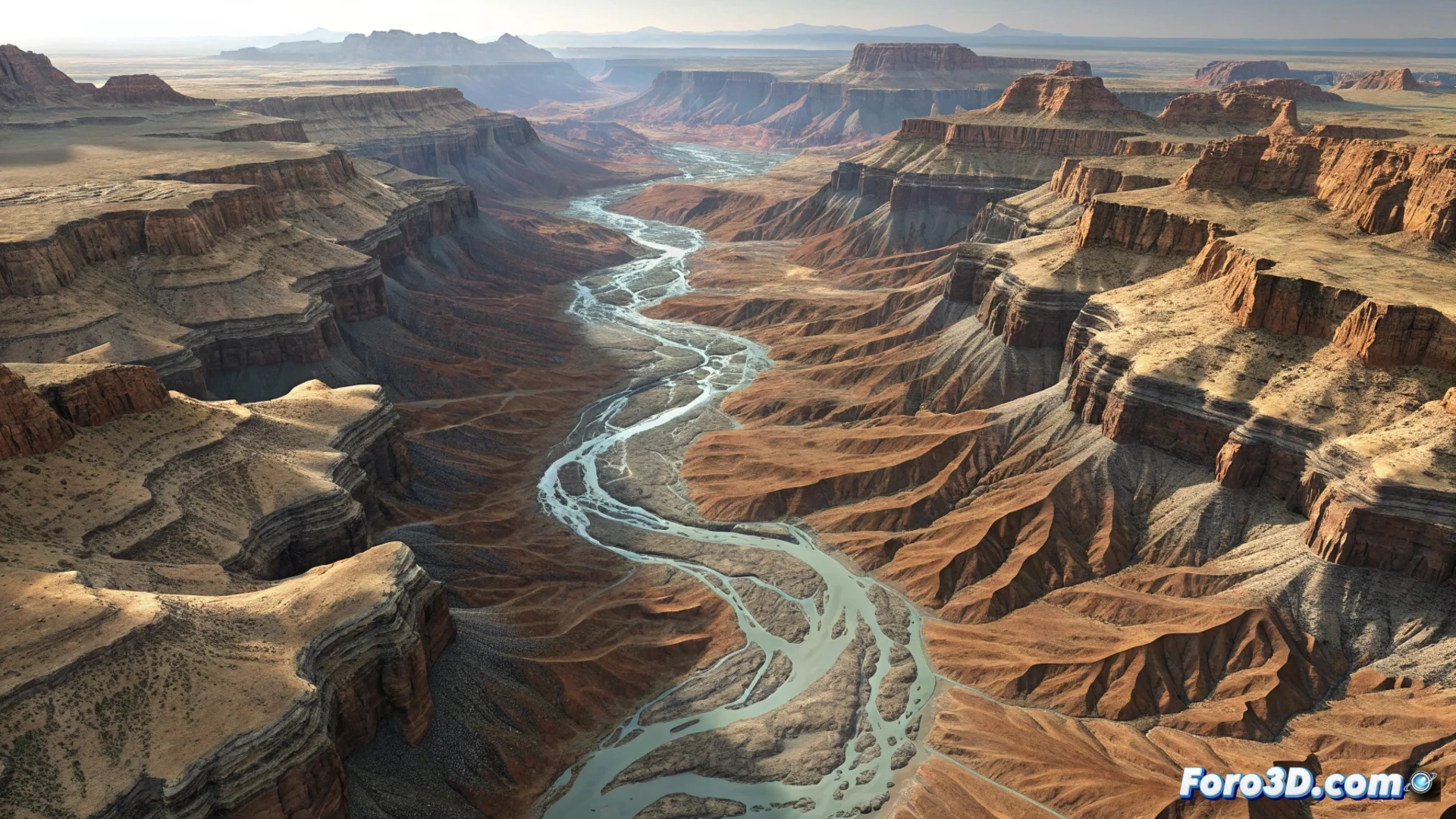
The Erosion Node in Gaea Simulates Terrain Wear
In the Gaea procedural terrain creation environment, the Erosion node is a fundamental tool. This component automates the calculation of how natural elements wear down and sculpt the digital landscape, freeing the artist from having to do every detail by hand 🏔️.
Erosion Simulation Mechanics
The node processes an initial heightmap through algorithms that replicate the physics of real-world erosive agents. It is not limited to a single effect, but combines multiple forces to achieve a complex and believable result.
The three pillars of simulated erosion:- Hydraulic erosion: Calculates how water flows over the surface, transports sediments, and excavates the earth to form channels and rivers.
- Wind erosion: Models the action of wind, which wears down surfaces and deposits particles in other areas.
- Thermal erosion: Simulates the cycles of freezing and thawing water, a process that fractures rock and alters the terrain slope.
A novice user can create a spectacular canyon in minutes, but then spends hours trying to make the river not flow uphill.
Integrating the Node into a Project
Artists typically use this node within a broader node graph. Its application is versatile, serving both to create landscapes from scratch and to refine preexisting geometries and give them a weather-aged appearance.
Typical Workflow with the Erosion Node:- Generate a base mountain shape using fractal noise nodes.
- Connect the Erosion node to apply wear effects and model the terrain as if it had gone through millennia of weather.
- Adjust parameters such as flow intensity, wind direction, or number of iterations to control the result.
- Export the final result as a heightmap ready to use in video game engines or 3D rendering software.
From Artistic Control to Physical Realism
Adjusting the strength of each sub-process allows for very diverse results, from arid and severely eroded landscapes to dense and organic river valleys 🌊. The tool offers significant artistic control, but at the same time teaches that to achieve realism, one must respect the strict rules that nature follows in its design. The Erosion node in Gaea democratizes the creation of complex terrains, making convincing digital geology accessible.