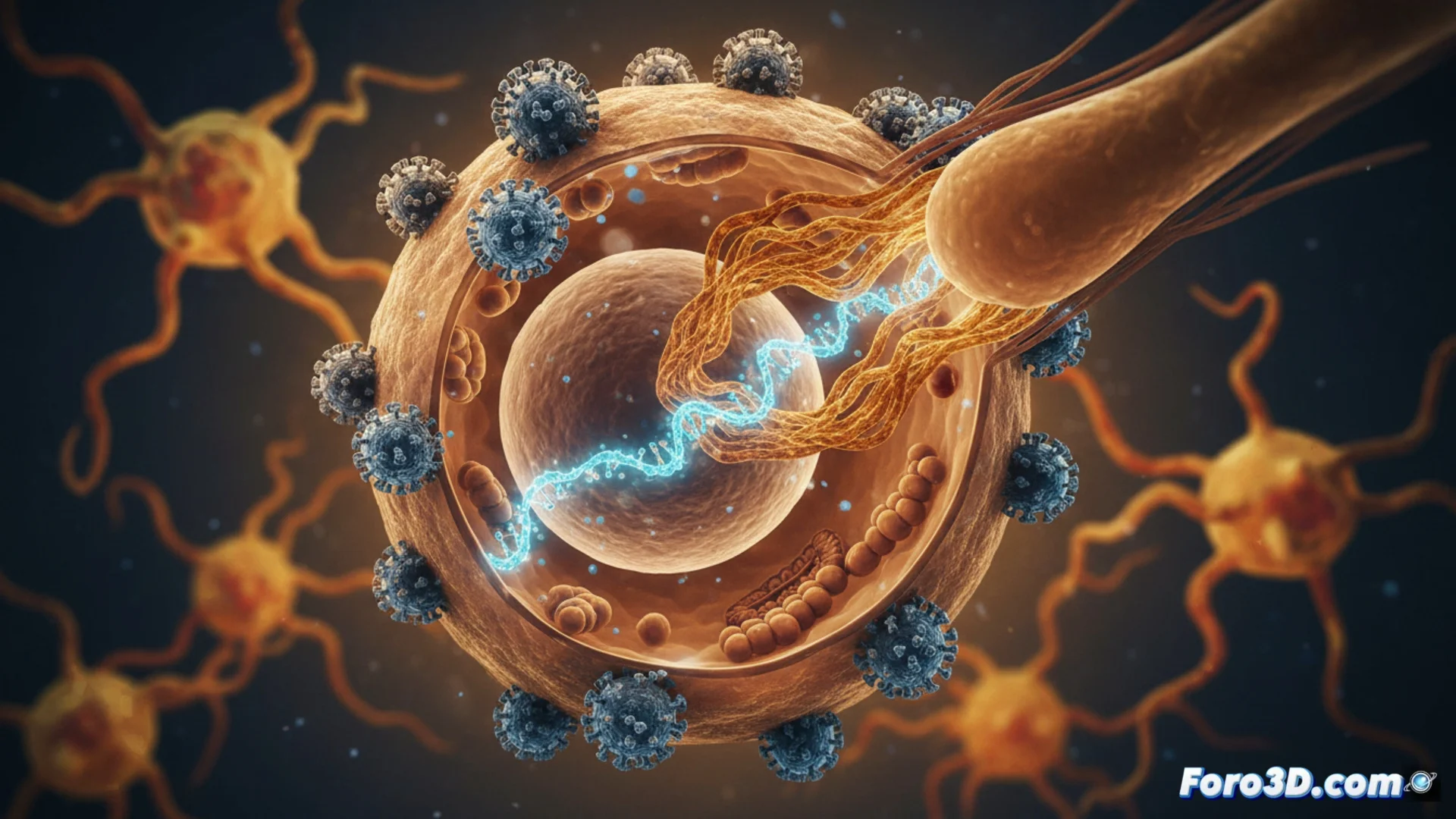
The Epstein-Barr Virus: Why It Infects Almost Everyone but Few Get Sick
The Epstein-Barr virus (EBV) is one of the most widespread human pathogens, as it affects the vast majority of the global population at some point. After the first exposure, which is often asymptomatic, the body's defense system usually confines the virus, which enters an inactive phase within some cells. This state of latency is the main reason why such a massive infection does not cause widespread pathology in the population. 🦠
The Key Lies in Genetics and the Immune Response
Understanding why only a small group develops serious complications requires looking at individual differences. Certain genetic variants influence how the body manages and suppresses EBV. In some cases, this balance between the host and the virus is disrupted. This dysfunction can facilitate the pathogen's reactivation or trigger a disproportionate defensive reaction, which ends up damaging the individual's own tissues.
Factors that Define the Risk:- Genetic Susceptibility: Certain genes affect the ability to control the virus effectively.
- Immune Regulation: A poorly modulated defensive response can cause collateral damage.
- Virus State: EBV's ability to reactivate from its latent phase.
EBV does not act alone; it needs a particular predisposition in the host to trigger serious diseases.
From Mononucleosis to Complex Pathologies
When control mechanisms fail, the most common outcome is infectious mononucleosis, which usually affects young people. However, for a small number of people with specific susceptibility, infection with this virus is linked to a higher risk of autoimmune disorders, such as multiple sclerosis, and certain types of cancer, including Hodgkin's lymphoma and nasopharyngeal carcinoma. In these scenarios, EBV acts as an essential trigger in already predisposed individuals.
Possible Consequences of an Uncontrolled Infection:- Mononucleosis: Acute illness common in adolescents and young adults.
- Autoimmune Diseases: Such as multiple sclerosis, where the immune system attacks the nervous system.
- Neoplasms: Some lymphomas and carcinomas are associated with the presence of the virus.
A Different Perspective on Infection
Therefore, if you ever thought that getting mononucleosis made you special, it was actually a sign that your immune system did not organize the initial response to the Epstein-Barr virus optimally. The great paradox of this pathogen lies in its ubiquity and, at the same time, the specificity with which it causes disease, depending almost entirely on the unique interaction between the virus and each person's biology. 🤔