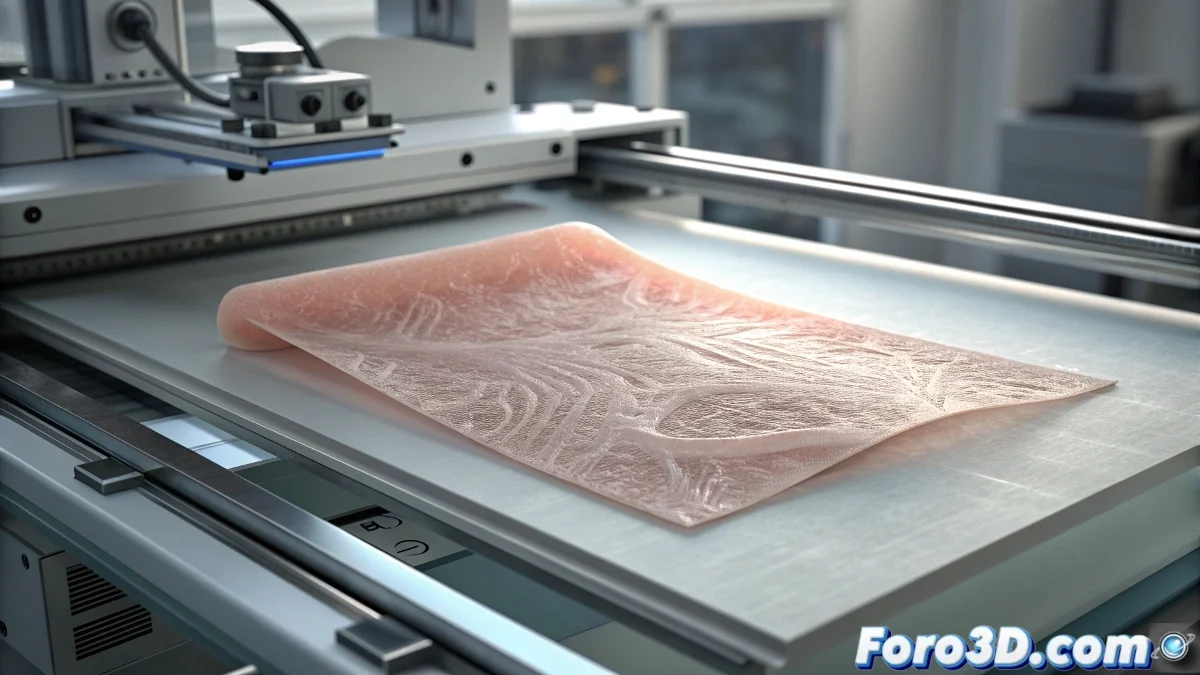
When 3D Printing Writes the Future of Regenerative Medicine
The La Paz hospital in Madrid is celebrating what many consider a historic milestone at the intersection of engineering and medicine: the successful application of 3D printing to create functional human skin in the laboratory. This advance represents not only a technical achievement, but a tangible revolution in treatment possibilities for patients with severe burns, complex wounds, and dermatological conditions that previously lacked effective solutions. The collaboration between tissue engineers and dermatologists is demonstrating that boundaries between disciplines can produce medical miracles.
The most extraordinary aspect of this development is how it is transforming the paradigm of regenerative medicine. Instead of relying on donors or traditional tissue culture methods, specialists can now print layer by layer complex skin structures that faithfully replicate the natural architecture of human skin. Each bio-printed skin sheet contains not only keratinocytes, but also miniature blood vessels and support structures that ensure its viability and functionality.
Bio-printing skin is not creating a patch, it is reconstructing the boundary between the body and the world
Revolutionary Technical Aspects
- Specialized bioinks that combine cells and biological scaffolds
- Microscopic precision in the arrangement of different cell types
- Complete customization based on each patient's characteristics
- Industrial scalability for on-demand production
A Before and After for Burn Patients
For victims of extensive burns, this technology represents that light at the end of the tunnel that many have been waiting for decades. Bio-printed skin grafts eliminate the need for painful procedures to extract healthy skin from the patient themselves, significantly reducing physical and psychological trauma. The ability to create perfectly compatible tissue in the laboratory is shortening recovery times from months to weeks in the most complex cases.
The tissue engineers on the project have developed an optimized process that begins with a small biopsy from the patient, from which the necessary cells are isolated and multiplied. These are mixed with advanced biomaterials that serve as a temporary scaffold, creating a three-dimensional structure that guides the growth and organization of the tissue in a manner identical to natural skin.
Immediate Medical Applications
- Treatment of second and third-degree burns
- Tissue regeneration for chronic ulcers
- Post-surgical reconstruction in dermatological oncology
- Disease models for pharmacological research
Absolute customization is perhaps the most significant advantage of this approach. Each skin sheet can be specifically tailored considering the patient's skin type, age, affected body area, and particular genetic characteristics. This approach maximizes integration and minimizes the risk of rejection, representing the holy grail of personalized medicine applied to skin care.
At La Paz, we no longer talk about treating wounds, but about reprogramming the ability to heal
And while the first patients see their regenerated skin regain sensitivity and texture, researchers are already working on the next frontier: printing hair follicles and sweat glands... because the true revolution is not imitating nature, but understanding it well enough to rebuild it 🏥