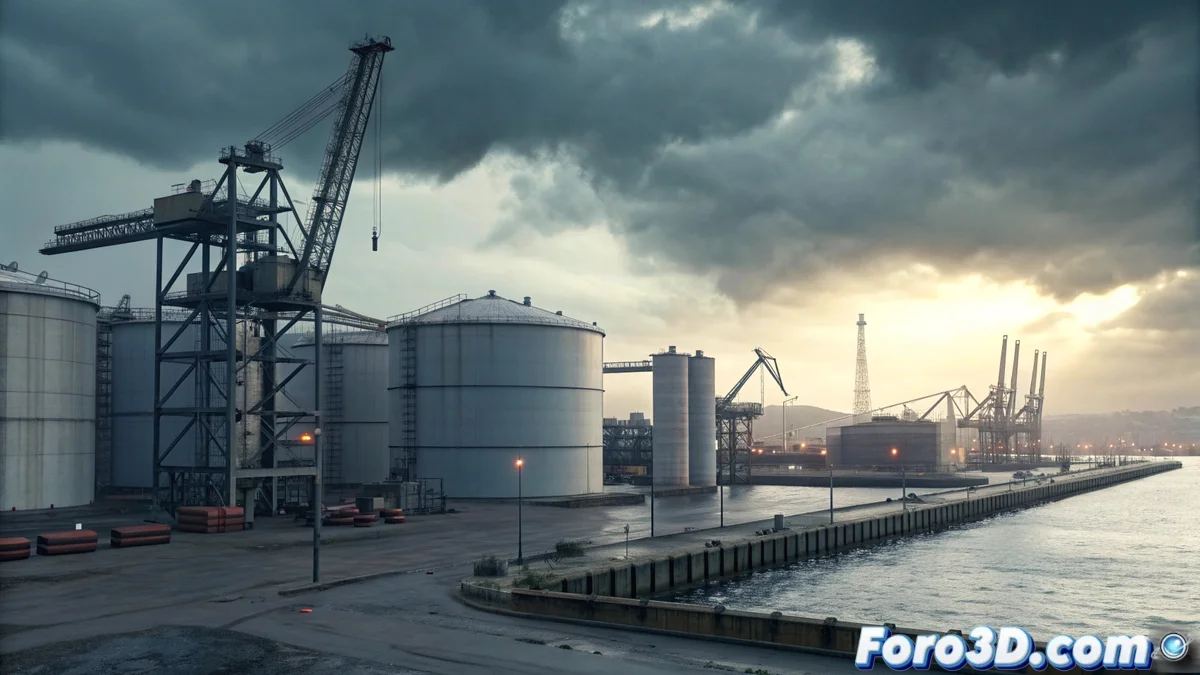
The El Musel Regasification Plant: A 400 Million Infrastructure Paralyzed
In the port of Gijón stands a sleeping industrial giant 🏗? The plant to regasify liquefied natural gas (LNG) in El Musel represents an investment exceeding four hundred million euros. Although construction finished more than a decade ago, it has never received a methane carrier ship. Designed to import, store, and convert the fuel, it has become a symbol of an underutilized project. It remains in an indefinite state of waiting, fully equipped but silent, while its final fate is decided.
A Regulatory Veto That Halted the Project
The permit to operate the plant ran into the refusal of the body that regulates the gas system in Spain. The decision was based on the fact that the country did not need more import capacity at that time, as other similar facilities were operating below their maximum capacity. This administrative blockade plunged the infrastructure into a legal and financial limbo. Despite subsequent attempts to reopen the case and explore alternatives, the situation did not move forward. The facility, ready at a technical level, depends on the authorities changing their assessment of the real need for its service.
The main obstacles it faced:- Regulator's veto: The state body ruled that Spain's LNG import capacity was sufficient.
- Lack of demand: The market did not generate the expected need to justify starting up a new plant.
- Unrecovered investment: The more than 400 million euros of initial investment remain without return.
The silhouette of the regasification plant in the Asturian port serves as a physical reminder of the challenges involved in coordinating large energy projects with market evolution.
The Cost of Maintaining an Inactive Facility
Maintaining an infrastructure of this magnitude involves ongoing expenses even if it does not produce. It is necessary to carry out conservation, surveillance, and basic maintenance tasks to prevent the equipment from degrading. These operational costs, combined with the huge unrecovered initial investment, fuel a public debate on how to plan strategic infrastructures. The case shows the complexity of aligning large energy projects with market dynamics and current policies.
Costs associated with the paralysis:- Preventive maintenance: Ongoing tasks to keep tanks, pipelines, and systems in good condition.
- Security and surveillance: Fixed expenses in personnel and systems to protect the facilities.
- Potential deterioration: Risk of equipment damage due to lack of active use, increasing future repairs.
An Uncertain Future Awaiting a Decision
The structure continues waiting for its fate, perhaps with the hope that one day a methane carrier will unload at its docks the gas it was designed for. Its situation raises crucial questions about long-term needs assessment and agility in adapting infrastructures to changing contexts. Meanwhile, the debate on its possible reactivation or reconversion remains open, illustrating the difficulties of managing large-scale assets in a sector as volatile as energy ?