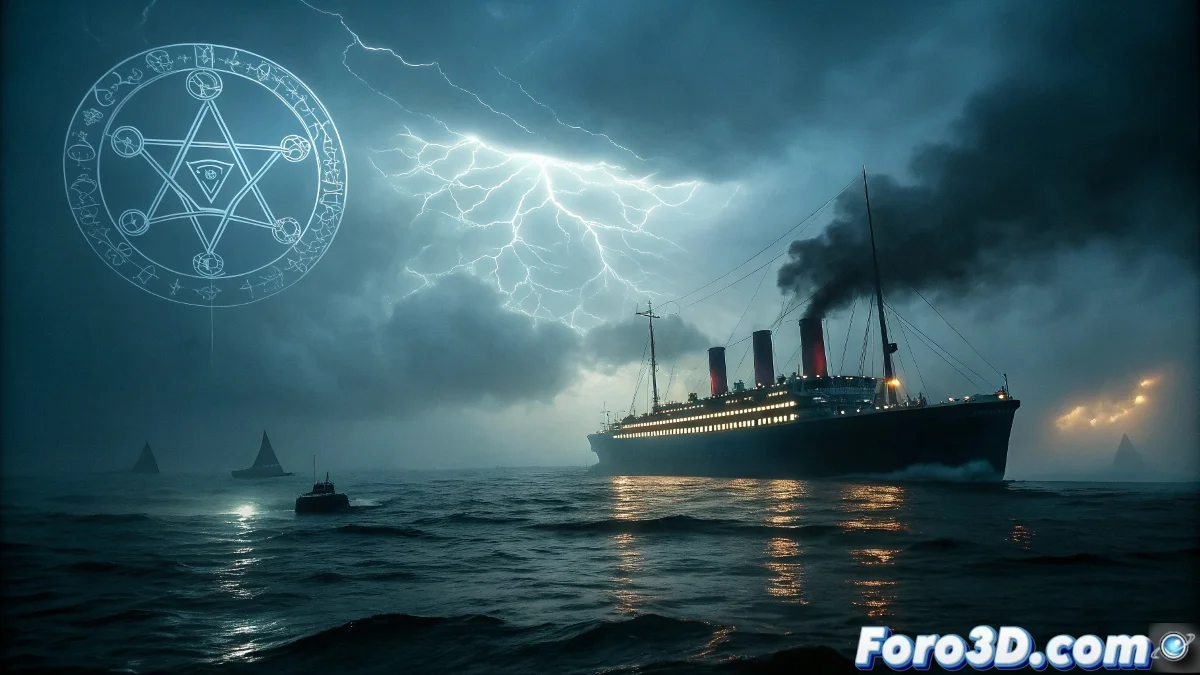
When the Mystery Needs Pixels (Lots of Pixels)
In 1899, DNEG proved that creating a series about a lost ship requires more technology than the original Titanic. Because in this production, even the waves have secrets to hide. 🌊🔍
"The ocean was not just a backdrop, it was another character. Every wave, every reflection, every light change had to convey that sense of constant threat."
StageCraft at High Sea: Navigating Between LEDs and Code
The key technical innovation:
- 360° LED Volume for reflections and interactive lighting
- Wave Simulations with "paranormal" behavior
- Digital Extensions that multiplied the real ship
- Dynamic Skies that changed according to the psychological state
The result is so immersive that the actors ended up with real... and existential seasickness. ⚓🤢
Effects That Challenge Reality (and Sanity)
The most mind-blowing moments:
- Dimensional portals with nightmare physics
- Corridors that fold like hellish origami
- Transitions between times and spaces with impossible morphing
Because in 1899, even the laws of physics have existential crises. 🌌😵💫
The Art of Hiding Clues in the Effects
Details for attentive eyes:
- Hidden symbols in clouds and water formations
- Distorted reflections that foreshadow plot twists
- Subtle lighting changes that mark alternate realities
So now you know: the next time you see the ocean, look twice... just in case it starts rendering. 🌊💻
Technology in Service of the Enigma
What makes this work unique:
- Every visual effect is also a narrative clue
- Physics breaks down consistently with the plot
- Nothing is what it seems... literally
Because in 1899, even the pixels are part of the mystery. 🧩🖥️