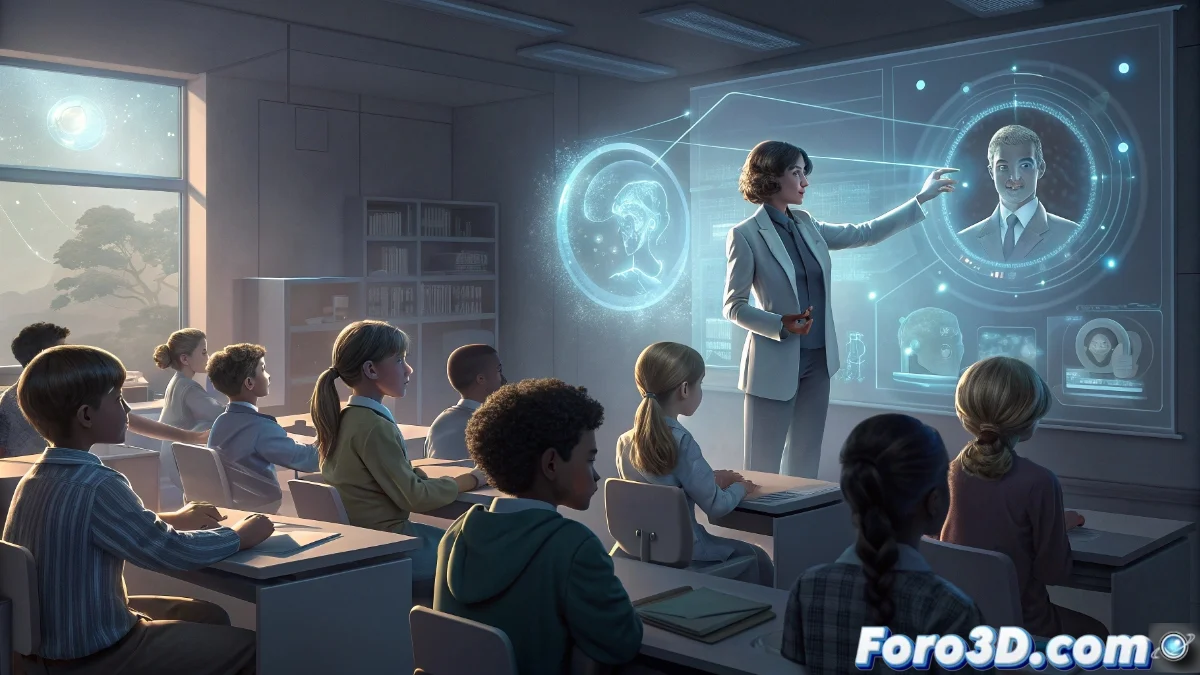
The Educational Revolution Driven by Artificial Intelligence
Artificial intelligence is generating a radical transformation in contemporary educational systems, as documented by José Picó in his work The Teacher's Algorithm. This disruptive technology is not limited to optimizing administrative processes, but is fundamentally redefining pedagogical methodologies and learning experiences for students of various levels and sociocultural contexts 🚀.
Intelligent and Personalized Tutoring Systems
Algorithmic tutoring platforms meticulously examine each student's academic performance and preferred cognitive styles. These sophisticated systems detect specific weaknesses in the learning process and generate focused complementary activities that consolidate knowledge where there is the greatest need for reinforcement.
Main advantages of intelligent tutors:- Individualized academic progression without external time constraints
- Precise identification of problematic areas through predictive analysis
- Automatic generation of exercises adapted to the assimilation pace
Educational algorithms will never be late to class, but they won't share coffee in the teachers' lounge either - reflection on human-machine coexistence
Automated Assessment and Material Development
Algorithmic grading of assessments provides immediate and objective feedback, freeing teachers from repetitive tasks. At the same time, AI designs innovative educational resources such as immersive simulations and interactive multimedia content that significantly increase student engagement.
Transformative applications in assessment and content:- Automatic grading tools with consistent parameters
- Creation of dynamic and multisensory didactic materials
- Educational simulations that replicate real-world scenarios
The Future of Teaching in the Algorithmic Era
Although these technological innovations promise more efficient educational environments, the inevitable question arises about the future role of the human educator in the face of systems that never absent themselves but lack emotional intelligence and shared life experiences. The true challenge lies in finding the perfect balance between algorithmic precision and the human essence of teaching 🤖.