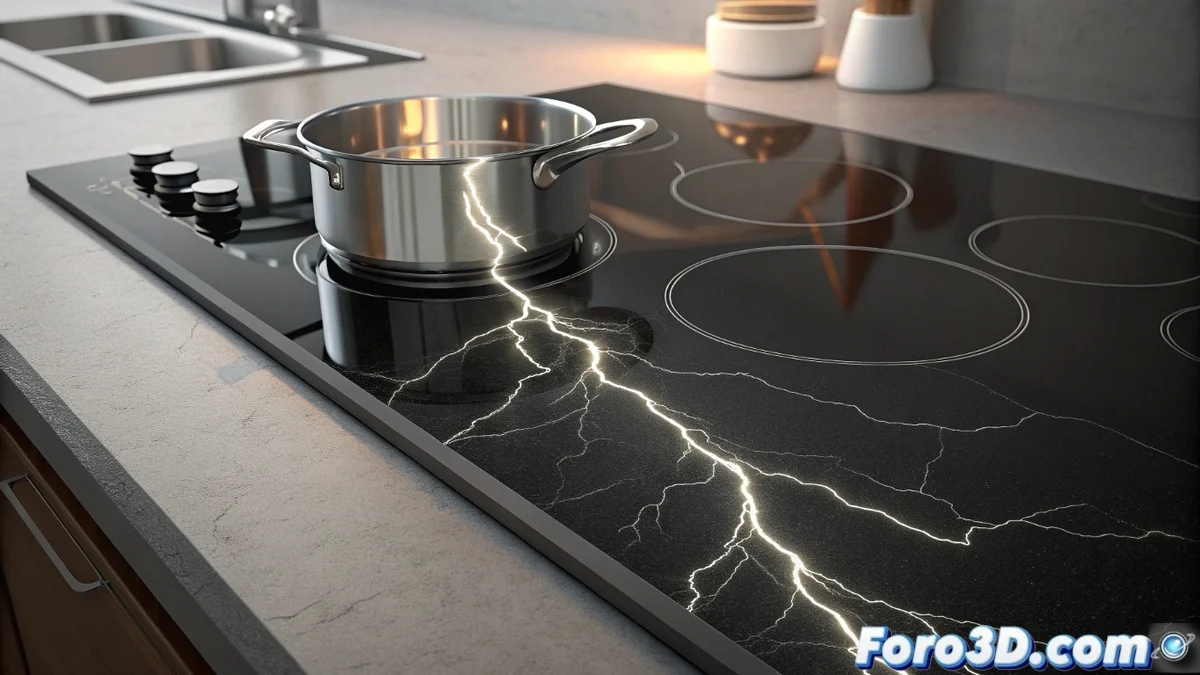
The Economic Dilemma of Repairing an Induction Hob with a Broken Glass
A common household accident, such as the fall of a heavy utensil, can have disproportionate consequences on a modern appliance. Although the impact is localized and the internal electronics remain operational, a crack in the vitroceramic glass of an induction hob is usually the beginning of the end for the device. 🫣
The Paradox of Repair Costs
Replacing this component is not a simple task. It is an operation that requires specific parts for each model and the intervention of a specialized technician. The economic breakdown reveals the root of the problem: the price of the replacement glass plus specialized labor frequently reaches or exceeds the purchase value of a new mid-range appliance. This reality makes the repair option an irrational investment for the average consumer.
Factors that make repair more expensive:- Model-specific components: Manufacturers do not usually standardize parts, making them more expensive and difficult to obtain.
- Highly specialized labor: Installation requires specific technical knowledge to avoid damaging the touch sensors and inductors.
- Complex logistics: The glass is fragile and bulky, increasing transportation and storage costs.
Repairing is not economically viable, fostering a cycle of constant consumption that generates more electronic waste.
Design, Durability, and Obsolescence
This situation goes beyond economics and points to a problem of design and sustainability. When a single fragile, albeit crucial, element condemns an entire unit with functional electronics to the scrap heap, many see the traits of planned obsolescence by design. The user is trapped in a dead end, incentivized by the market to discard and buy again, perpetuating an unsustainable model.
Consequences of this model:- Increase in electronic waste (e-waste): Appliances with many still operational components are discarded.
- Recurrent spending for the user: The initial investment is lost, forcing a new outlay.
- Total disincentive to repair: The "use and throw away" culture is reinforced in the appliance sector.
Conclusion: A Fragile Point of Failure
The next time you use your induction hob, remember that its glass surface is its Achilles' heel. A momentary carelessness can turn a high-tech kitchen device into a very expensive coaster with touch lights. This case exemplifies how design decisions can prioritize aesthetics and initial functionality over repairability and lifespan, leaving the consumer with few real options beyond complete replacement. 🤔