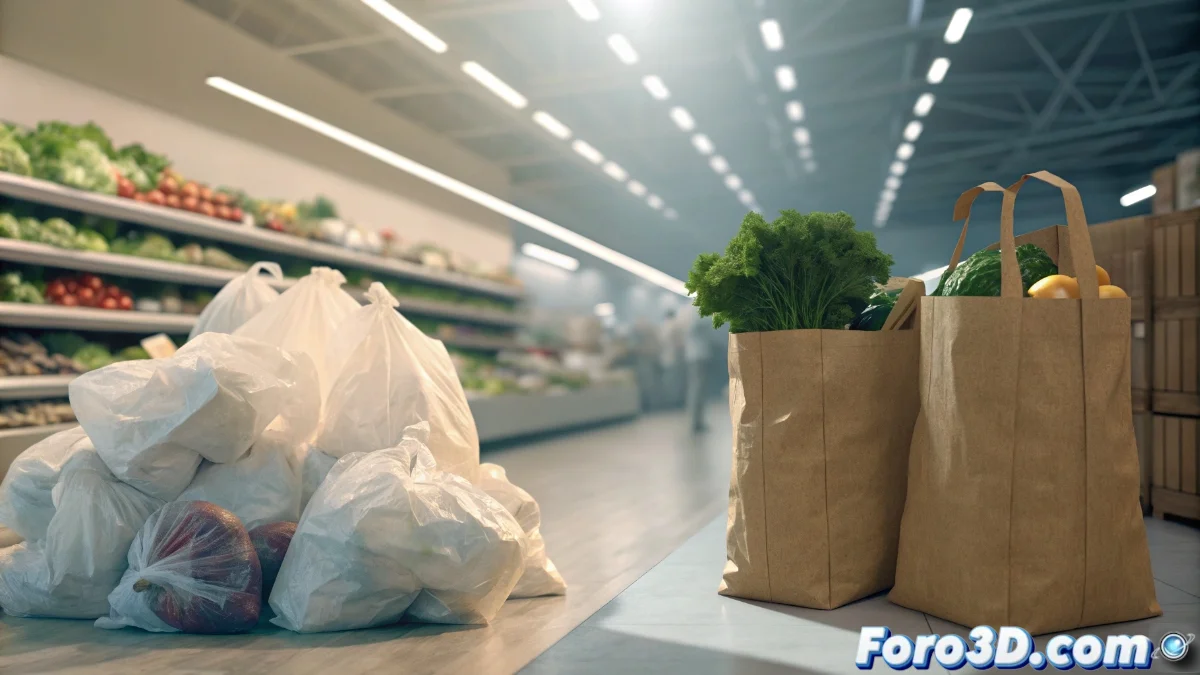
The ecological transition in supermarkets: plastic vs paper
Retail establishments are undergoing a significant transformation in their packaging systems, gradually shifting from traditional plastic bags to cellulose alternatives. This movement responds to a growing ecological sensitivity among consumers and legislators, although both materials present complex environmental implications that require thorough evaluation 🌍.
Life cycle assessment of plastic
Bags derived from hydrocarbons represent a multidimensional environmental challenge. Their manufacturing intensively consumes non-renewable resources, while their decomposition can extend over four centuries, generating microscopic particles that contaminate entire ecosystems.
Critical aspects of plastic:- Petroleum origin with high energy demand in production
- Extremely prolonged environmental persistence
- Low rates of effective recycling globally
The durability that makes plastic useful becomes its main ecological problem at the end of its life cycle
Complete analysis of cellulosic bags
Alternatives from vegetable fibers offer advantages in biodegradability but require evaluating their water and energy footprint. Their manufacturing process involves massive water consumption and potentially contaminating chemical treatments.
Characteristics of paper:- Origin from renewable sources with less environmental persistence
- High water and energy consumption during manufacturing
- Lower resistance that requires frequent replacement
Paradox of consumer behavior
It is contradictory to observe how the discussion between materials overshadows the fundamental human factor. While we debate plastic versus paper, many users accumulate both types without implementing consistent reuse practices, demonstrating that the solution transcends material choice 🛍️.