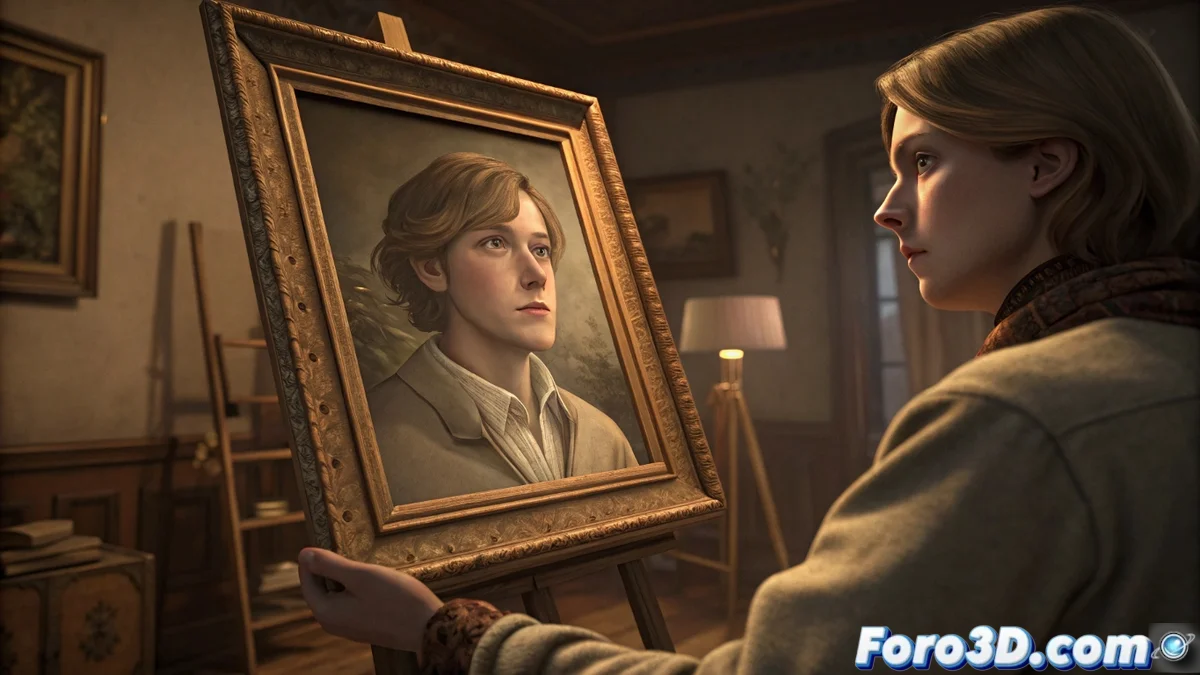
The Droste Effect and How to Create Recursive Illusions in Digital Art
The Droste effect produces an optical illusion where an image includes a reduced copy of itself, and that copy contains another, in a sequence that seems endless. This concept of visual recursivity took its name from a well-known Dutch cocoa brand that used it on its packaging. In the field of digital art and illustration, it can be achieved by precisely manipulating layers or using code that processes the image automatically. The result is a visual tunnel that challenges the perception of beginning and end. 🌀
The Conceptual Power and Impact on the Viewer
Using this effect without a defined purpose can disorient the viewer. The mind seeks a fixed reference point within the loop and, failing to find it, can generate a sense of vertigo. More than a mere technical trick, it is a powerful conceptual tool. Artists like M.C. Escher explored similar ideas to question the limits of perceived reality. In digital creativity, it serves to express notions of self-similarity, endless cycles, or the paradox of an object containing itself, allowing the construction of complex visual narratives.
Key Points of Visual Impact:- Controlled Disorientation: The absence of a clear visual anchor causes the brain to strive to follow the pattern.
- Narrative Tool: Allows representing abstract concepts like infinity or self-reference.
- Artistic Legacy: Connects with a tradition of illusory art that questions perception.
To create the sensation of infinity, you often only need the loop to repeat three or four times; our mind takes care of imagining the rest.
Planning and Executing the Effect Step by Step
Creating an illustration with this effect requires careful planning. The first step is to define the frame or area within the main image where the replica will be placed. Coherence in perspective, lighting, and graphic style across all iterations is fundamental for the illusion of continuity to work. In software like Photoshop, smart layers and clipping masks are commonly used. Although there are filters or scripts that can automate the process, manual control allows adjusting details and preventing the image from degrading too quickly in successive repetitions. The ultimate goal is for the loop to appear natural and deep.
Methods for Implementation:- Manual Approach: Use layers, transform, and mask to insert the image into itself. Offers maximum control.
- Automatic Approach: Employ algorithms or scripts that process the image to generate recursivity. Faster but may be less precise.
- Key to Realism: Maintain visual coherence in each iteration so the eye believes the illusion.
Conclusion: More Than a Technique, a Visual Experience
The Droste effect transcends mere technical exercise. It is a resource for exploring recursivity and perception in digital art. Whether applied manually or through code, its success lies in meticulous planning that prioritizes visual coherence. By mastering this effect, artists can produce works that not only surprise but also invite reflection on the nature of images and the limits of what we see. The final trick is usually to subtly deceive perception so it completes the idea of infinity. ✨