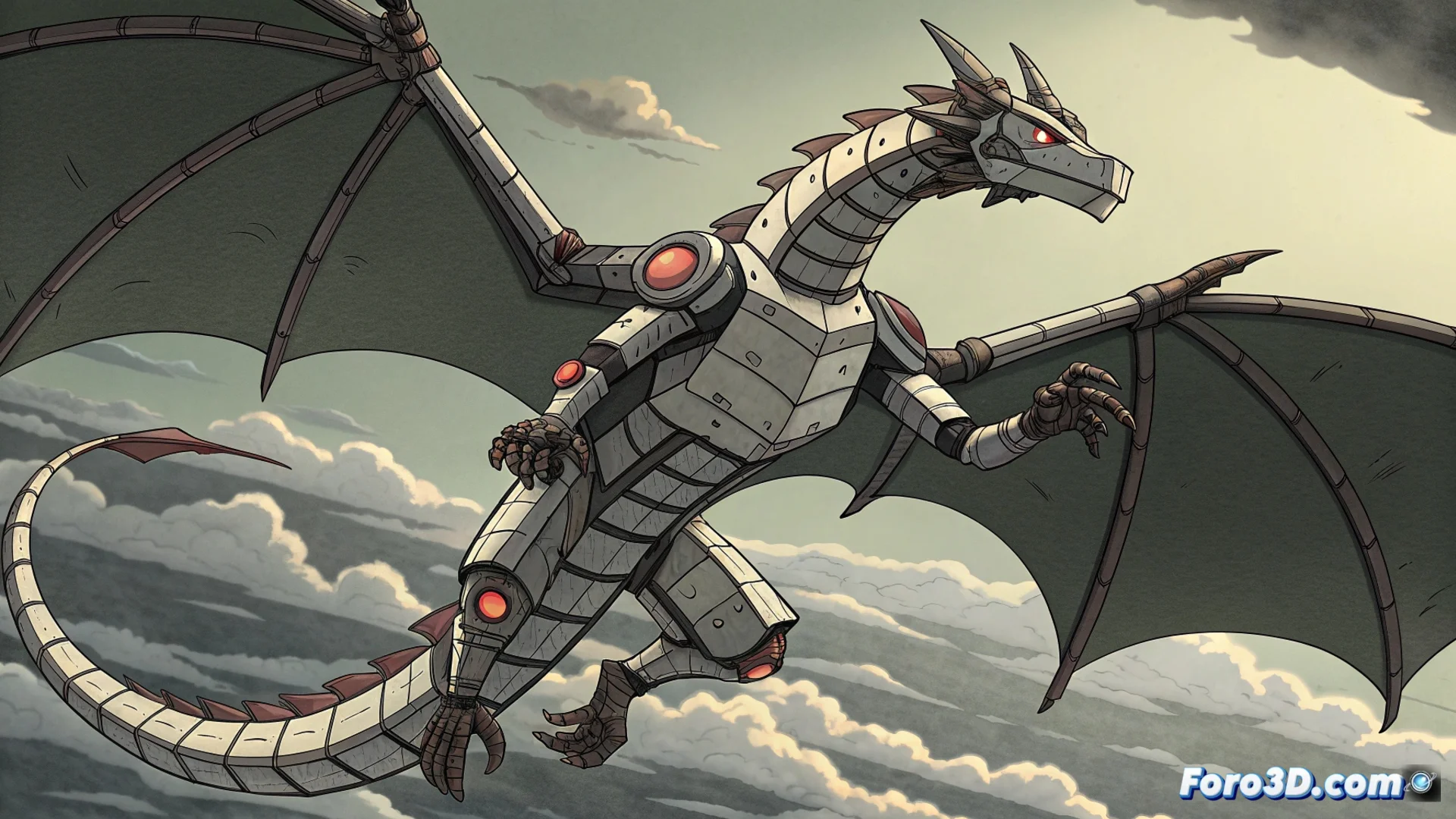
The JSK Lab's Dragon Robot Flies and Changes Shape
In the JSK Lab at the University of Tokyo, they have created a unique aerial system. Inspired by the figure of a dragon, this modular robot challenges traditional drone concepts by being able to alter its morphology while in the air. 🐉
An Articulated Body That Transforms in Flight
The essence of the Dragon robot lies in its architecture composed of multiple independent links. Each of these modules integrates its own pair of thrusters, giving it stable flight capability. However, its true potential unfolds when it begins to contort its elongated body. This ability allows it to dynamically adapt to different tasks and navigate complex environments.
Key features of its modular design:- Active joints: The links are joined by articulations that can adjust their angle during operation.
- Distributed control: A management system processes sensor data and calculates dynamics in real time to decide how to move each segment.
- Real-time reconfiguration: The robot can adopt specific shapes, such as becoming compact to slip through narrow gaps or wrapping around objects to manipulate them.
A robotic dragon that twists in the air could be the perfect excuse for someone to say they finally have a 'snake problem' instead of a 'butterfly problem' in their garage.
Exploring the Limits of Aerial Robotics
This project is not just an eye-catching prototype; it represents serious research in the field of reconfigurable aerial robotics. Its goal is to overcome the restrictions imposed by fixed-structure drones, radically expanding their versatility to interact with the environment.
Possible practical applications:- Inspection in confined spaces: Evaluate infrastructures in hard-to-reach places where conventional drones cannot fit.
- Aerial manipulation: Use its body to grasp or transport objects in unconventional shapes.
- Environmental adaptation: Modify its profile to avoid obstacles in real time, increasing its effectiveness in exploration missions.
A New Direction for Drones
The JSK Lab's Dragon robot demonstrates that the future of aerial vehicles does not necessarily lie in making them faster or smaller, but in endowing them with morphological intelligence. Its ability to redefine its own structure in mid-flight opens up a range of possibilities for industrial and research applications, marking a milestone in how we conceive machines flying and interacting with the physical world. ✨