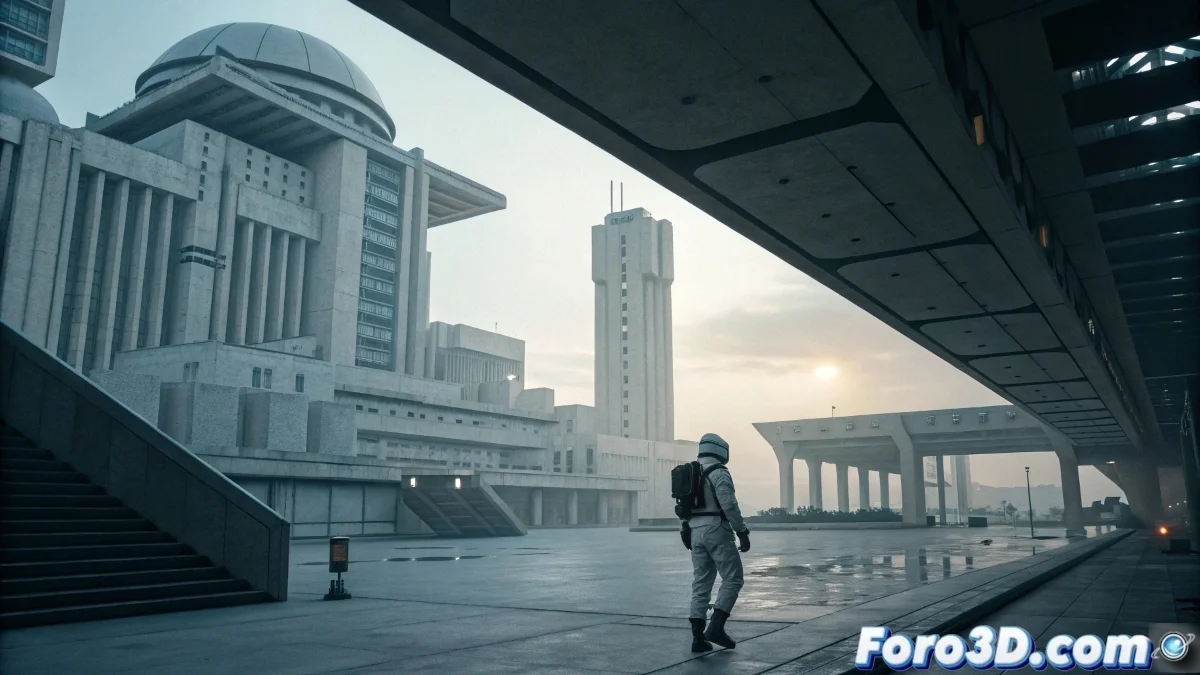
When the future is built pixel by pixel (but you shouldn't notice)
In The Assessment, LAVAlabs faced the opposite challenge to a typical blockbuster: no need to create lush worlds or alien creatures, but a dystopia so impeccable that it felt believable. The short film, starring Alicia Vikander and Mads Mikkelsen, needed visual effects that whispered rather than shouted. 🏢❄️
"Every window, every interface, every artificial beam of light was designed to feel like a perfect prison" - LAVAlabs Team
The architecture of control
The German studio used specific tools for each aspect of the futuristic world:
- Blender for modeling spaces with Swiss watch precision
- Houdini for microgravity simulations and controlled atmospheres
- Nuke to integrate holograms so subtle they seem a natural part of the environment
Interfaces that unsettle (deliberately)
The floating screens and holographic projectors were designed with four key principles:
- Smooth but mechanical movements
- Clean but cold typographies
- Desaturated colors that never distract
- Interactions that reflect the story's emotional control
As the VFX director commented: "We wanted viewers to feel like even the air was rendered". 💻
The art of the invisible
The true technical achievement was the perfect integration between:
- Subtle performances by the protagonists
- Ultra-precise digital environments
- Lighting that blurs the line between real and CG
The "simplest" shots were actually the most complex, requiring dozens of compositing layers to achieve that impeccable augmented reality look.
When less is more (and more difficult)
This project demonstrates that the most effective visual effects are often the ones that go unnoticed. While other studios compete to create the biggest explosions, LAVAlabs won by making a shadow fall exactly at 37 degrees or a reflection on a white surface have the perfect shade of gray.
As one team artist aptly summarized: "In this project, a pixel out of place would have been as obvious as a clown in brain surgery". In the end, they made every digital element serve the narrative, proving that in the VFX world, sometimes perfection lies in what isn't seen. 🕶️