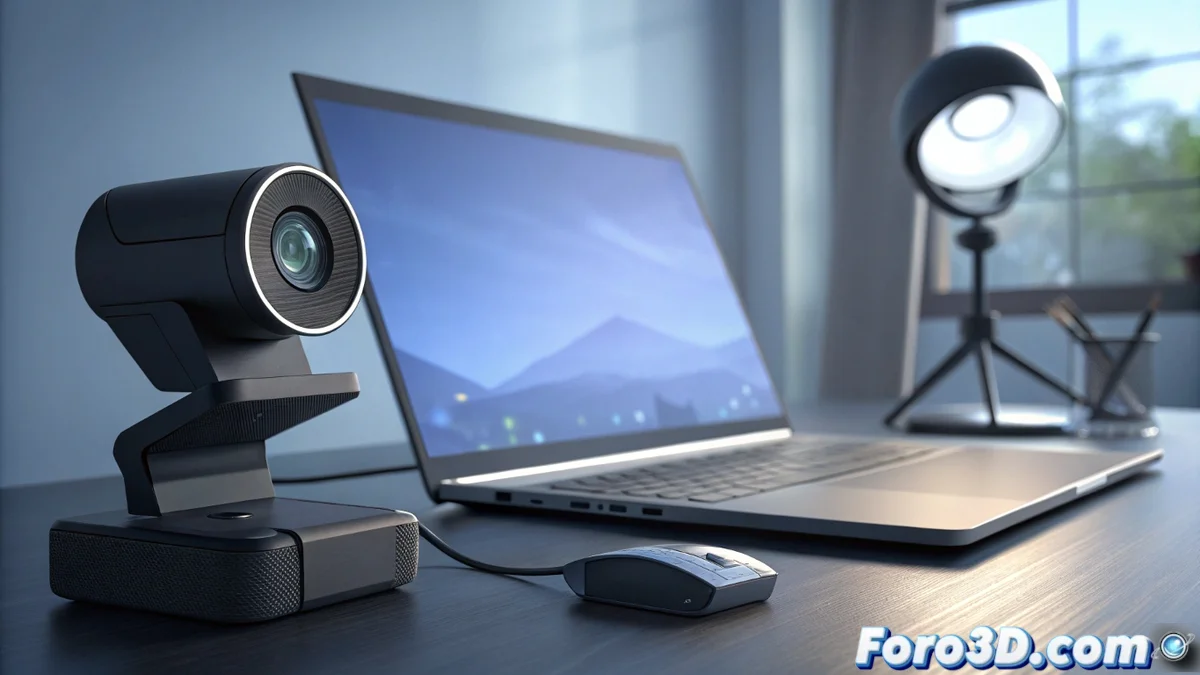
The Software Dilemma in High-End Webcams
Investing in a high-end webcam means seeking lasting quality. Its lens and sensor are designed to capture video that remains relevant for several years. However, its true potential lies not only in the hardware, but in the proprietary software that manages it. When this stops receiving support, the physical device becomes an empty shell of its original capabilities. 🎥
The Uneven Lifecycle Between Hardware and Software
The core of the problem is the temporal disparity. While the camera body remains functional, the software support cycle usually ends much earlier. Operating system updates can break compatibility with drivers or the configuration application. The user then finds themselves with an expensive peripheral that the system only recognizes as a generic video device, without access to the specialized settings they paid a premium price for.
Consequences for the user:- Loss of features like facial tracking, precise digital zoom, or custom white balance profiles.
- The hardware is reduced to operating with basic and automatic settings, limiting its utility in professional or streaming environments.
- A high initial investment depreciates quickly, not due to physical failure, but due to digital abandonment.
It is a technological paradox: a physically intact object is disabled by something intangible like a software update.
The Manufacturers' Commercial Strategy
For brands like Logitech or Razer, allocating resources to develop drivers for old models is not usually a priority. Their commercial focus is on promoting and selling new generations of products. This dynamic leaves owners of perfectly operable hardware in a situation of abandonment, completely dependent on the company's willingness to maintain support.
Common scenarios faced by the consumer:- The official application stops working or does not install on the new operating system.
- The drivers are not digitally signed for the new version of Windows, causing errors.
- The user community sometimes generates unofficial solutions or patches, but these options are scarce and not guaranteed.
Looking Toward the Future of Durable Hardware
This dilemma raises a crucial question about the true ownership of the device. You buy the hardware, but you rent the software that gives it life. To protect users' investments, a shift toward open standards or a commitment from manufacturers to longer and more transparent support cycles would be needed. In the meantime, the camera remains ready on the monitor, but its digital "brain" has aged prematurely and artificially.