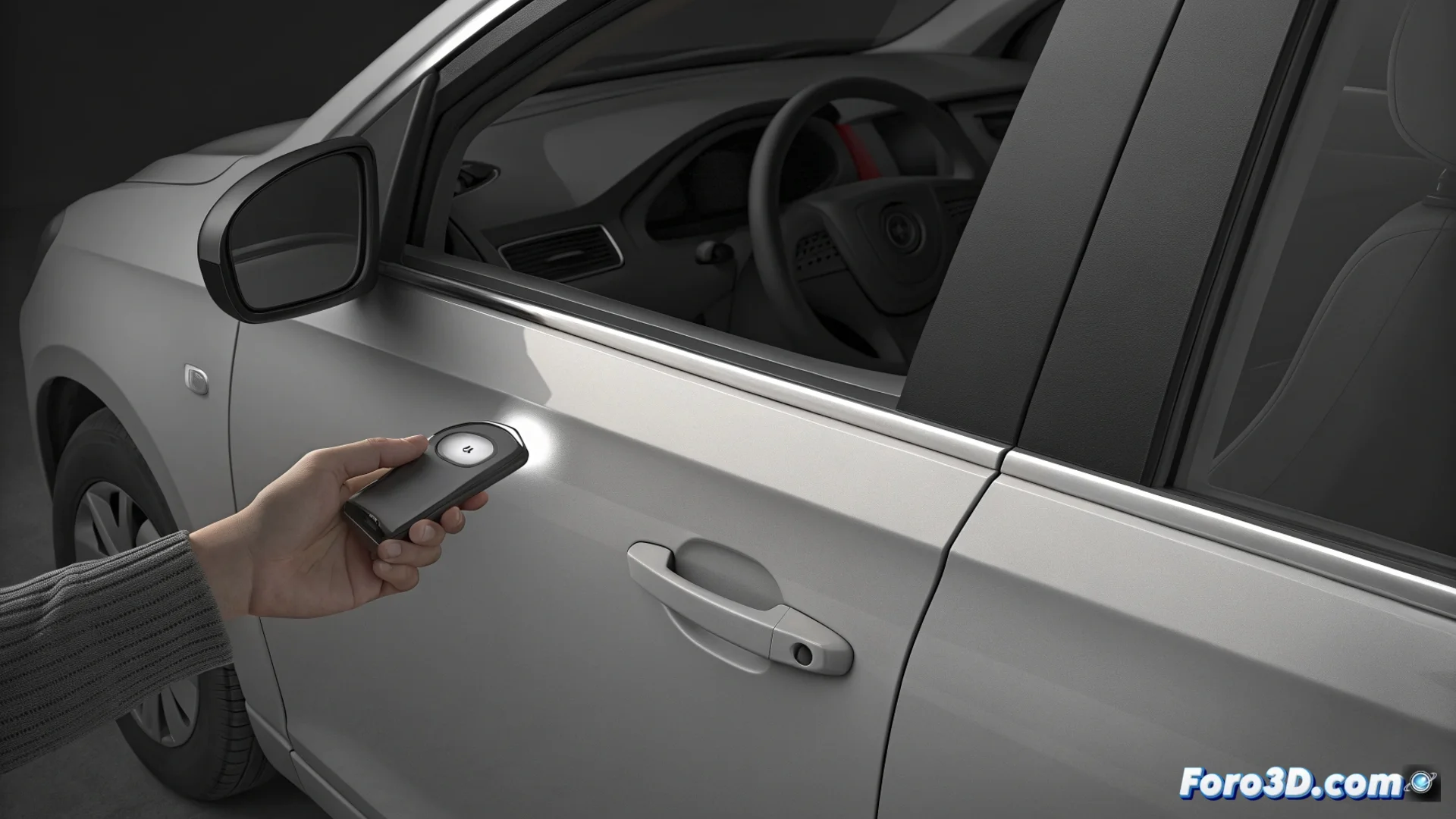
The Dilemma of Sealed Batteries in Car Alarm Sensors
Numerous vehicle alarm systems integrate wireless sensors in doors or to detect movement. These compact devices run on button batteries, typically the CR2032 model, which manufacturers permanently seal inside the housing. The goal is to protect the sensor from water, dust, and moisture, but this solution creates a serious inconvenience for long-term system maintenance. The user cannot replace the battery when it loses its charge, something that inevitably happens after a few years of using the device. 🔋
The Silent Risk to Security
The central problem is the lack of an effective method to alert the owner. When the internal battery runs out, the sensor starts failing to communicate with the main alarm unit. This causes the system to stop reliably protecting the car, without activating when a door is opened or movement is detected inside. Many manufacturers do not implement a protocol to warn of this failure. Instead of emitting a distinctive beep or displaying an error code on the remote, the alarm simply behaves erratically. The car owner may think their vehicle is secure when, in reality, the protection is compromised. 🚨
Consequences of the sealed design:- Impossibility of replacing the power source by the user.
- The sensor becomes a disposable component once the battery runs out.
- Creation of an unpredictable and silent security blind spot.
A device created to protect your car can become its Achilles' heel by overprotecting it from external elements, a problem that a well-designed O-ring could avoid.
Solutions and Methods to Detect the Problem
There are alternatives and ways to identify when a sensor fails. Some more advanced systems monitor the battery voltage in the sensors and notify the user via an LED on the remote or a sequence of flashing lights. Another viable option is sensors with replaceable batteries, which maintain watertightness through an O-ring, allowing the user to change the battery. To diagnose a sensor with low power, a RF frequency checker can be used or the alarm can be manually triggered while manipulating the sensor. If the system does not respond, it is very likely that the cause is poor communication due to lack of power in the sensor. 🛠️
Options for users and technicians:- Look for alarms with battery status monitoring.
- Opt for sensors that allow easy battery replacement.
- Use diagnostic tools like radiofrequency checkers to verify the signal.
Final Reflection on Design
The paradox is evident: a component designed to increase security ends up reducing it due to a design decision that prioritizes absolute watertightness over maintainability. The result is an alarm system that can fail without warning, leaving the vehicle vulnerable. The choice between a sealed sensor or one with a replaceable battery has a direct impact on long-term reliability and the total cost of owning the system. Evaluating these features before purchasing is crucial to avoid unpleasant surprises years later. ⚖️