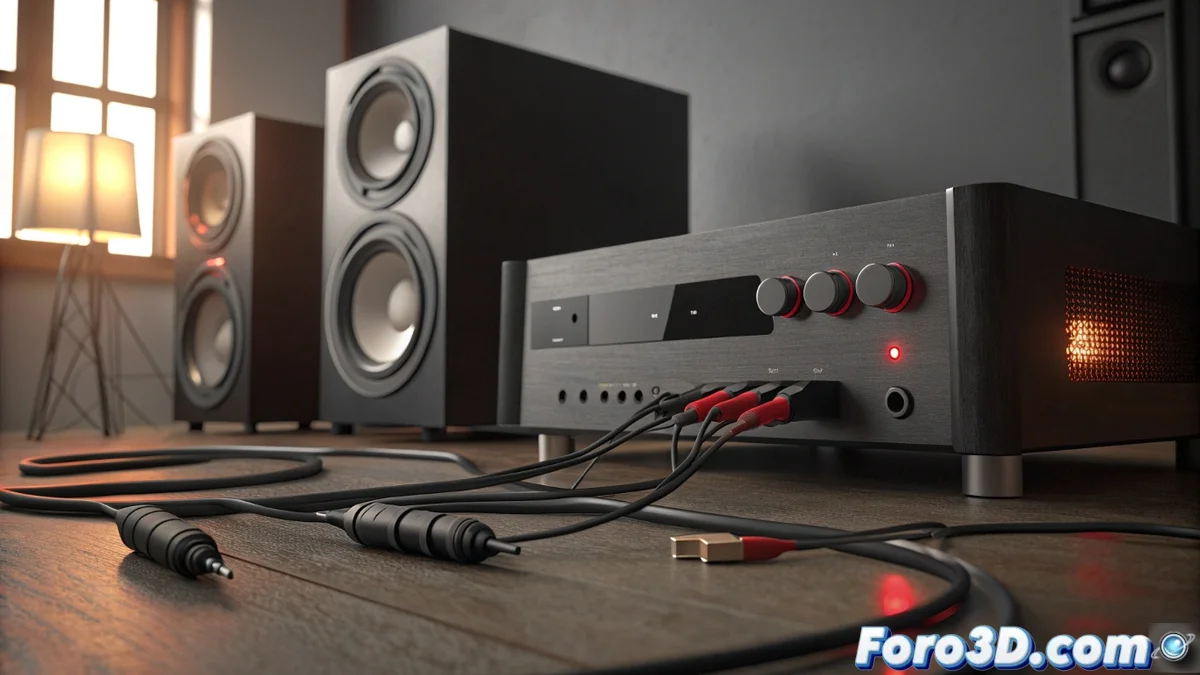
The Dilemma of Home Cinema Systems with Proprietary Connectors
The promise of a Home Cinema in a Box is tempting: simplicity of installation and an immersive sound experience from the very first moment, all in a closed package. This concept integrates the amplifier or receiver with a set of speakers supposedly perfectly calibrated. However, behind this facade of convenience hides a crucial limitation in the long term, rooted in the use of exclusive design connectors and cables that break with the universal standards of the industry. 🎬
The Trap of Exclusive Compatibility
The core of the problem lies in the closed architecture of these systems. Instead of using pressure terminals, banana connectors, or simple bare wire, they use unique plugs, terminals, or cable assemblies, specifically designed for that particular model or brand. This design decision, which initially seeks a clean and "foolproof" assembly, becomes its greatest weakness over time. The exclusive interconnection creates an ecosystem from which it is impossible to escape without sacrificing functional components.
Direct consequences of non-standard connectors:- Waste of healthy components: If the brain of the system (the amplifier/receiver) fails after the warranty, the speakers, which may be in perfect condition, become electronic scrap. There is no practical way to connect them to new equipment.
- Risky modifications: The only alternative usually involves cutting cables, splicing connectors, or performing soldering, operations that compromise safety and void any remaining warranty, in addition to potentially degrading sound quality.
- Planned obsolescence: The initial investment in a complete package is nullified by the failure of a single piece, forcing the user to a total replacement instead of a repair or partial upgrade.
A system with proprietary connectors is like a luxury prison for your audio: everything works perfectly until the door (the amplifier) gets stuck and you can't get in or out with anything standard.
The Modular Philosophy: Freedom and Future
Facing this dead end, the smart and sustainable alternative is to build a modular home cinema based on independent components. This approach is based on the use of universal connections, such as terminals for bare wire or the popular banana connectors. A standard AV receiver, combined with any set of speakers that use conventional wiring, establishes a system where each part is interchangeable and upgradable independently.
Key advantages of opting for universal standards:- Investment protection: A failure in the receiver does not condemn the speakers, and vice versa. You can replace or upgrade a component without affecting the rest of the system.
- Total flexibility: You have the freedom to mix brands, models from different eras, or integrate second-hand equipment with new acquisitions, creating a totally personalized system.
- Path of progressive improvement: It allows evolving the system in parts, for example, starting with a basic receiver and modest speakers, then gradually improving the front speakers, adding a subwoofer, or upgrading the receiver to one with the latest codecs.
Conclusion: Better Standard Than Sorry
While an elegant all-in-one system with its unique and perfect wiring may end up relegated to a corner as a technological fossil after the death of its amplifier, a system built with standard components demonstrates much superior longevity and resilience. That apparent initial "complexity" of choosing separate pieces and handling conventional cables translates, in reality, into absolute freedom to repair, upgrade, and adapt your home cinema over the years, ensuring that your investment in sound lasts much longer beyond the first technical failure. 🎧🔧