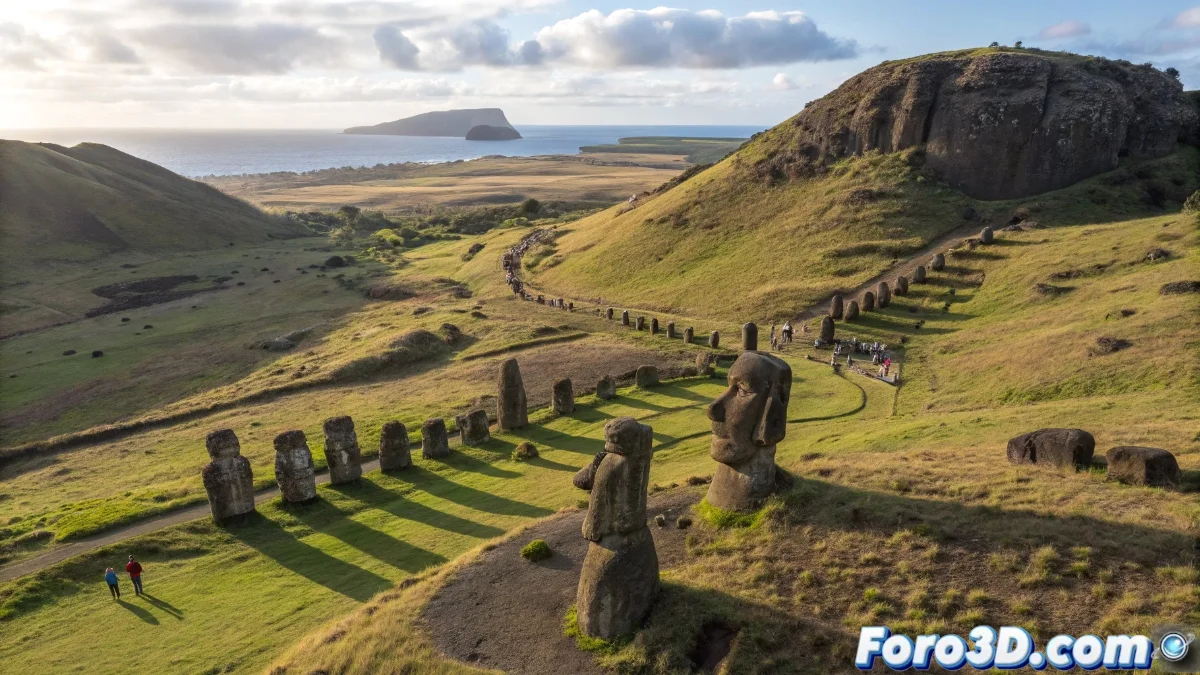
The digital revolution in the study of Rapa Nui's moai
Three-dimensional documentation techniques are radically transforming our perception of the creation and mobilization of the iconic moai. 🔍
Advanced capture methodologies
The research combines specialized drone flights and high-precision laser scanners to obtain comprehensive records of Rapanui heritage. This technological synergy allows documenting both complete statues and those that remain attached to the original rock.
Documentation process:- Aerial photogrammetry using drones with ultra-high resolution cameras
- Terrestrial laser scanning that records millions of measurement points
- Data fusion to create textured 3D models with millimeter precision
The technology we use for selfies and video games is unveiling secrets that the statues have guarded for centuries
Revealing discoveries
The three-dimensional digital models have allowed identifying more than four hundred statues in different stages of elaboration, many with anatomical details previously invisible to the human eye. Computerized analysis reveals much more sophisticated work patterns than imagined.
Main findings:- Hidden petroglyphs on the backs of already erected moai
- Carving sequences reconstructed through tool marks
- Complex spatial organization in production areas
Impact on archaeological understanding
This comprehensive digital documentation provides fundamental insights into the ancestral work techniques and the logistics employed by the ancient Rapanui. The models allow studying abandoned tools and manufacturing marks with unprecedented detail. 📊