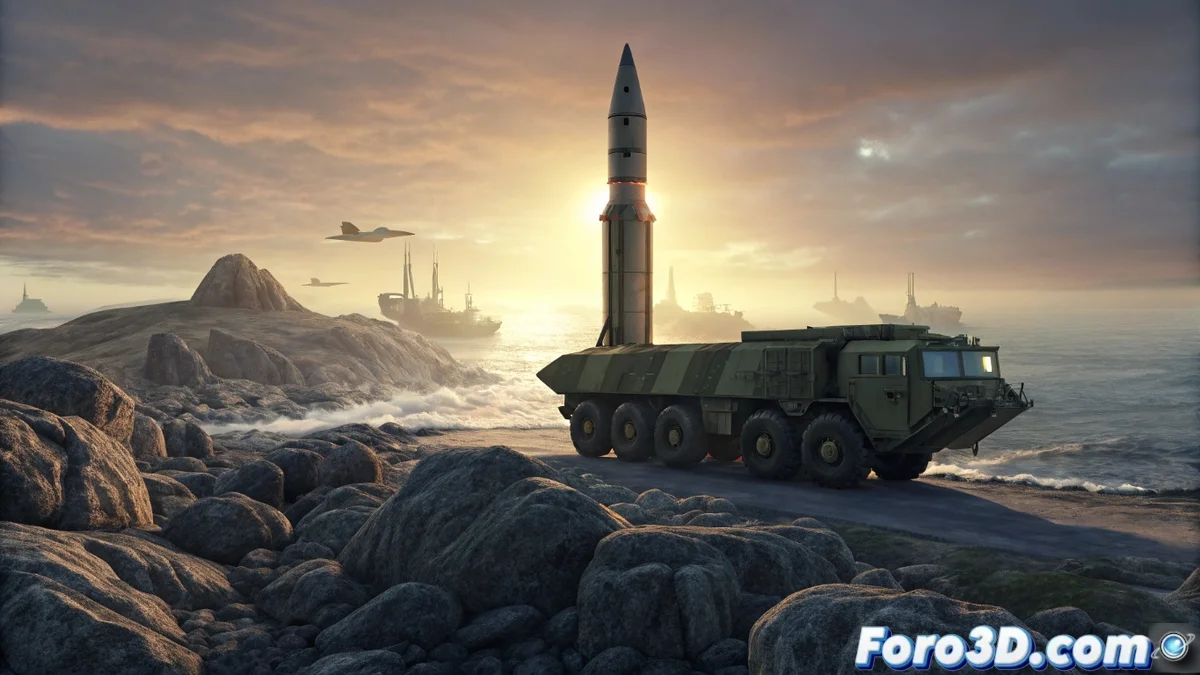
The DF-21D: the ballistic missile that redefines naval warfare
In the landscape of contemporary defense, the DF-21D emerges as a disruptive innovation. Designed by China, this weapons system is specifically configured to threaten the integrity of carrier-centered battle groups, altering traditional maritime power balances. Its mere existence poses an unprecedented technological and tactical challenge 🚀.
System architecture and capabilities
The power of the DF-21D lies in its combination of mobility and lethal precision. It is deployed from a transporter erector launcher vehicle (TEL), granting it high survivability against preemptive attacks. Its most fearsome feature is the maneuverable terminal guidance, which allows it to correct its trajectory in the final flight phase to strike a moving naval target, even while reentering the atmosphere at hypersonic speeds.
Key technical features:- Dimensions: Approximately 10.7 meters in length and 1.4 meters in diameter, a giant with long-range capability.
- Warhead versatility: It can carry conventional high-explosive warheads or tactical nuclear warheads, expanding its threat spectrum.
- Strategic function: It acts as the central element of an area denial/anti-access (A2/AD) system, designed to deter or prevent enemy fleets from approaching.
The DF-21D symbolizes a paradigm shift: the ability to project power from land to control vast oceanic expanses.
Strategic impact and deterrence
The introduction of this missile has forced the world's major navies, especially those reliant on aircraft carriers, to deeply reevaluate their operational doctrines. The threat of a massive, precise attack from a distant, mobile land-based platform exponentially complicates fleet defense tasks.
Consequences for naval doctrine:- Tactical rethinking: Fleets must operate farther from the coast, reducing their effectiveness in power projection.
- Investment in countermeasures: Priority is given to developing terminal-layer anti-missile defense systems and advanced electronic warfare.
- New geometry of conflict: It expands China's defensive perimeter, creating a maritime "exclusion zone" where traditional naval superiority is neutralized.
Final reflection on the balance of power
The DF-21D is more than a weapon; it is a strategic statement. It embodies the principle that, in modern naval warfare, sometimes the best defense is the ability to deny the adversary use of the sea from a safe distance. Its presence forces a grim calculation: is it worth risking an asset as valuable as an aircraft carrier to the possibility of an unannounced "visit" by a hypersonic projectile? This missile redefines the rules of the game, demonstrating that technological innovation can redistribute the cards of global power 🌊⚖️.