When Geology Meets Mythology
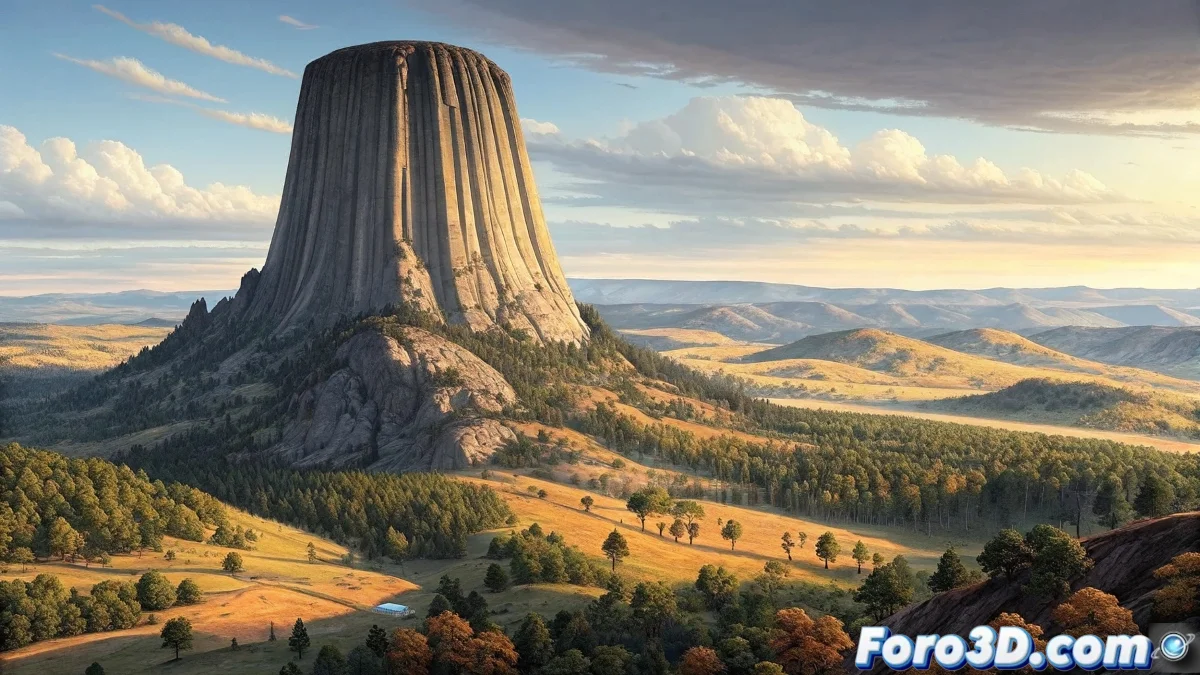
The Devil's Tower rises as one of the most enigmatic and visually striking geological formations in North America. This national monument in Wyoming, known as Mato Tipila by Native American tribes, combines a fascinating scientific origin with ancestral legends that have endured for centuries. The structure, composed of nearly perfectly hexagonal basaltic columns rising 386 meters above the surrounding terrain, represents both a challenge for climbers and a sacred place for indigenous peoples.
Geologically, the tower is the eroded remnant of what was once an underground magmatic chamber. Approximately 50 million years ago, molten magma forced its way toward the surface but cooled before erupting, forming these characteristic columns as it contracted during the cooling process. What makes this formation unique is the extraordinary regularity of its columns and the way it rises solitary in the landscape, creating an instantly recognizable silhouette.
Highlights of the Formation
- Basaltic columns with up to six sides of remarkable uniformity
- Imposing height dominating the Black Hills landscape
- Rare formation considered the first national monument in the U.S.
- Cultural significance for multiple Native American tribes
Legends and Cultural Significance
For the Lakota, Kiowa, and Cheyenne tribes, the Devil's Tower is a deeply sacred place. A common legend tells of seven sisters who were chased by a giant bear. When they prayed to the Great Spirit to be saved, the rock they were on began to rise toward the sky while the bear, frustrated, clawed at the sides creating the vertical marks. The sisters transformed into the stars of the Big Dipper, while the rock remained as a testament to the event.
Some formations not only defy gravity, but also explanation
This cultural significance has led many tribes to request that climbers not ascend during June, the month of important religious ceremonies. Respect for these traditions coexists with the recreational use of the monument, creating a delicate balance between cultural preservation and public access. The tower thus represents not only a natural wonder, but also a bridge between different worldviews.
Attractions for Different Visitors
- Technical climbers: challenging routes on high-quality columnar rock
- Geologists: unique case study in basaltic column formation
- Filmmakers and photographers: dramatic setting for visual productions
- Spiritual visitors: place of pilgrimage and reflection
The fame of the Devil's Tower was amplified globally with its appearance in Steven Spielberg's film Close Encounters of the Third Kind, where it served as the meeting point between humans and extraterrestrials. This cinematic connection added another layer of mystery to an already enigmatic place, attracting visitors fascinated by the paranormal in addition to those interested in its geology and cultural significance.
Those who have witnessed the tower at sunset, when long shadows accentuate its vertical striations, understand why this place has inspired both scientific explanations and spiritual legends alike 🏔️
When Geology Meets Procedural
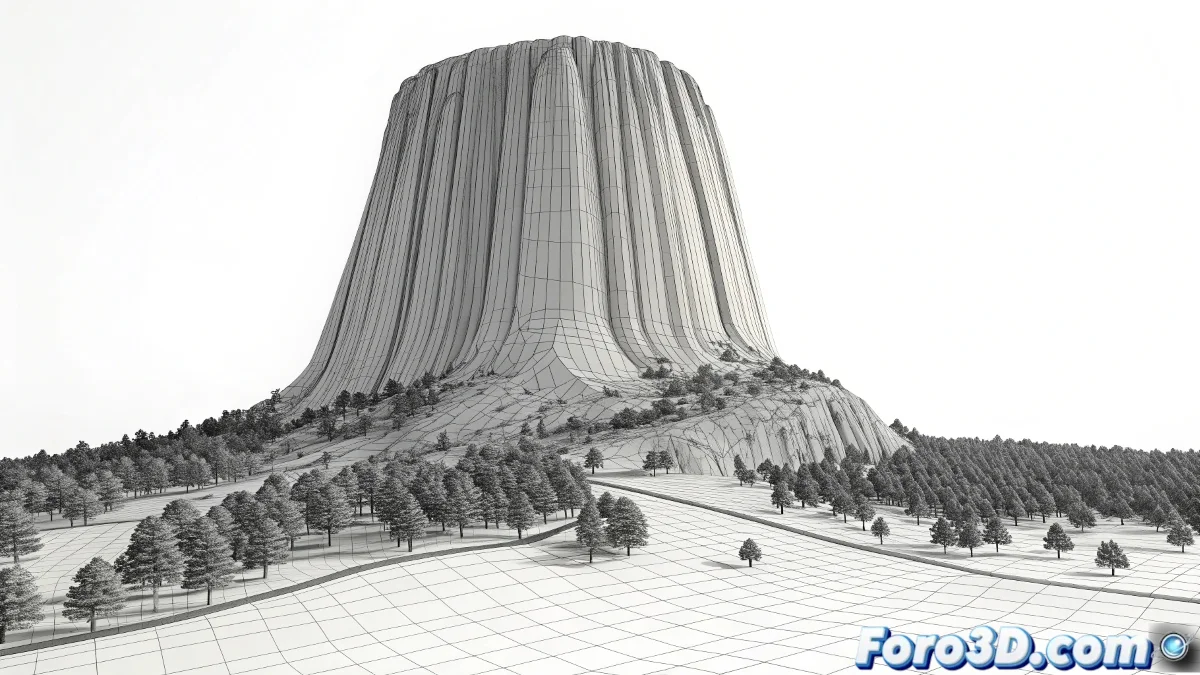
Recreating the Devil's Tower in Houdini represents the perfect challenge to demonstrate the power of procedural modeling applied to natural geological formations. This unique monument requires combining multiple techniques: from base terrain generation to the simulation of millennial erosion and the creation of those iconic hexagonal basaltic columns. The procedural approach not only ensures geological authenticity, but also allows adjusting every aspect of the formation to achieve that instantly recognizable silhouette.
The process begins by understanding the real geological genesis of the tower: an igneous intrusion that cooled slowly underground, was exposed by erosion, and then sculpted by elements over millions of years. In Houdini, we will replicate this natural process through a strategic combination of heightfields, VDB techniques, and procedural modeling. The magic will be in how these elements combine to create not only the shape, but also the texture and monumental scale sensation.
Initial Base Terrain Setup
- Basic heightfield with mountainous noise for the surrounding terrain
- Circular mask to define the igneous intrusion zone
- Procedural elevation using radial ramps for the conical shape
- Strategic distortion for natural asymmetries and unique features
Creation of the Basaltic Columns
The hexagonal columns are the soul of the tower and require a particularly creative approach. We will use a combination of VDB from Polygons and Boolean operations to generate the columnar structure. Starting with a base cylinder, we will apply a Voronoi fracture pattern to create the hexagonal divisions, then extrude and scale to achieve those tall, thin columns characteristic of the real formation.
Nature is the best artist, we just learn its techniques
The trick is to slightly vary the size and orientation of the columns to avoid artificial repetitive patterns. Using attribute randomize and point jitter, we will introduce subtle variations that replicate how the magma cooled irregularly. The cracks between columns will be created through boolean subtraction, ensuring each column maintains its individuality while contributing to the cohesive whole.
Erosion and Weathering Process
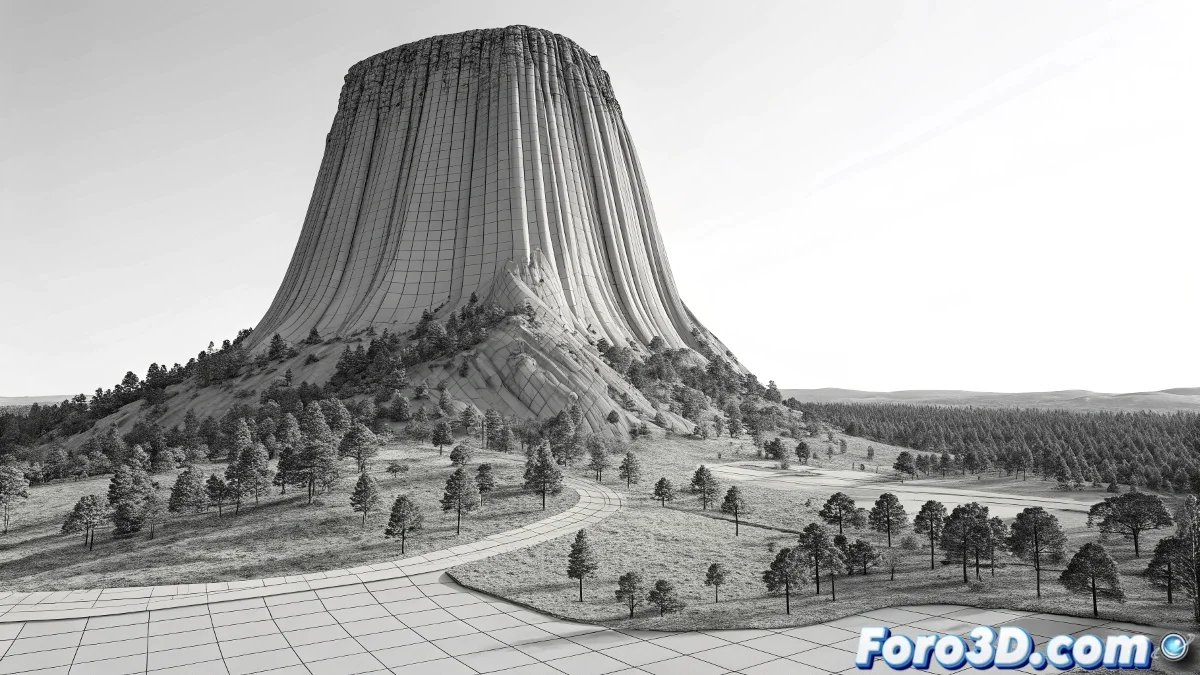
- Heightfield erosion for natural wear at the base and slopes
- Angle-based mask to protect vertical faces from erosion
- Scatter points for fallen rocks and debris at the base
- Procedural cracks on columns using noise patterns and curves
The texturing stage is where the tower comes visually to life. We will use procedural shading based on surface angles and height to replicate the real rock color variations. Eroded areas will show lighter tones, while vertical faces will maintain the characteristic dark basaltic color. The intelligent use of ambient occlusion and curvature maps will accentuate the cracks between columns and erosion details.
Final Composition and Render
- Dramatic lighting with low angles to accentuate height
- Volumetric atmosphere for depth and monumental scale
- Scattered vegetation at the base using tree generation tools
- Terrain integration ensuring natural transition between tower and landscape
The final render must capture not only the physical appearance of the tower, but also its imposing presence in the landscape. By playing with low camera angles and side lighting, we can accentuate its height and the vertical textures of the columns. The inclusion of scale elements like trees or optional human references will help communicate the colossal dimensions of this unique geological formation.
Those who master this workflow will not only have recreated a specific monument, but will have acquired the techniques to generate any natural geological formation procedurally and convincingly 🗻