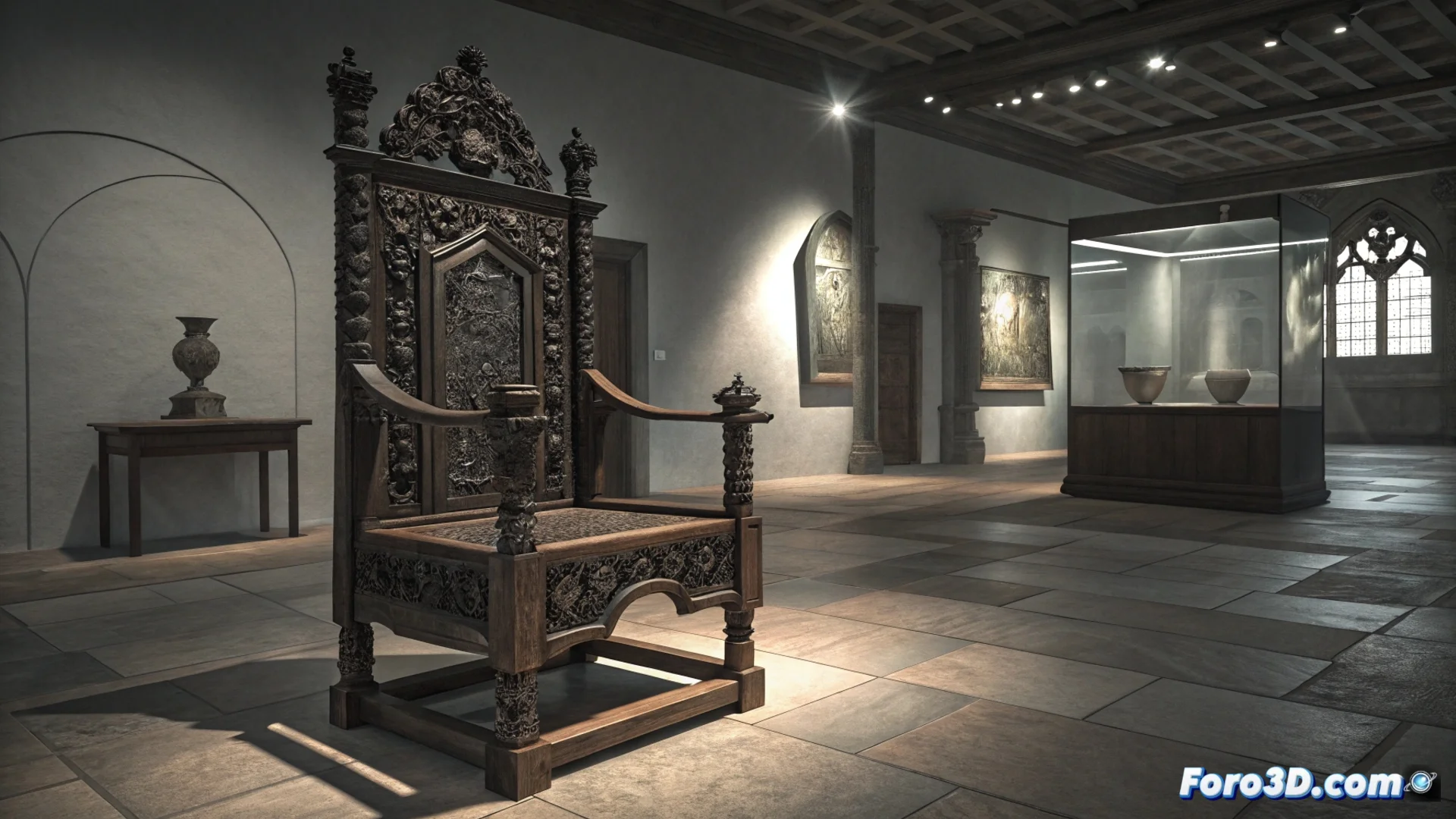
The Devil's Chair is on Display at the Valladolid Museum
Among the historical pieces at the Valladolid Museum stands out a 16th-century wooden chair that carries an unsettling reputation. Popular legend points to it as a cursed object, used by its former owner to communicate with dark forces. This narrative has led the institution to protect it behind glass and prohibit any physical contact. 👹
Origin of the Necromancer Doctor Legend
The story places its first owner as a 16th-century doctor who, in addition to practicing medicine, delved into necromancy practices. According to accounts, this man used the chair as a focal point for his demonic invocations, seeking knowledge that transcended the permitted. The furniture's association with these secret rituals is the core of its sinister fame.
Key details about the chair:- Dating: It was made in the 16th century, during the Spanish Renaissance.
- Legendary use: It served as a portal or medium to contact underworld entities.
- Owner: A local doctor who studied dark arts and alchemy.
Tradition warns that anyone who sits in this chair will suffer a sudden and inexplicable death.
The Curse and Its Effect on Current Museography
The warning of a sudden death for the bold one who sits has transformed the object into a focus of morbid fascination. The museum catalogs it as a historical piece but acknowledges the cultural weight of the narrative surrounding it. The express prohibition on approaching or touching the furniture goes beyond preventive conservation, reflecting tacit respect for the legend.
Display and precaution measures:- Display: It is permanently shown behind a security case.
- Regulations: There is a strict prohibition for visitors to interact with the piece.
- Institutional approach: Its historical context is presented alongside the popular tale, without validating the curse.
The Enduring Power of a Story
Although no scientific method can verify a supernatural curse, it is notable to observe how a simple piece of furniture inspires more fear and caution than other relics. The Devil's Chair demonstrates that, sometimes, the most potent spell lies in the ability of a powerful narrative to captivate the collective imagination across centuries. Its true power is not in the wood, but in the story it inhabits. 🔮