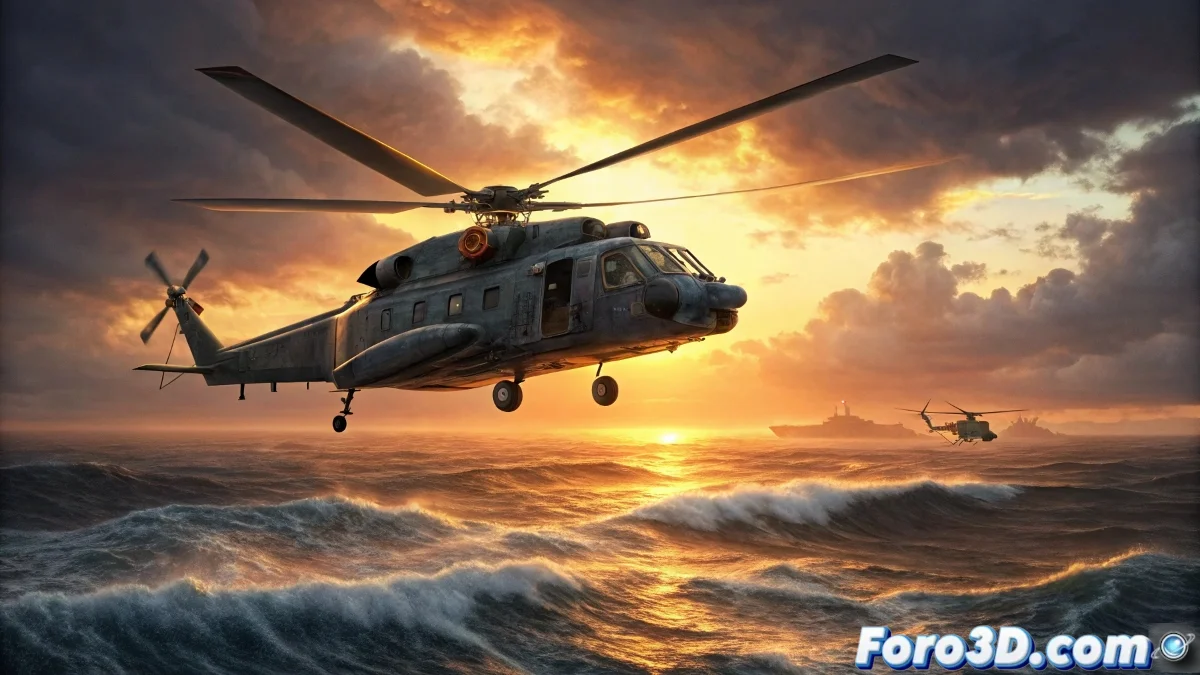
The Development of the Z-20J and Its Graphic Creation in Photoshop
The Z-20J emerges as China's strategic response to the capabilities of the Sikorsky SH-60 Seahawk, developed as a modern naval helicopter to operate from destroyers and frigates. Its evolution reflects China's growing technological autonomy in defense 🚁.
Historical Context and Operational Evolution
The program accelerated after defining the naval operational requirements, incorporating improvements such as a reinforced landing gear, anti-corrosion protection, and anti-submarine warfare systems. The first units deployed on aircraft carriers around 2021 marked a milestone in the modernization of Chinese naval aviation.
Main Technical Characteristics:- Fuselage optimized for maritime operations with a folding tail rotor
- Integrated radar, sonar, and electronic countermeasure systems
- Multi-role capabilities: anti-submarine, rescue, and tactical transport
The Z-20J demonstrates that, in naval aviation, surpassing the competitor involves creating familiar versions but with a manual in Mandarin.
Strategic Impact and Naval Projection
This helicopter significantly expands China's projection capabilities, allowing for complex missions with greater efficiency than previous models. Culturally, it symbolizes technological self-sufficiency and alters the regional balance of power 🌊.
Key Aspects of the Legacy:- Reduction of external dependence on complex weapon systems
- Strengthening of Chinese naval air operations in international waters
- Direct technological competition with established naval powers
Graphic Creation Process in Photoshop
To digitally recreate the Z-20J, start with a 3840x2160 pixel document at 300 PPI in RGB mode and Photography workspace. Organize layers into groups: background, helicopter, effects, and adjustments, importing visual references for accuracy 🎨.
Digital Modeling Phases:- Silhouette with the pen tool, focusing on the fuselage and folding rotor
- Vector shapes for the cockpit, main rotor, and weapon systems
- Layer masks for window transparencies and custom brushes for complex details
Lighting, Materials, and Final Effects
Apply adjustment layers to simulate sunlight on metallic surfaces, using overlays with radial gradients. Use polished metal textures and cockpit lighting effects with soft light mode. For finishing touches, add sea spray particles and atmospheric blurs 🌟.
Rendering Steps:- Export in 16-bit PNG maintaining necessary transparencies
- Use of smart objects for adjustable elements and saving in PSD with intact layers
- Integration of environmental effects that reinforce the operational naval context
Conclusion: Fusion of Technology and Digital Art
The Z-20J not only represents an advance in naval capabilities but also an excellent subject for advanced technical illustration. Its recreation in Photoshop requires attention to aeronautical detail and mastery of graphic tools, reflecting the intersection between military innovation and artistic expression 💻.