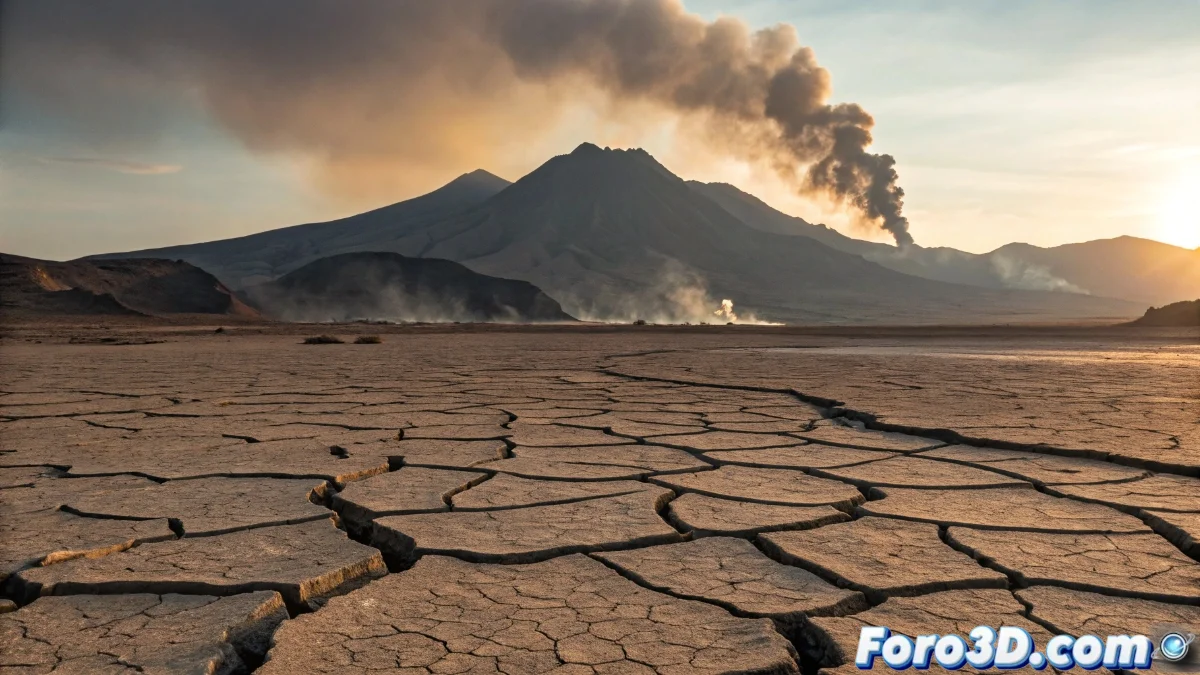
Drying of Lakes in Rift Zones and Their Geological Effects
The loss of water bodies in rift regions constitutes a phenomenon with far deeper consequences than it appears at first glance. These surface changes trigger a chain of geological events that modify the internal equilibrium of our planet in surprising ways 🌍.
Triggered Geological Mechanisms
When water bodies disappear, a natural stabilizing element that acted as a counterweight on tectonic structures is removed. This alteration causes an isostatic readjustment in the Earth's crust, releasing tensions accumulated over centuries and generating conditions conducive to seismic activity.
Interconnected Processes:- Reduction of pressure on geological faults allowing greater mobility between tectonic plates
- Modification in load distribution that alters the subterranean equilibrium
- Release of accumulated stress generating earthquakes of various magnitudes
Nature shows us that by removing the weight of water, the Earth responds with energetic movements that reveal its internal dynamics
Effects on Volcanic Systems
The decrease in surface load is not limited to affecting tectonic faults, but also directly influences magma chambers underground. As the confining pressure decreases, magma finds less restrictive ascent routes to the surface.
Observed Manifestations:- Increased probability of volcanic eruptions in active systems
- Documented correlation between the disappearance of glacial lakes and increased eruptive activity
- Clear evidence in regions such as the Iceland Rift and East Africa
Planetary Interconnection
These phenomena demonstrate the close relationship between surface hydrological systems and deep geological processes. The planet's sensitivity to seemingly simple changes on its surface reveals how interconnected all elements of our dynamic world are 🌋.