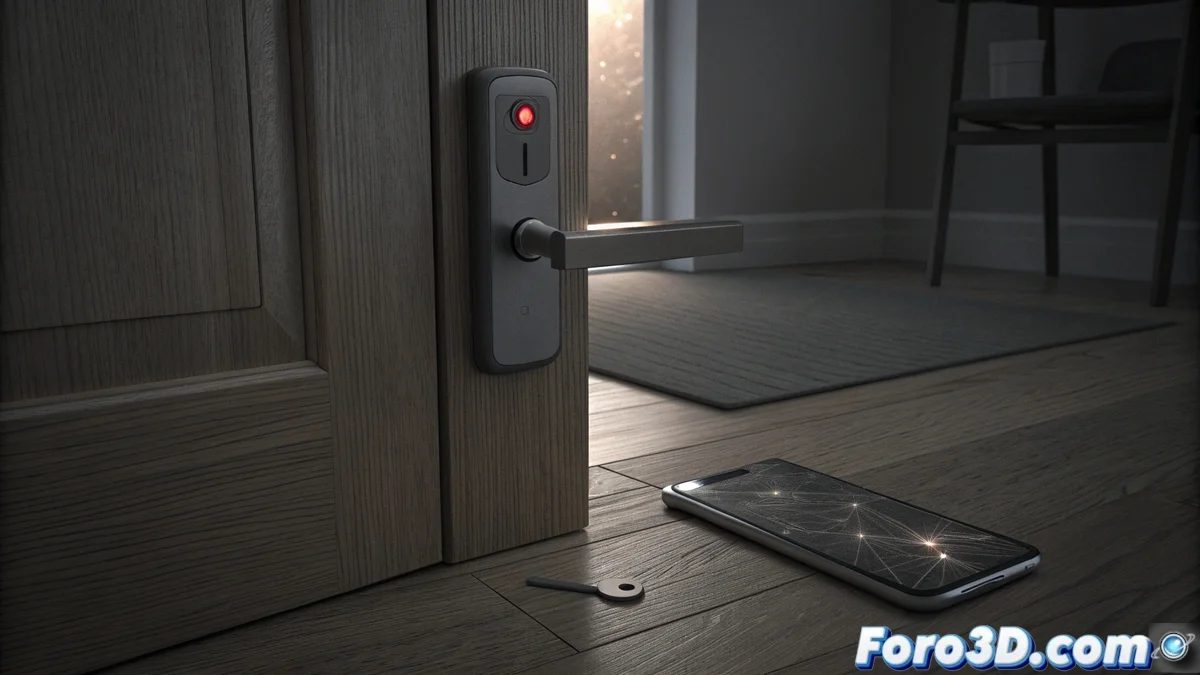
The Dependency on Smart Locks and How to Avoid It
A smart lock seems to offer freedom, but its true core is not the metal mechanism. To unlock with your phone, manage permissions, or check logs, it completely needs an app and an external cloud service. This approach ties its utility to the future of the company that manufactures it. 🔓
The Real Danger When the Manufacturer Disappears
The risk that the device becomes unusable is not theoretical. If the company shuts down, is sold, or decides to stop supporting a model, the cloud service can be turned off. In that situation, the lock loses what makes it smart. You can no longer add new fingerprints or PIN codes, and remote user management is blocked. In the most extreme scenario, the device can turn into a permanent electronic obstacle on your door.
Consequences of depending on an external server:- Total loss of remote administration functions and credential updates.
- Inability to integrate the lock with other home automation systems if the central platform disappears.
- Risk that the device becomes a useless lock, requiring a complete physical replacement.
Your master key could be a simple email announcing the service shutdown.
Taking Control: Local Protocols and Open Source
To escape this bondage, it's key to seek alternatives that do not depend on a foreign server. The solution lies in models that operate with local communication protocols, such as Zigbee or Z-Wave, connected to your own control center within the home. Systems that integrate with open source home automation platforms guarantee greater long-term autonomy.
Advantages of opting for a local and independent ecosystem:- The system's brain resides in your own home network, not on servers with an uncertain future.
- You maintain the ability to program, manage users, and automate, even without an internet connection.
- By being based on open standards, you avoid being trapped in a single manufacturer's closed ecosystem.
Prioritizing Independence Over Fleeting Convenience
When choosing a smart lock, evaluating its architecture is crucial. Prioritizing devices that use local protocols and rely on open platforms protects your investment and access. This way, you ensure that you control who enters your home, without a third party deciding when it stops working. 🏡