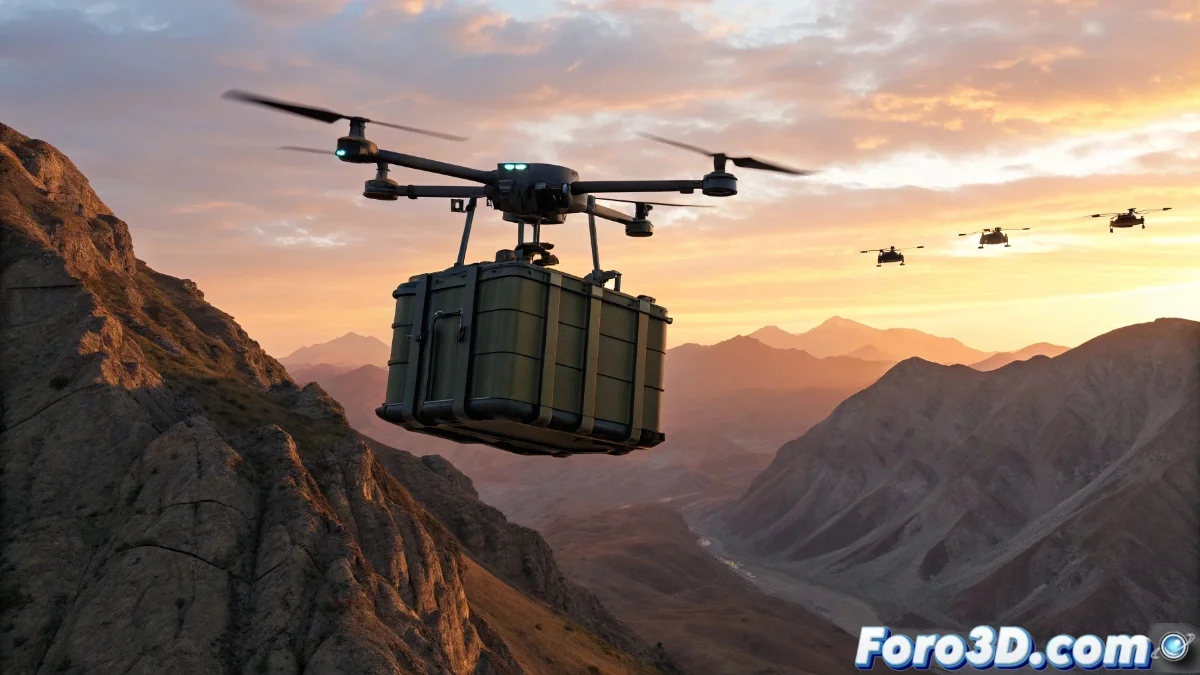
The DARPA Lift 2026 Challenge: Autonomous Drones for Heavy Cargo
The DARPA agency has scheduled one of the most ambitious technological challenges of the decade for the summer of 2026: the Lift Challenge, which seeks to develop unmanned aerial vehicles capable of transporting significant payloads in a completely autonomous manner. This project marks an inflection point in the evolution of drone technology, overcoming current barriers and establishing new paradigms for the future of aerial mobility 🚁.
Radical Transformation in Supply Chains
The operational autonomy of these systems will completely revolutionize logistical processes in both military and civilian spheres. In defense operations, they will enable immediate resupply to high-risk zones without exposing human personnel, while in the commercial sector they will optimize urban deliveries and deliveries in remote territories, drastically reducing transport times and associated costs.
Strategic Applications:- Military resupply in hostile environments without endangering human lives
- Distribution of medical and humanitarian supplies to hard-to-reach areas
- Integration with existing logistical systems to create more efficient distribution networks
Traditional delivery services are watching with anticipation as these flying machines could completely transform their operations, offering capabilities that require no breaks or salary increases.
Technological Innovation and Economic Recognition
This international competition will exponentially accelerate advances in aeronautical design, energy efficiency, and autonomous control systems. Participating teams will face complex technical challenges related to flight stability with heavy loads, navigation in variable conditions, and optimization of energy consumption.
Priority Development Areas:- Navigation algorithms to operate in dynamic and unpredictable environments
- Energy management systems that maximize flight autonomy
- Stabilization solutions to maintain control with variable loads
Incentives and Future Prospects
DARPA has established a prize fund of 6.5 million dollars to be distributed among the most innovative solutions in various categories, thereby recognizing the technological advances that set new milestones in this emerging field. This initiative not only fosters healthy competition among developers but also lays the groundwork for the future standards of autonomous aerial mobility, preparing the ground for a new era in cargo transport that combines efficiency, safety, and total operational autonomy 🌟.