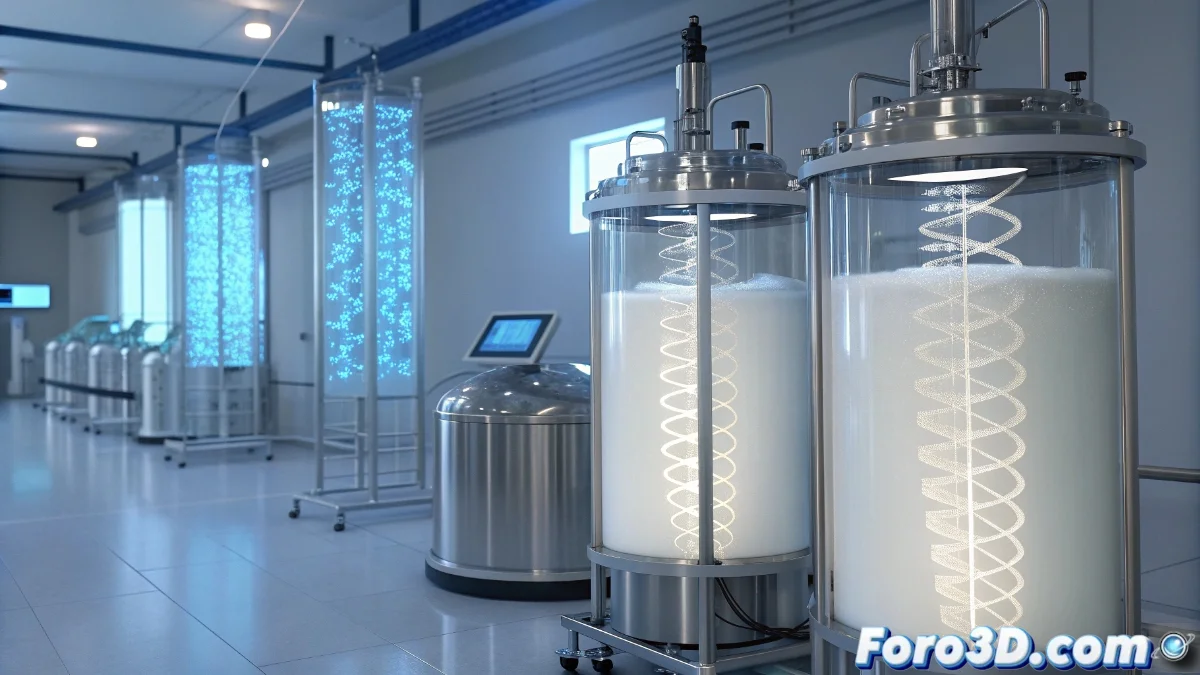
The Dairy Revolution: Precision Fermentation to Create Milk Without Cows
Precision fermentation is radically transforming the food industry by enabling the creation of authentic milk without relying on conventional livestock farming. This biotechnological technology uses specifically programmed microorganisms to synthesize the same proteins that characterize traditional milk, but through controlled laboratory processes that completely dispense with cows. The resulting product is molecularly identical to bovine milk, preserving its flavor, texture, and nutritional value, but obtained through more sustainable and ethical methods 🥛.
The Fascinating Mechanism of Precision Fermentation
This innovative procedure begins with the identification and isolation of bovine genes responsible for producing dairy proteins, which are then incorporated into microorganisms such as yeasts and fungi. These genetically modified organisms are grown in specialized bioreactors where they ferment plant-based nutrients, generating casein and whey indistinguishable from their natural counterparts. The methodology is similar to artisanal beer production, though in this case the result is pure dairy components that are combined with water, vitamins, minerals, and vegetable lipids to reconstitute milk in its entirety 🔬.
Fundamental Stages of the Process:- Identification and extraction of genetic sequences responsible for dairy proteins in bovines
- Insertion of these genes into host microorganisms such as yeasts
- Controlled fermentation in bioreactors with specific plant-based nutrients
While some purists debate whether this constitutes "authentic" milk, cows are probably experiencing their first voluntary workforce reduction in centuries.
Key Benefits and Practical Applications
Milk produced through precision fermentation offers considerable advantages, including a substantially reduced ecological footprint by requiring less land, water resources, and energy compared to traditional livestock farming. At the same time, it eliminates concerns related to animal welfare and provides total control over the final product composition, facilitating nutrient customization or the removal of allergenic components. This versatile technology is not limited to liquid milk production but also enables the creation of cheese, yogurt, and ice cream with identical sensory characteristics to conventional dairy products 🌱.
Main Applications and Advantages:- Reduction of environmental impact through lower use of land, water, and energy
- Elimination of ethical concerns regarding animal treatment
- Possibility of nutritional customization and allergen removal
The Future of Dairy Production
Precision fermentation represents a paradigm shift in dairy product manufacturing, combining biotechnological innovation with environmental and ethical responsibility. This methodology not only faithfully replicates the properties of traditional milk but also introduces substantial improvements in sustainability and quality control. As this technology becomes established, it radically reconfigures our relationship with food production, offering viable solutions to 21st-century food challenges while redefining traditional concepts of what we consider "real milk" 🚀.