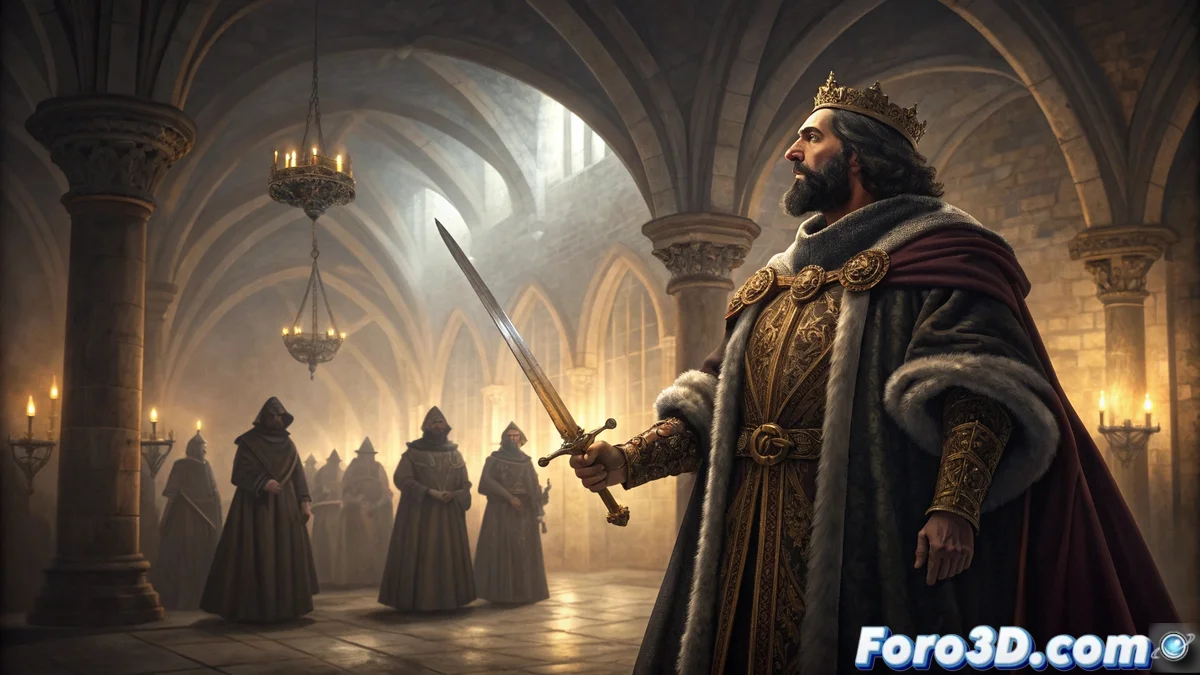
The Dagger and Power in the Court of Juan II According to Fernando Nadal
Fernando Nadal's historical narrative transports us to tumultuous 15th-century Castile, where unchecked ambitions and shifting loyalties define the fate of the characters. Through the figure of don Álvaro de Luna, the author unfolds a tapestry of power and betrayal that captures the essence of an era marked by political instability 🏰.
Historical Recreation and Complex Characters
The work stands out for its rigorous reconstruction of the period, presenting don Álvaro de Luna as a man of humble origins who defies social conventions to reach the highest spheres of influence. In this palatial setting, nobles and courtiers weave a web of political machinations where every gesture hides secret intentions and survival depends as much on wit as on weapons.
Highlighted Elements of the Setting:- Meticulous recreation of courtiers' spaces and clandestine meetings
- In-depth exploration of the psychology of historical characters
- Symbolic use of the dagger as a representation of danger and cunning
In the court, it seemed that carrying a sharp dagger was more valuable than an impressive lineage, especially when yesterday's allies could become tomorrow's executioners.
Narrative Development and Political Tensions
The plot advances with an engaging rhythm that explores how alliances are forged and broken under the constant threat of betrayal. Nadal builds a multifaceted narrative that balances personal dramas with conflicts of state, demonstrating how don Álvaro's decisions impact not only his individual fate but the stability of the entire Castilian kingdom.
Key Aspects of the Narrative Structure:- Plot twists that maintain tension until the outcome
- Progressive revelation of courtiers' machinations
- Reflection on the price of power in a society ruled by blood
Historical Legacy and Final Reflection
The novel transcends historical recreation to offer a profound meditation on the dynamics of power and the fragility of loyalties in contexts of high political tension. Through the rise and fall of don Álvaro de Luna, Nadal invites us to contemplate how individual decisions can alter the course of history and how personal cunning often surpasses inherited privileges in the struggle for influence 🗡️.