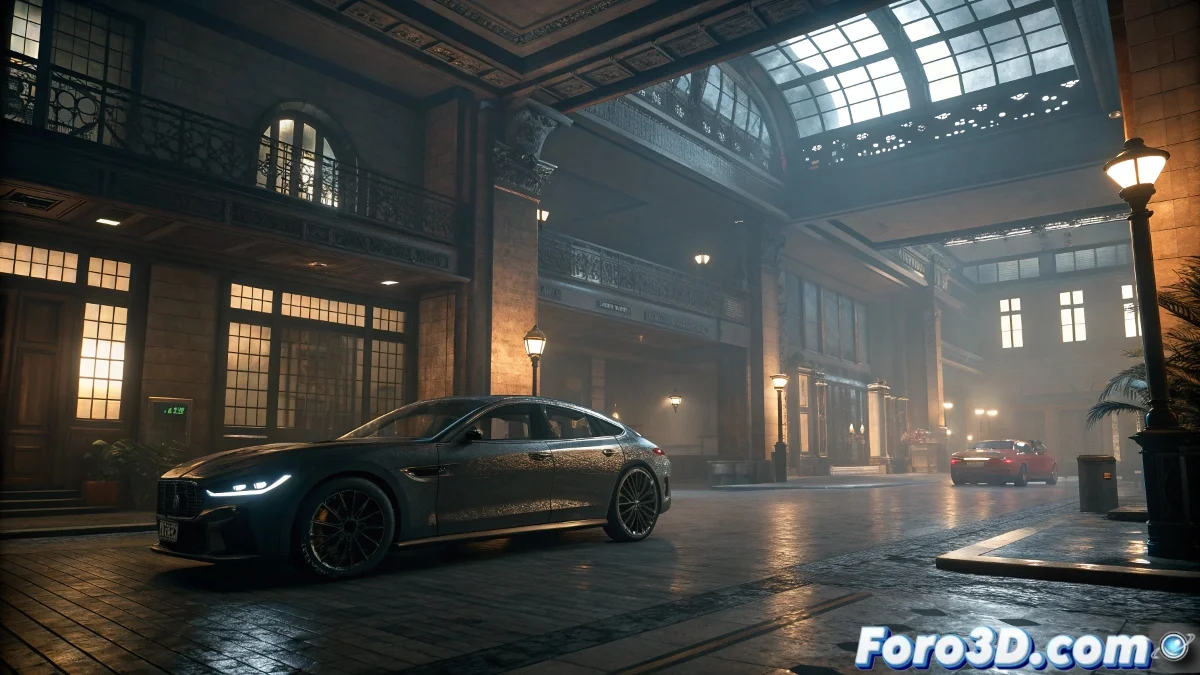
The Rebirth of a Rendering Classic
In the competitive world of rendering engines for 3ds Max, FinalRender holds a special place in history as one of the pioneers in bringing advanced global illumination capabilities to the mainstream public. Many artists fondly remember its innovative features and the quality it offered during its golden age. However, with the constant evolution of software and the emergence of new competitors, it's natural to wonder what has become of FinalRender and whether it remains a viable option for current versions of 3ds Max.
FinalRender's Journey Through Time
The story of FinalRender is a testament to the rapid evolution of rendering technology. From its days as a revolutionary rendering engine to its current state, it has undergone several transformations and development changes. What began as a powerful alternative to native renderers later faced fierce competition with the arrival of V-Ray, improved Mental Ray, and subsequently Corona and Arnold.
- FinalRender Stage-1 the legendary classic version
- Stage-2 with significant improvements
- Stage-3 and integration with CINEMA 4D
- Current status of development and support
Compatibility with Modern 3ds Max
The crucial question about FinalRender and its compatibility with recent versions of 3ds Max has a complex answer. While active development for 3ds Max has significantly decreased in recent years, the current situation depends on which specific version of FinalRender and 3ds Max we are considering.
Searching for FinalRender for current Max is like searching for a retired actor for a new movie: the talent is there but the context has changed
- Stage-2 compatible up to 3ds Max 2018 approximately
- Stage-3 with main focus on CINEMA 4D
- Limited support for recent Max versions
- Sporadic updates without a clear roadmap
Modern Alternatives in the Rendering Ecosystem
For artists seeking capabilities similar to those offered by FinalRender, the current market offers very robust options that have far surpassed what once seemed revolutionary. The good news is that competition has greatly benefited users with more accessible prices and technical capabilities unimaginable a decade ago.
At the end of the day, evaluating FinalRender for current projects is like considering a classic car for daily use: it has its charm and nostalgia, but it's probably not the most practical option for the demands of modern work 🎨. The important thing is to recognize its historical contribution while leveraging the current tools that have inherited and surpassed its legacy.