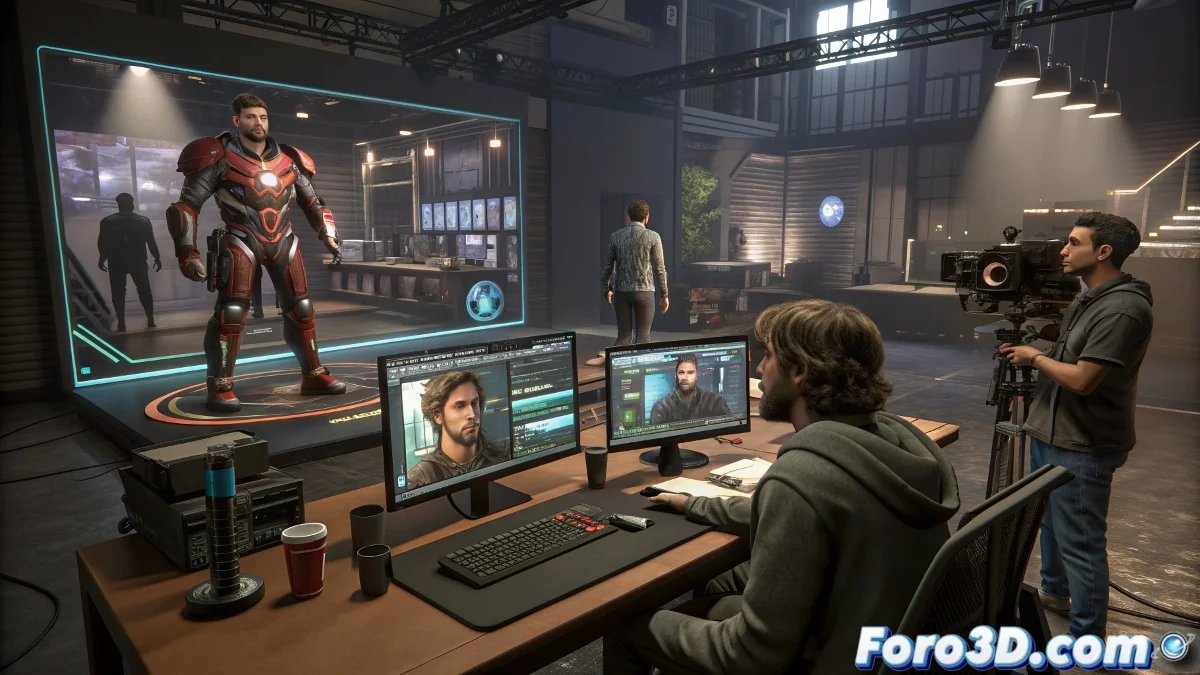
When the Film Set Becomes a Digital World
The entertainment industry is undergoing a fundamental transformation as virtual production moves from experimental technology to mainstream. This shift goes far beyond the mere adoption of new tools - it represents a complete restructuring of how we conceive, plan, and execute film and television projects. What began as a niche solution for some complex sequences is becoming the backbone of entire productions, redefining relationships between departments and blurring traditional lines between pre-production, filming, and post-production.
What makes this change particularly significant is how it is altering the very psychology of the creative process. Directors no longer need to imagine how a final environment will look - they can see and interact with it during filming. Actors can react to fantastic worlds that exist tangibly around them instead of imagining them in front of green screens. This visual immediacy is generating more authentic performances and more informed creative decisions, creating a virtuous cycle where technology serves rather than dominates the artistic process.
The Pillars of the Virtual Production Revolution
- LED volume screens displaying environments in real-time
- Game engines like Unreal Engine for instant rendering
- Camera tracking systems for correct perspective in real-time
- Seamless integration between practical and digital elements
The Reinvention of Traditional Roles
This cultural shift is radically redefining responsibilities and collaborations between departments. VFX artists, traditionally relegated to post-production, now work side by side with directors of photography during filming. Lighting technicians must understand how digital light interacts with the physical, while production designers need fluency in both real and virtual architecture. This disciplinary convergence is creating hybrid professionals whose value lies in their ability to bridge previously separate worlds.
Virtual production is not just a new tool, it's a new creative language
From an economic and logistical perspective, virtual production is proving to be surprisingly efficient despite its high initial costs. The ability to make final decisions on set rather than months later in post-production eliminates costly reshoots and revisions. The reuse of digital assets across multiple productions creates visual libraries that appreciate over time. And the reduction in location travel and physical set construction represents significant savings that, over time, justify the investment in technology.
Impact on the Entire Production Chain
- Pre-visualization that directly becomes the final product
- Drastic reduction of time between filming and final view
- Greater creative autonomy for directors and designers
- New opportunities for studios in non-traditional locations
The cultural embrace of virtual production represents one of the most significant changes in the entertainment industry since the transition to digital. For professionals, it means a steep but exciting learning curve, with opportunities for those willing to adapt and learn new skills. For audiences, it promises visually richer and narratively more cohesive content, where the creative vision can be realized with previously impossible fidelity. And for the industry as a whole, it marks the beginning of an era where the only real limitations are imagination and the willingness to collaborate across traditionally separate disciplines. 🎬
And so, between LED screens and real-time game engines, the industry demonstrates that sometimes the deepest cultural change begins with something as simple as asking: "What if we could see it now instead of imagining it later?" ✨