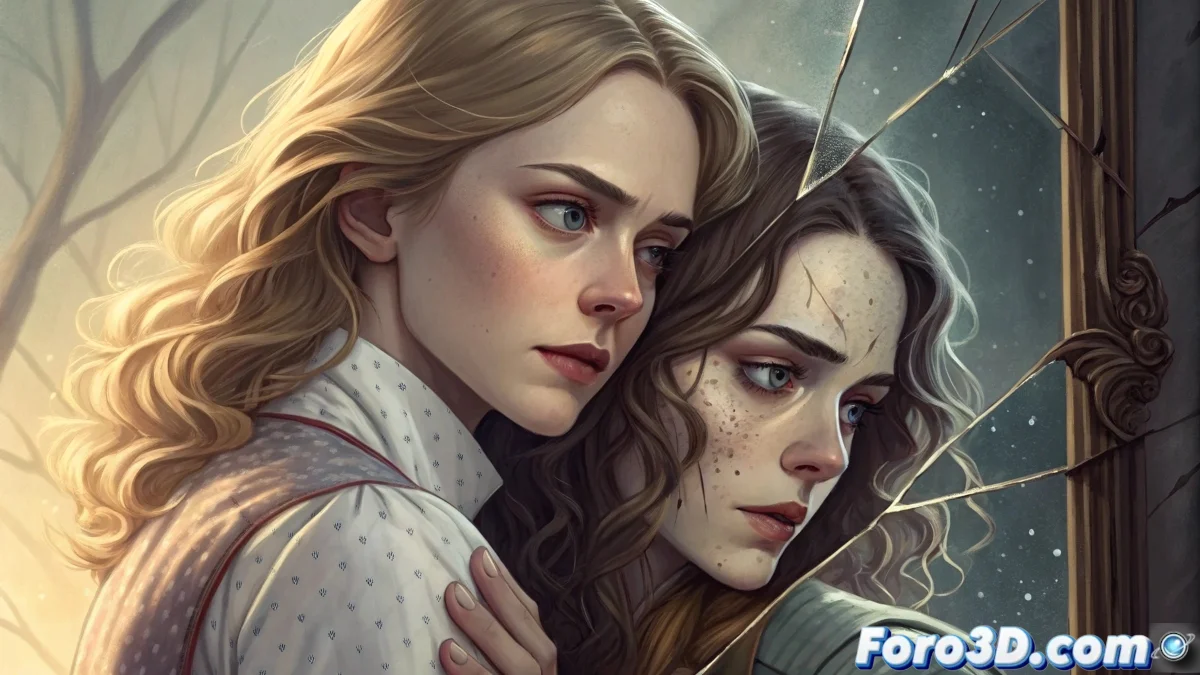
The Crying Doll: when toy tears hide real nightmares
DC Comics has introduced The Crying Doll into its supernatural horror line, presenting a chilling story where an ancient doll becomes the epicenter of paranormal phenomena. Created by James Tynion IV and artist Werther Dell'Edera, the series follows John Constantine and Detective Chimp as occult investigators who must solve the mystery behind a Victorian doll that cries real tears. Each tear seems to contain the memories and traumas of its previous owners, creating a psychic connection that threatens to absorb those who cross its path. 🪆
The horror of the everyday transformed
What makes The Crying Doll particularly effective is how it takes an apparently innocuous object—a antique doll—and transforms it into a nightmare artifact. The doll is not evil in itself, but functions as a psychic sponge that absorbs human pain through generations. Its crying mechanism is not a traditional curse, but a physical reaction to the accumulated trauma it has absorbed. This psychological approach to horror recalls the best traditions of the genre, where the true monster is not a supernatural entity, but humanity's capacity for suffering.
Analysis of the narrative and DC mythology
The series integrates intelligently into the DC universe while maintaining its unique psychological horror identity. The supernatural elements connect with established mythologies like the House of Mystery and the Lands of the Night, but the story remains focused on human drama.
Investigators of the impossible
The protagonist duo combines John Constantine's experienced cynicism with Detective Chimp's detective meticulousness, creating a unique dynamic where street magic meets deductive reasoning. While Constantine perceives the magical flows around the doll, Detective Chimp analyzes historical and psychological patterns in the victims. Their contrasting approach allows exploring the mystery from multiple angles, both mystical and rational.
Approaches to the mystery:- practical magic and occult knowledge
- traditional detective investigation
- psychological analysis of the victims
- historical investigation of the artifact
The doll's mythology
The story reveals that the doll was created in the Victorian era by a jeweler who lost his daughter, infusing the object with his pain. Through the years, it has passed through multiple owners, each adding their own tragedies to the object. The supernatural mechanism functions as an emotional ecosystem where pain feeds the psychic manifestation. The doll does not actively seek to cause harm, but its nature makes it a magnet for suffering, creating a cycle that intensifies with each new owner.
In The Crying Doll, some tears never dry, they just wait for someone else to cry them.
Art that conveys discomfort
Werther Dell'Edera creates a visual atmosphere that is deliberately uncomfortable without resorting to traditional jump scares. His design of the doll avoids exaggerated grotesqueness in favor of disturbing realism—the glass eyes seem to follow the reader, the tears have an overly liquid quality—. The use of negative space and shadows creates a constant sensation of being watched, even in well-lit scenes. The dreamlike sequences where characters experience the doll's memories employ subtle changes in artistic style to differentiate different eras and owners.
Highlighted visual elements:- realistic but unsettling doll design
- expressive use of shadows and reflections
- smooth transitions between reality and memory
- sober color palette with dramatic accents
Horror as psychological exploration
Beyond supernatural entertainment, The Crying Doll functions as an exploration of intergenerational trauma and the nature of grief. Each previous owner of the doll represents a different facet of pain: mourning for losses, regret for past decisions, nostalgia for better times, and fear of the future. The series asks whether some pains are so intense that they can impregnate physical objects, and what responsibility we have toward the suffering of those who came before us. 🕯️
Thematic layers:- trauma as an invisible inheritance
- nature of grief and overcoming
- objects as emotional receptacles
- responsibility toward others' pain
In the end, The Crying Doll proves that some toys should never be found, though they certainly make for a story that will keep you awake checking your shelves. 🔍