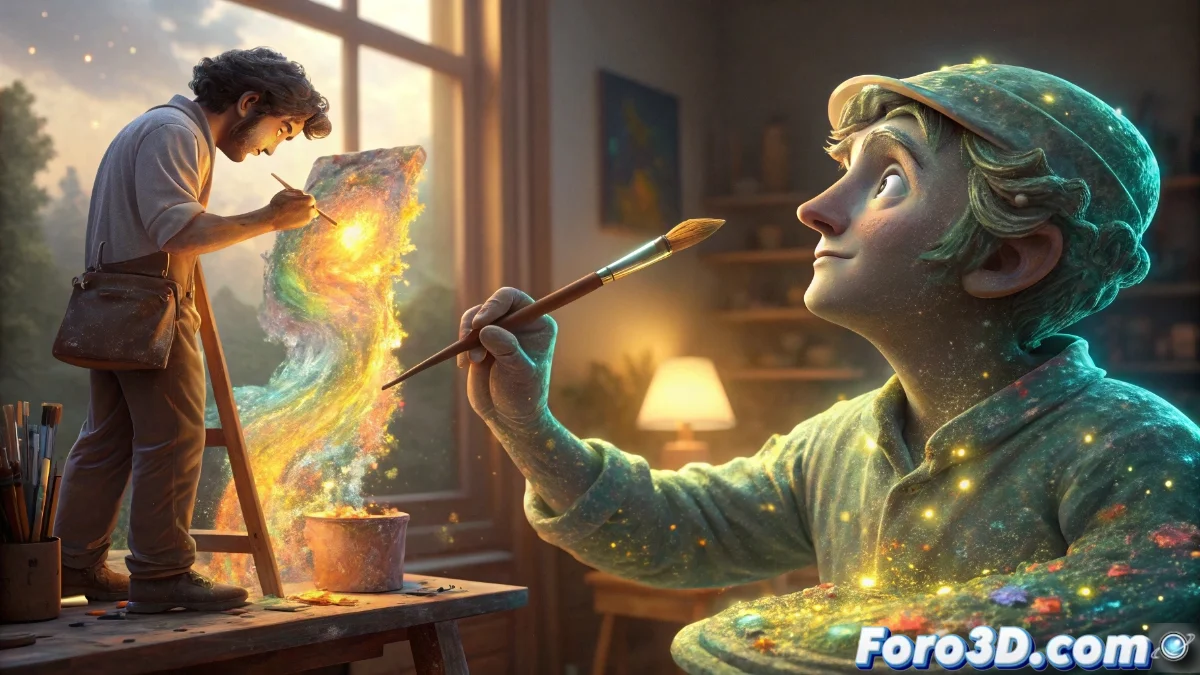
The creative revolution: fusing traditional art with 3D technology
The current artistic landscape is undergoing a radical transformation through the integration of ancestral creative methods with the most advanced three-dimensional digital tools. This unprecedented convergence allows creators from diverse disciplines to develop works that preserve the human essence of the manual process while incorporating the infinite possibilities of the virtual environment 🎨
From the physical workshop to the digital space: combined methodology
The hybrid creative process often begins in conventional studios where fundamental physical elements are generated, such as preliminary drawings, oil paintings, or tactile sculptures. These material creations are transformed into digital assets through advanced capture technologies like three-dimensional scanners or high-fidelity photogrammetric systems.
Phases of the integrated process:- Creation of base physical elements using traditional techniques such as painting, sculpture, or drawing
- Digitalization using specialized equipment that captures every detail and organic texture
- Import and manipulation in professional 3D software to add geometric complexity and visual effects
The true creative magic occurs when the imperfectly human meets the perfectly digital, generating works that no single medium could produce
Emerging aesthetics and innovative visual narratives
This interdisciplinary fusion is giving birth to completely original visual languages where visible brush marks coexist with realistic physical lighting, or where traces of the sculptural process combine with fluid and dynamic animations.
Highlighted creative manifestations:- Animated short films that preserve manual textures in immersive three-dimensional environments
- Interactive installations where viewers can simultaneously experience the physical and the virtual
- Visual pieces that explore the tension between the recognizably organic and the fantastically digital
Challenges and particularities of the mixed approach
This combined method presents unique particularities that artists must learn to manage, such as correctly interpreting intentional imperfections during digitalization, or handling the resulting technical complexity of converting physical objects into ultra-detailed polygonal meshes. The curious irony arises when digital tools attempt to "correct" deliberately imperfect textures, or when simple manual creations generate files with greater polygonal density than professional digital productions 🤔