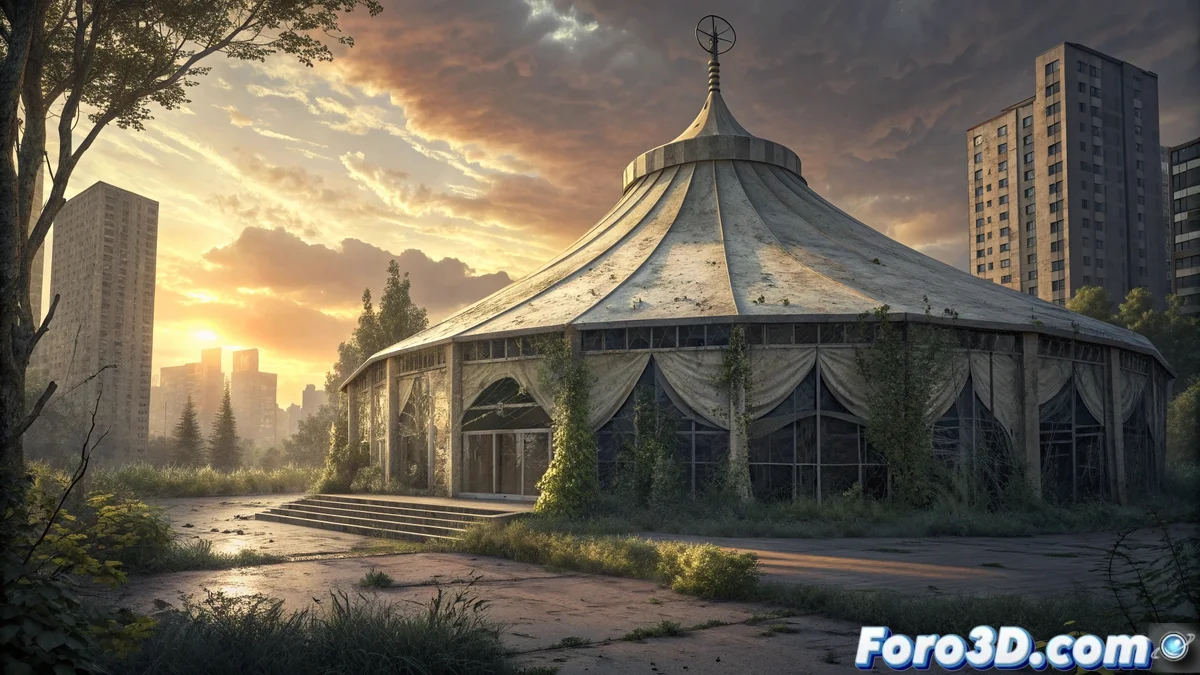
The CREAA of Alcorcón: Ghost Architecture of Unfulfilled Promises
The Center for Artistic Creation of Alcorcón, popularly known as CREAA, currently stands as a monumental skeleton that embodies truncated ambitions and unfulfilled commitments. Originally designed by architect Nacho G. Pedrosa with an initial estimated investment of 100 million euros, this cultural complex aspired to become a national benchmark for avant-garde architecture. Its conceptual design, reminiscent of a circus tent, aimed to integrate multiple artistic disciplines under one symbolic roof, although the current reality presents a panorama radically opposite to the one originally imagined 🎪.
The Pharaonic Project and Its Abrupt Halt
The construction of the CREAA began with enormous expectations and ambitious projections, but a succession of budgetary problems and administrative complications determined its paralysis when only the main structure had been completed. The skeleton of reinforced concrete, with its characteristic arches evoking a circus tent, currently rises from the ground as an architectural ghost dominating the urban landscape. The fractured glass in its facades allows a glimpse of the empty interior, where cultural activities should take place but where currently only accumulated dust and absolute silence reign.
Characteristics of the Paralyzed Project:- Main structure completed with arches simulating a circus tent
- Initial budget of 100 million euros without completion
- Administrative and financial problems as the main causes of abandonment
"This circus never hosted shows, but it became the best example of a continuous performance: that of unfulfilled political promises"
Contrast Between Projected Vision and Tangible Reality
While the original project promised specialized spaces for theater, dance, music, and visual arts, the tangible reality exhibits incomplete facilities and materials deteriorated by exposure to the natural elements. The residents of Alcorcón watch with growing frustration as this cultural icon progressively transforms into a perpetual reminder of missed opportunities. The fundamental criticisms focus on the deficient management of public funds and the absence of continuity in ambitious cultural projects, openly questioning the viability of undertaking works of such magnitude without firm guarantees of completion.
Highlighted Aspects of the Contrast:- Promise of multidisciplinary spaces versus reality of empty facilities
- Progressive deterioration of materials due to climatic exposure
- Questions about the management of public resources in cultural projects
Final Reflection on the Symbolism of the CREAA
The CREAA of Alcorcón transcends its condition as a mere architectural structure to become a powerful symbol of frustrated cultural aspirations and deficient public administration. Its empty silhouette stands not only as a reminder of what could have been, but as a forceful warning about the risks of embarking on pharaonic projects without solid planning and sustainable commitments. The final irony lies in the fact that this architectural circus, although it never hosted shows, represents the most enduring performance: that of the unfulfilled promises that continue to unfold before the eyes of an expectant community 🎭.