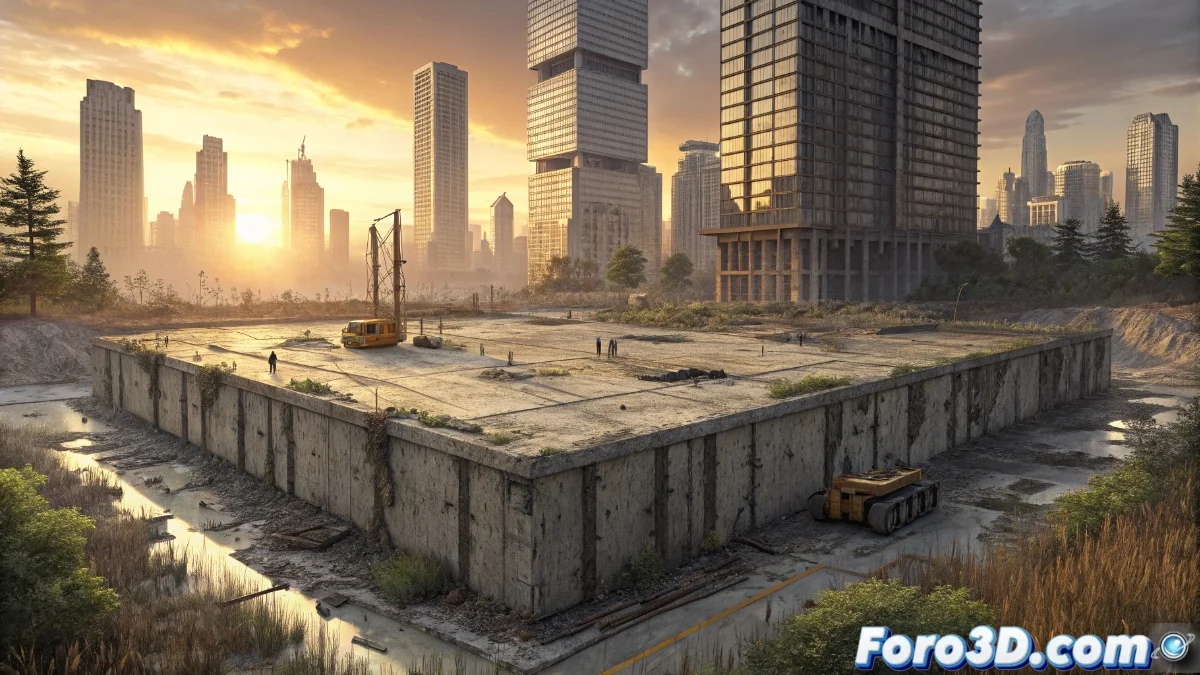
The Concrete Giant: The Story of Madrid's Ghost Convention Center
In the most modern financial district of the Spanish capital, right next to the iconic Cuatro Torres complex, extends a colossal concrete structure that tells a story of interrupted architectural ambitions. It is the remains of what was intended to become the most impressive International Convention Center in Europe, a monumental initiative that the 2008 economic recession derailed just as it was beginning its development. What should be a vibrant space for international events today remains as a silent witness to the dreams cut short by the economic crisis, representing an investment of over 100 million euros that never materialized 🏗️
The Decline of an Architectural Dream
This megalomaniac initiative was conceived as an symbol of progress and vanguard in Madrid, specifically designed to compete with the main congress centers on the European continent. During its early phases, construction work advanced with remarkable speed, managing to erect a foundation of extraordinary proportions and several underground levels that currently remain buried underground. However, when the global financial tsunami hit Spain hard, economic resources evaporated and heavy machinery stopped definitively, leaving as its only legacy this enormous concrete base that bears witness to what could have been and never was 💔
Key details of the abandoned project:- Strategic location in the heart of Madrid's most modern business complex
- Initial investment of over 100 million euros in foundation work alone
- Design conceived to rival the main European convention centers
"Some Madrileños joked suggesting that turning it into Europe's most expensive parking lot would be its best possible use" - Popular reflection during the years of abandonment
The Metamorphosis of a Valuable Urban Space
For almost ten years, this land transformed into an uncomfortable reminder of failed initiatives, an urban area of extraordinary real estate value that remained completely unproductive. It was not until several years had passed that a new purpose was finally defined for this plot, putting an end to an extensive period of abandonment that contrasted dramatically with the effervescence and activity that characterizes the rest of the Cuatro Torres complex. This urban transformation symbolizes the reinvention capacity of cities, although it can never completely erase the memory of that architectural colossus that never saw the light 🌆
Phases of the recovery process:- Prolonged abandonment period lasting almost a full decade
- Active search for alternatives to leverage the investment already made
- Final reconversion that ends the contrast with the surrounding dynamism
Legacy and Final Reflections
This buried giant represents much more than a simple failed architectural project: it has become a tangible symbol of an era of economic exuberance followed by a severe recession. The concrete slab of pharaonic dimensions continues to be a mute witness to the ambitious urban plans that the economic crisis swept away, reminding us of the fragility of large projects when faced with adverse financial realities. Although the space has finally found a new destiny, it remains as an architectural and urban lesson on the limits between ambition and viability in city development 📉