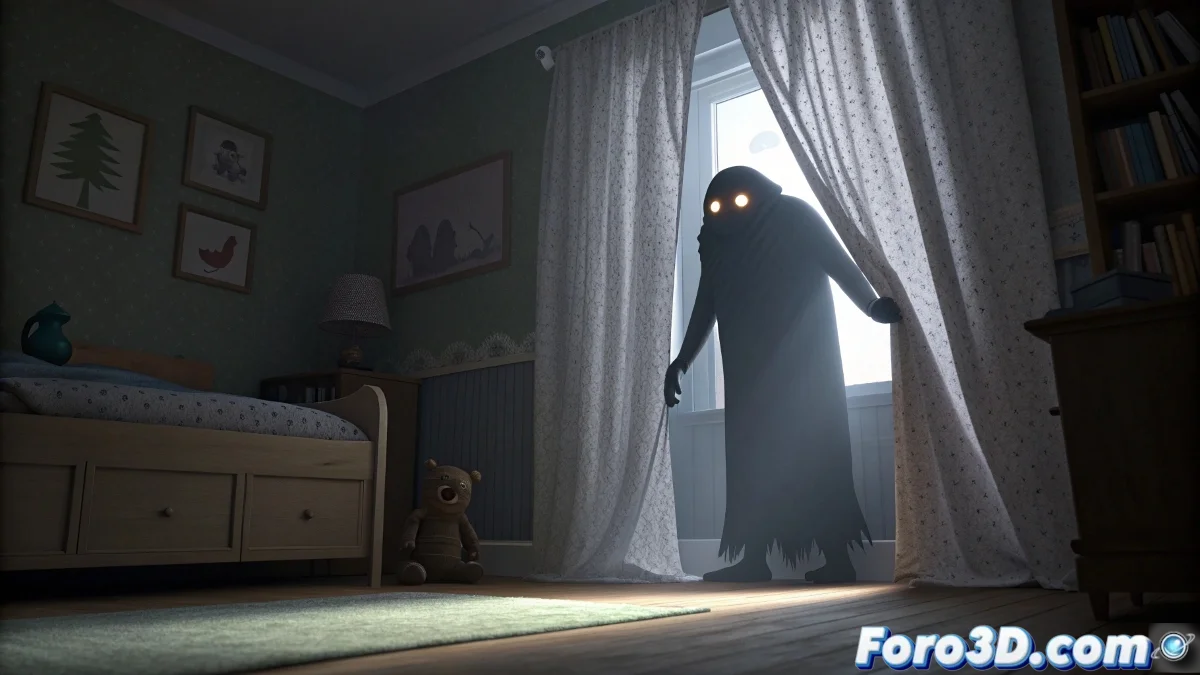
The Coco: Legendary Figure of Hispanic American Folklore
In the rich collective imagination of Hispanic American cultures, The Coco emerges as an ancestral presence that embodies the deepest fears of childhood. This legendary entity symbolizes the dread of darkness and the consequences of disobedience, adapting masterfully to each family context to fulfill its educational purpose 🌙.
The Changing Essence of The Coco
The fascinating aspect of this folkloric creature lies precisely in its amorphous and undefined nature. It lacks a concrete physical appearance, allowing each generation to shape its representation according to the pedagogical needs of the moment. This conceptual adaptability transforms The Coco into a versatile resource for parents, who modulate its description to generate the desired psychological impact on the little ones.
Fundamental Characteristics:- Dark and amorphous figure that prowls exclusively at night
- Detects and punishes children's resistance to established sleep routines
- Its description varies intentionally according to the region and family imagination
"The Coco represents that controlled fear which, paradoxically, protects children through fright, establishing boundaries where reason has not yet reached" - Cultural Anthropologist
Traditional Narrative and Mechanisms of Appearance
The classic story is activated when a child openly defies bedtime, ignoring parental warnings. According to oral tradition, The Coco perceives this rebellion from its hidden dimension and begins its stealthy approach toward the child's home. The tales describe in vivid detail its infiltration methods: it enters through half-open windows, hides in dark corners, and emits almost imperceptible whispers that only the awake child can detect.
Auditory and Tactile Manifestations:- Drags invisible cloaks that create currents of cold air
- Produces creaks in furniture and structures to announce its presence
- Emits whispers that gradually increase in intensity
Social Function and Cultural Diversity
Beyond the momentary scare, this entity fulfills a fundamental social function by reinforcing behavioral norms through symbolic fear. Its representation acquires fascinating regional nuances: in Spain it is known as The Sack Man, in Mexico it adopts traits of The Cucuy, while in Caribbean territories it merges with legends of African origin. The extraordinary thing is that no culture defines its face precisely, for its psychological power lies in that ambiguity that activates the child's imagination to the maximum.
Pedagogical Variations and Final Reflection
Parents use this educational tool with notable discernment, applying mild versions for young children and more intense tales for those who openly challenge the rules. This graduation of fear demonstrates the cultural sophistication behind an apparently simple tradition. Curiously, this creature that has terrified generations probably has worse working conditions than a professional babysitter, considering its nighttime hours and the absence of remuneration for its controlled intimidation services 😅.