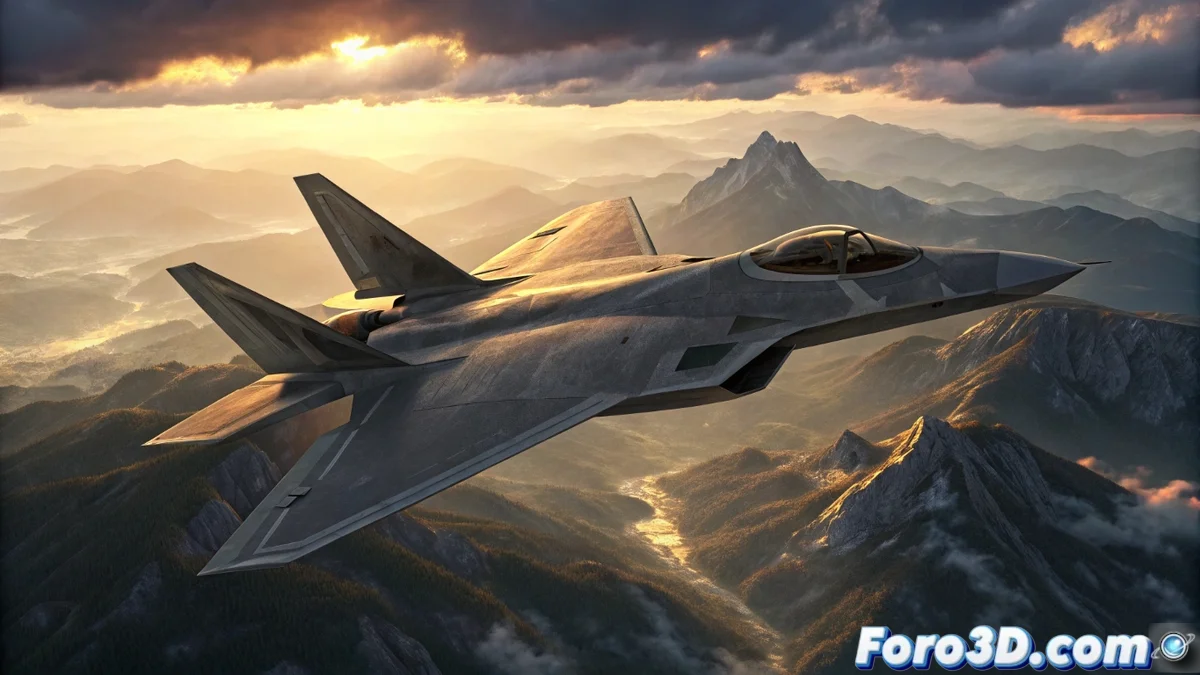
The Chengdu J-20 Mighty Dragon: Analysis of the Chinese Stealth Fighter
In the landscape of modern military aviation, the Chengdu J-20 Mighty Dragon emerges as a symbol of Chinese technological advancement. This formidable fifth-generation fighter is specifically designed to establish and maintain air superiority in advanced combat scenarios, where its most outstanding feature is its low observability against enemy radars. 🛩️
Dimensions and Aerodynamic Design
With measurements of 21.2 meters in length, a wingspan of 13.01 meters, and a height of 4.69 meters, the J-20 has a deliberately compact and aerodynamic silhouette. This profile is not accidental; it is optimized to reduce the radar signature and significantly improve its maneuverability and performance at high speeds, allowing it to operate agilely in complex aerial environments.
Key Design Features:- Canard-delta configuration: It incorporates front canard planes combined with a delta wing, providing exceptional stability and control at supersonic speeds.
- Conventional engine nozzles: Unlike other fighters of its generation, most of its variants use round nozzles without thrust vectoring, prioritizing a more discreet stealth profile.
- One-piece integrated canopy: Ergonomically designed to offer the pilot optimal integration and a wide field of vision during high-intensity missions.
"The true strength of the dragon lies not in its roar, but in its ability to move unseen." - Reflection on stealth doctrine.