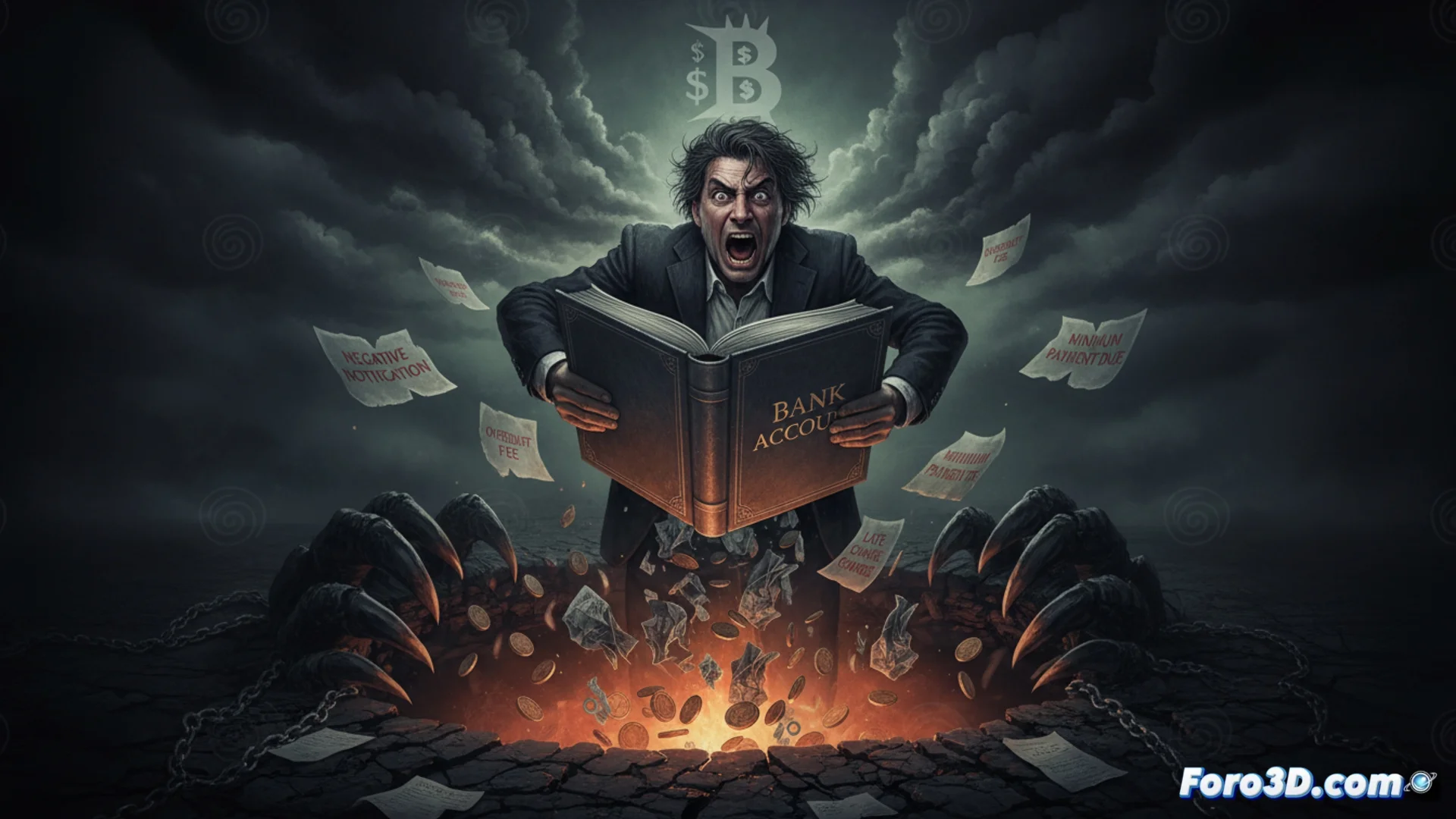
The Charge Loop When Closing a Santander Account
When a Banco Santander customer decides to no longer direct deposit their payroll, a commission of twenty euros is automatically activated each month. This expense immediately generates a deficit in the account balance. If the user then requests to cancel their product, the entity requires them to pay that amount to regularize their position. After paying and formally requesting the closure, it seems the process is progressing, but days later they receive a notification informing them that it could not be processed and they must request it again. 🔄
A Self-Feeding Cycle That Adds Expenses
In this phase, many affected individuals discover with surprise that their account already records another identical charge of twenty euros, which recreates the balance in the red. This forces the customer to disburse again before being able to retry the cancellation. This pattern can repeat multiple times, indefinitely delaying the closure and causing periodic disbursements that the user did not anticipate. The situation leaves people trapped in a vicious circle of management.
Consequences for the user:- Unexpected payments accumulate due to recurring charges.
- The process to cancel the account is prolonged without an apparent solution.
- The customer perceives that the system is designed to retain them and generate extra income.
It seems that the only way to win this game is not to play, but not playing here means continuing to pay.
The Impact on the Relationship with the Bank
This operating scheme undermines trust and projects an image of opacity. Customers who wish to stop using the entity's services encounter a procedure that they interpret as created to obstruct the cancellation and obtain additional benefits. This practice questions the simplicity of canceling financial products and the security in handling these procedures.
Key elements of the problem:- Lack of transparency in the conditions when withdrawing the payroll.
- Closure mechanisms that systematically fail.
- Automatic generation of new charges that prevent completing the process.
A Situation That Requires Supervision
This scenario has led to expectations of intervention by supervisory bodies. There is a social demand for the Bank of Spain and the prosecutor's office to examine these practices that could be classified as fraudulent and profit-driven, and that directly affect citizens. Resolving these loops is crucial to restore faith in basic banking processes. ⚖️