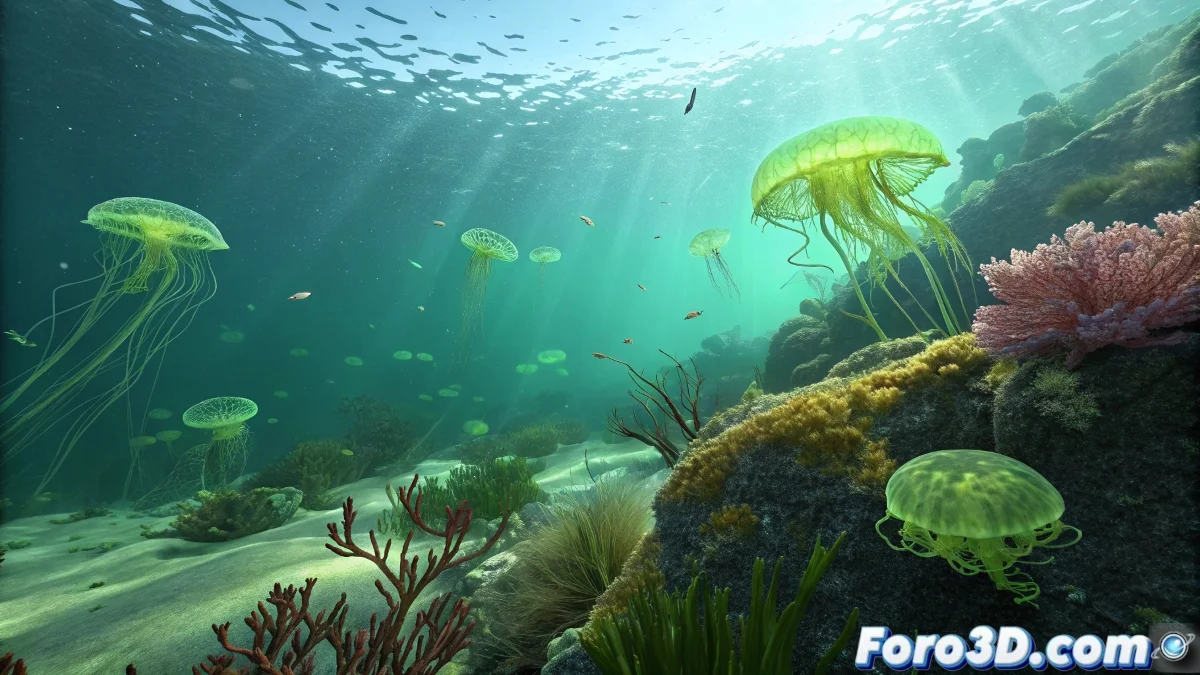
When Green Doesn't Mean Ecology
Nature is giving us these days a visual spectacle in Australia... that we'd prefer not to see 🌊. While toxic algae invade the coasts, 3D artists find in this ecological disaster the perfect excuse to practice our organic modeling. Ironies of fate: what kills marine life feeds our portfolio.
Techniques for Algae with Attitude
Turning an environmental problem into digital art requires:
- Living Geometry: Use Bezier curves with Wave and Displace modifiers for those hypnotic movements that hypnotize... and then kill
- Alerting Materials: Fluorescent greens with SSS so that even the render seems to say "do not touch"
- Credible Environment: Turbid water with volumetrics that show how the algae steal oxygen (and charm) from the sea
A good algae texture must convey both beauty and danger - like that ex we all have in our social media history.
Details That Make the Difference
To take your modeling to the next level:
- Add particles floating around like "toxic spores"
- Include fish fleeing the area (or worse, dead fish floating)
- Play with lighting to create visual danger zones
Bonus: animate some bubbles escaping from the seabed. Because even in the algal apocalypse, there's some poetry... or so we tell ourselves to not get depressed.
The Irony of the Digital Artist
While you model these killer algae on your air-conditioned computer, with your green smoothie by your side, you think about how fragile the ecological balance is... and how robust your GPU is rendering its destruction. 🖥️ The circle of (digital) life continues.
So go ahead: create the most spectacular algal bloom in 3D history. And remember: if your render is so convincing that it makes people want to call marine biologists, you've done your job well. Now we just hope it's not prophetic.