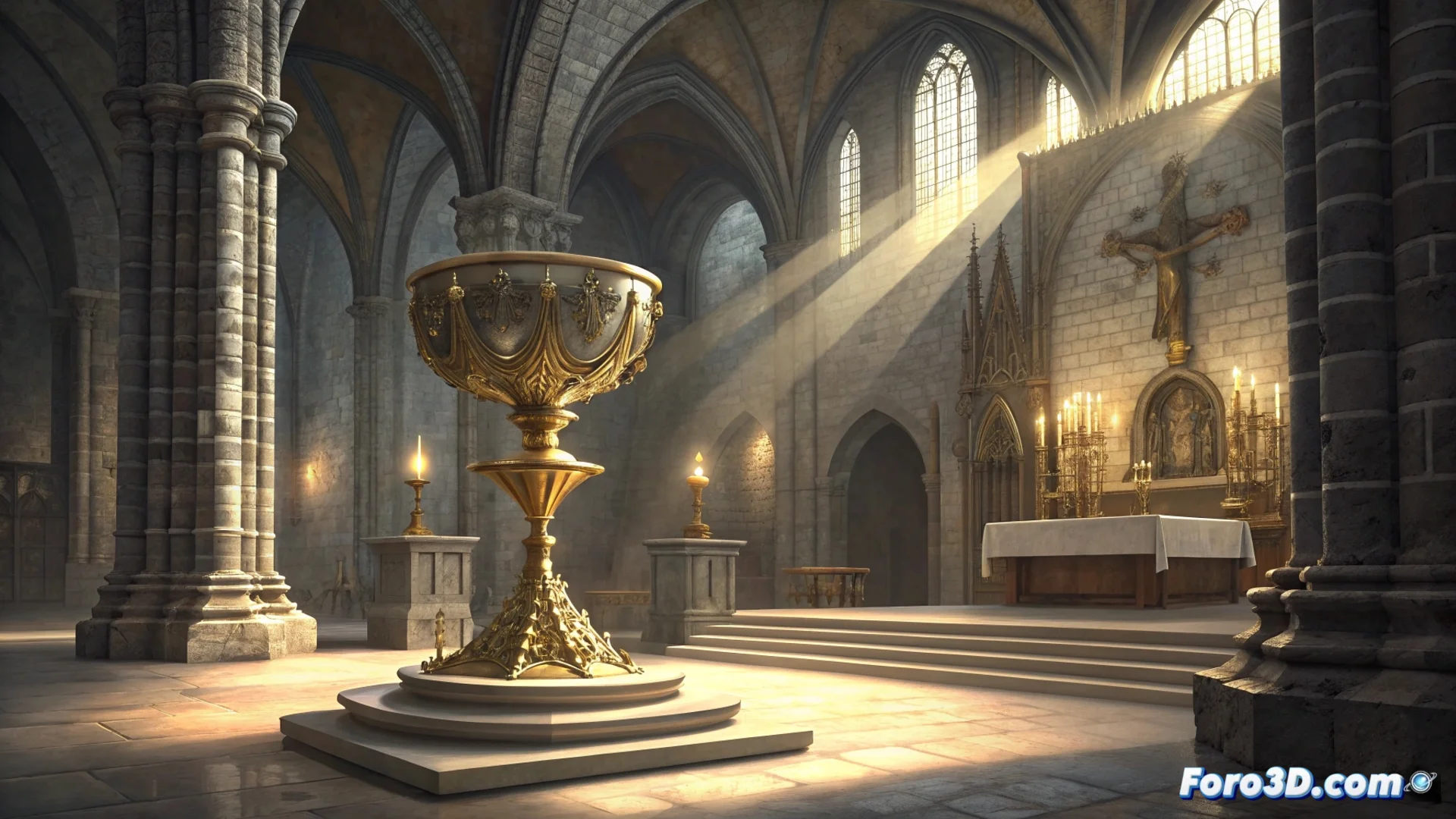
Valencia Cathedral Houses the So-Called Holy Grail
In the heart of the Valencia Cathedral is displayed a unique object: a cup carved from agate and set in gold that numerous voices point to as the authentic Holy Grail. Its legend is not built on apparitions, but on a tangible journey through history, guarded by kings and clerics to protect it from conflicts. 🏰
The Historical Journey of a Relic
The artifact consists of two distinct parts. The upper cup, made of polished chalcedony, experts date it to the 1st century. The base and handles, made of gold and precious stones, are a later addition. Historical records allow tracing its journey from 3rd-century Rome, when Pope Sixtus II entrusted it to his deacon Lawrence. He began its transfer to the Iberian Peninsula.
Key Stages of Its Journey:- From Jerusalem to Rome: First leg of its journey after the Last Supper.
- Refuge in Huesca and the Pyrenees: Deacon Lawrence sent it to his homeland; later, Muslim invasions forced its hiding in caves and hermitages of the mountain range.
- Arrival in Valencia: King Alfonso the Magnanimous deposited it in the cathedral in the 15th century, where it has remained since then.
"Popes John Paul II and Benedict XVI celebrated the Eucharist with this chalice during their visits to Valencia."
Between Faith and Academic Study
The Catholic Church does not issue a dogma on its absolute authenticity, but it does encourage venerating it as a historical relic of immense symbolic value. Archaeological analyses confirm that the stone cup corresponds to the period and region of a Jewish ritual object from the first century. This does not certify that it is the Grail, but it does support that it is an ancient vessel to which the legend has been linked. Its true power lies in the faith it generates and in being a witness to centuries of history. ⛪
Points Supporting Its Relevance:- Historical Consistency: Its documented route passes through Rome, Huesca, Pyrenean monasteries, the Aljafería Palace in Zaragoza, and Barcelona.
- Material Evidence: Studies on the materials (agate, gold) and the carving technique are consistent with the proposed chronology.
- Ecclesiastical Recognition: Its use by pontiffs gives it extraordinary liturgical and symbolic weight.
A Legacy Beyond the Myth
More than seeking magical power, the value of the Valencia Chalice lies in its ability to embody a millennial tradition. Guarding it means preserving a fragment of history that has survived wars and migrations. The pressure to preserve an object two thousand years old surpasses any supernatural tale, posing a tangible challenge for its guardians. Its secular journey, from the room of the Last Supper to the Valencian display case, is its authentic and fascinating history. ✨