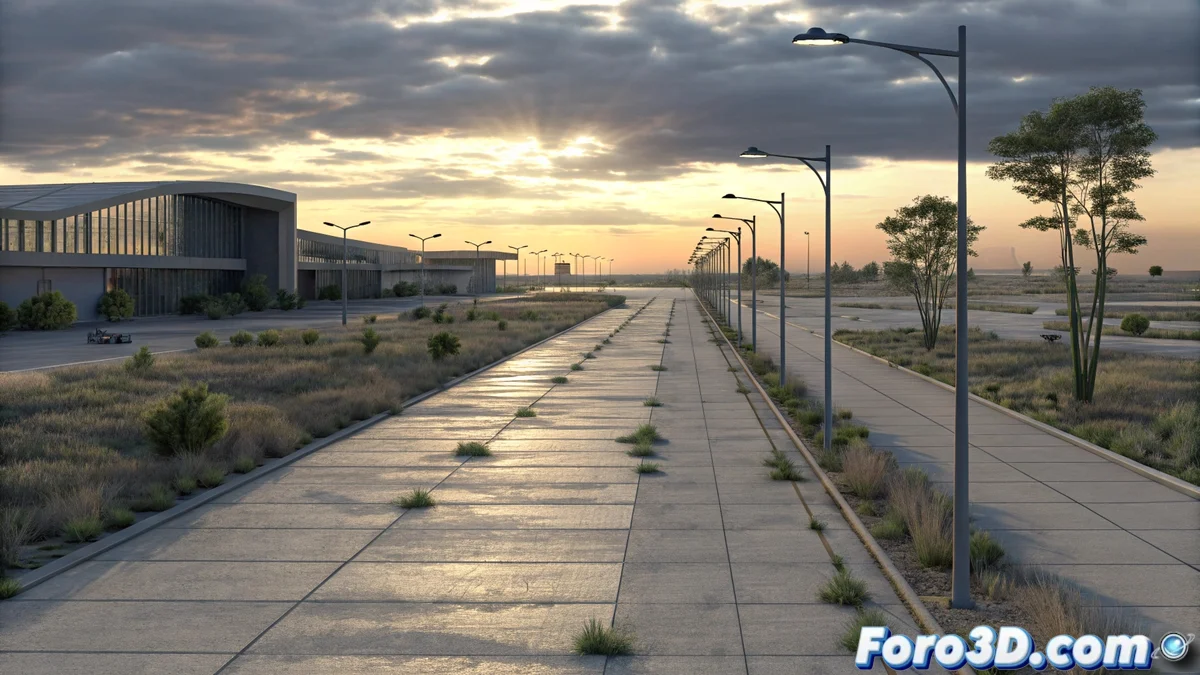
The Castellón airport city remains unfinished
The Castellón airport began operations in 2015 after a long public debate. Alongside it, an ambitious plan was designed to build a complete auxiliary city. This complex was intended to include hotels, shopping centers, and an extensive logistics area to serve air traffic. However, the current situation contrasts radically with those plans. Most of the land reserved for this purpose remains unbuilt, and the few constructions that exist do not fulfill their original function. This panorama shows a large-scale economic project that was never completed. 🏗?/p>
An urban plan that failed to materialize
The initial vision went beyond building a simple passenger terminal. The promoters sought to generate a development hub that would attract companies and create jobs in the region. To this end, large areas of land were allocated to house transportation companies, warehouses, and services for travelers. However, the low usage of the airport facilities, with very few regular flights, caused investors to withdraw their interest. Development came to a complete halt, leaving the logistics city only in the project documents.
Key elements of the stalled project:- Vast areas reserved for transportation and logistics companies that were never built.
- Plans that included hotels and shopping centers integrated with the air terminal.
- The goal of creating jobs and boosting the provincial economy through airport activity.
The landscape of underutilized modernity symbolizes the difficulties of executing pharaonic projects without real demand to sustain them.
The built infrastructure seeks a new use
During the initial phase of investor optimism, some buildings and roads were constructed. Currently, these structures face an uncertain fate. The air terminal, with a cutting-edge design, operates far below its maximum capacity. The industrial sheds and offices built in the surroundings have minimal occupancy or are rented for purposes different from those planned, such as generic storage.
Current reality of the facilities:- The airport terminal operates with excess capacity due to the low frequency of flights.
- Industrial sheds with residual occupancy or alternative uses not linked to aviation.
- Roads and roundabouts that do not lead to the planned developments, creating a surreal environment.
A scenario for urban exploration
The place has become a popular spot for urban explorers and photographers, who capture images of roundabouts that lead nowhere and faded promotional signs of a real estate boom that never happened. Ironically, the most constant activity in the area now is usually the traffic of curious visitors to the famous airport with so few planes. This case serves as a reflection on the risks of planning large infrastructure without ensuring a solid demand base. 🧭