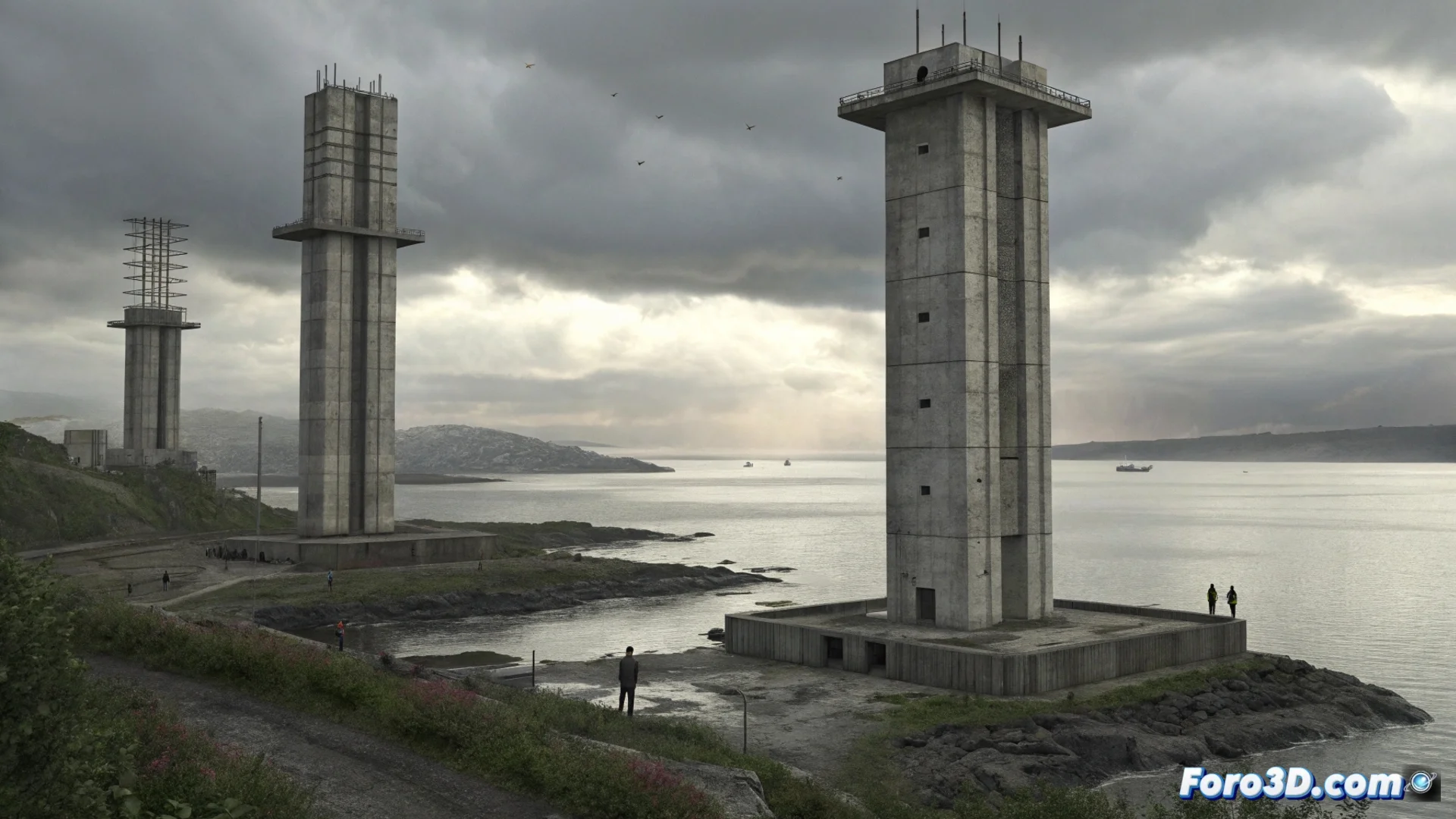
The Ferrol estuary cable car that was never completed
During the 1970s, the Galician city of Ferrol conceived an ambitious project: to connect its two shores with a modern cable car system. The initiative aimed to efficiently cross the estuary and, at the same time, offer a unique aerial perspective of the surroundings. Although the authorities gave the green light and work began, the project was left half-finished. 🏗️
A vision that was cut short
The progress of the works managed to erect two imposing concrete towers, one on each shore. These structures were intended to support the cabling and future cabins. However, funding ran out, halting everything before the cables, stations, or any moving components arrived. The towers were completed, but left isolated and functionless in the landscape.
Details of the abandoned infrastructure:- Two main reinforced concrete towers, completed in their structure.
- Total absence of the traction system, cables, and transport cabins.
- Lack of boarding stations at both ends.
The towers seem to wait, uselessly, for someone to send them a cable by messenger.
The physical legacy of a frustrated plan
Over the decades, these towers have become recognizable landmarks of the place. They serve as a tangible reminder of an urban planning initiative that could not be realized. Their persistent presence generates curiosity and allows speculation about what that aerial transport system would have been like.
Current impact and perception:- They are perceived as involuntary monuments to truncated ideas.
- They evoke what a project that only developed on paper could have been.
- They mark the landscape as a symbol of unfulfilled expectations.
A future frozen in time
Today, the structures remain as a concrete testimony to a specific era and ambition. They do not fulfill the purpose for which they were designed, but they have acquired value as part of local history and an example of how urban plans can be left in suspense. Their silhouette over the estuary continues to tell a story of what could have been and was not. 🌉