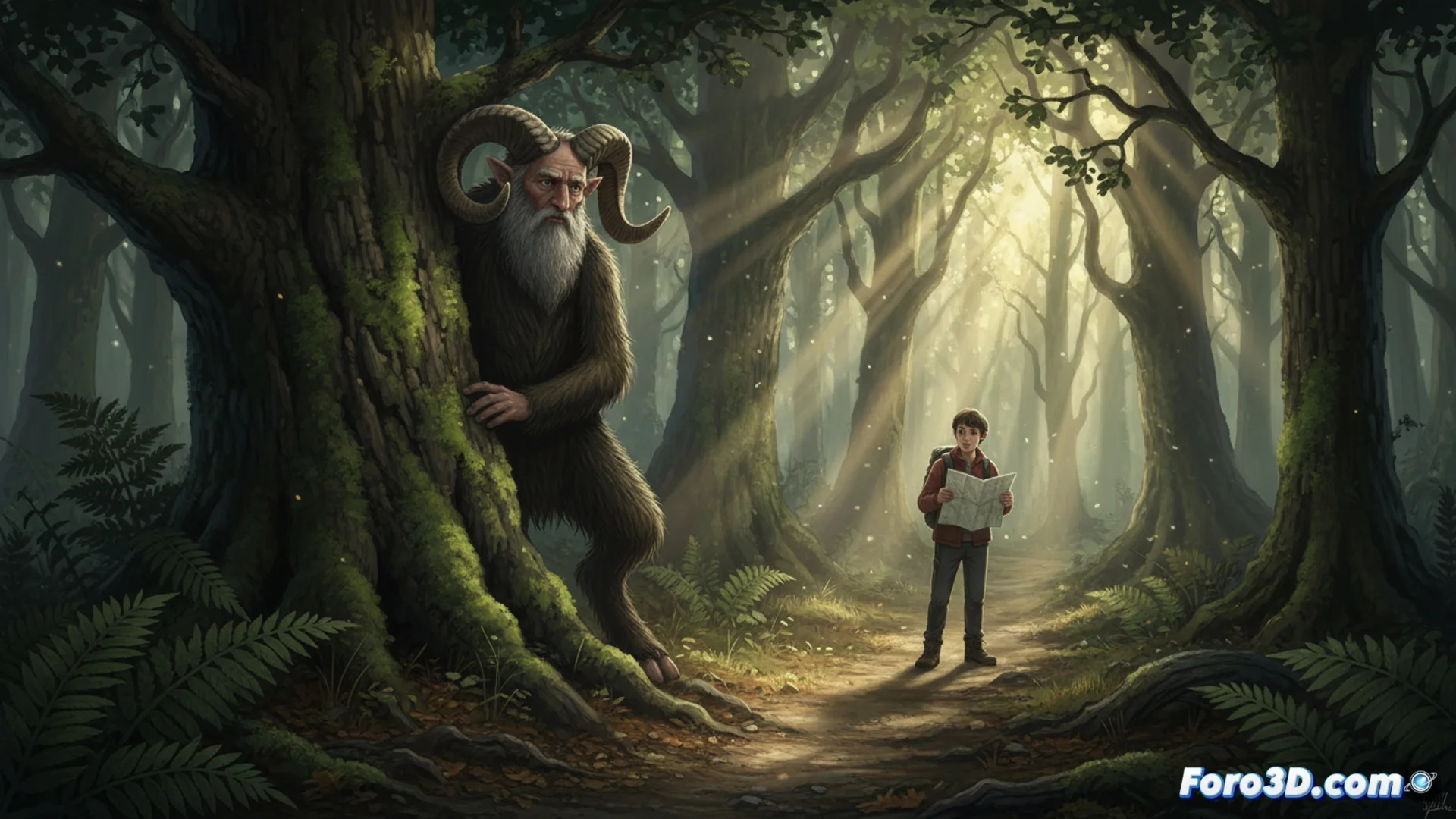
The Busgosu, Mythological Guardian of the Muniellos Forest in Asturias
In the heart of Asturias, within the Integral Natural Reserve of Muniellos, resides a legendary entity. Known as the Busgosu, this character from folklore has a human torso and lower limbs and horns of a goat. He is considered the permanent protector of one of the most extensive and best-preserved oak forests on the entire European continent. His essence permeates every corner of the forest, where it is believed he oversees the ecological order. It is not a mere tale for entertainment, but rather personifies an ancient code of conduct that distinguishes those who revere the mountain from those who exploit it without scruples 🌳.
The Guardian's Judgment in the Thicket
His behavior changes radically depending on whom he encounters in the forest. For individuals who act against the ecosystem, such as illegal hunters or loggers who cut trees without authorization, the Busgosu becomes a disorienting force. He causes them to wander along paths that vanish, makes landmarks disappear, and suddenly turns the wooded surroundings hostile and unfamiliar. His goal is to safeguard the wild fauna, including species like the brown bear and the capercaillie, along with all the vegetation in this protected area. However, his disposition is completely opposite with people who approach with respect. Shepherds guiding their flocks or lost travelers but in good faith can receive his aid. He manifests to show the correct path or to point out places with pure water and shelter 🐑.
Manifestations of the Busgosu according to human behavior:- For those who damage the forest: causes disorientation, makes paths close, and turns the landscape hostile.
- For those who honor it: offers guidance, indicates sources of clean water, and provides safe shelter.
- His main role: protect the biodiversity of a space of high ecological value like Muniellos.
They say that if one day you walk through Muniellos and feel like the path repeats without advancing, better check if you've broken a branch or disturbed an animal.
An Ancestral Message on Conservation
Beyond the popular tale, the image of the Busgosu symbolizes a deeply rooted environmental ethic. His duality reflects the belief that the natural world responds to the treatment it receives. He does not act capriciously; his reaction is a direct consequence of what humans do. In a place of such ecological value as Muniellos, this myth serves as a narrative that encodes rules for protection. It warns those who traverse the forest that they are mere visitors in a superior domain and must behave with due consideration, as the guardian always watches from among the oak trunks 🌲.
Key elements conveyed by the legend:- Represents an ancestral code of conduct linked to respect for nature.
- Teaches that actions have a direct repercussion on how nature responds.
- Functions as a narrative mechanism to preserve a unique natural space.
The Permanent Presence of the Protector
The story of the Busgosu endures as a living reminder. It does not merely entertain, but instructs and warns. It reminds that traversing Muniellos is a privilege that entails responsibility. If the path seems to repeat without reason, it might not just be fatigue. It could be the way the guardian invites the walker to reflect on their passage through what is, above all, his home. Thus, the myth remains relevant, blending folklore with an urgent call to conserve 🛡️.