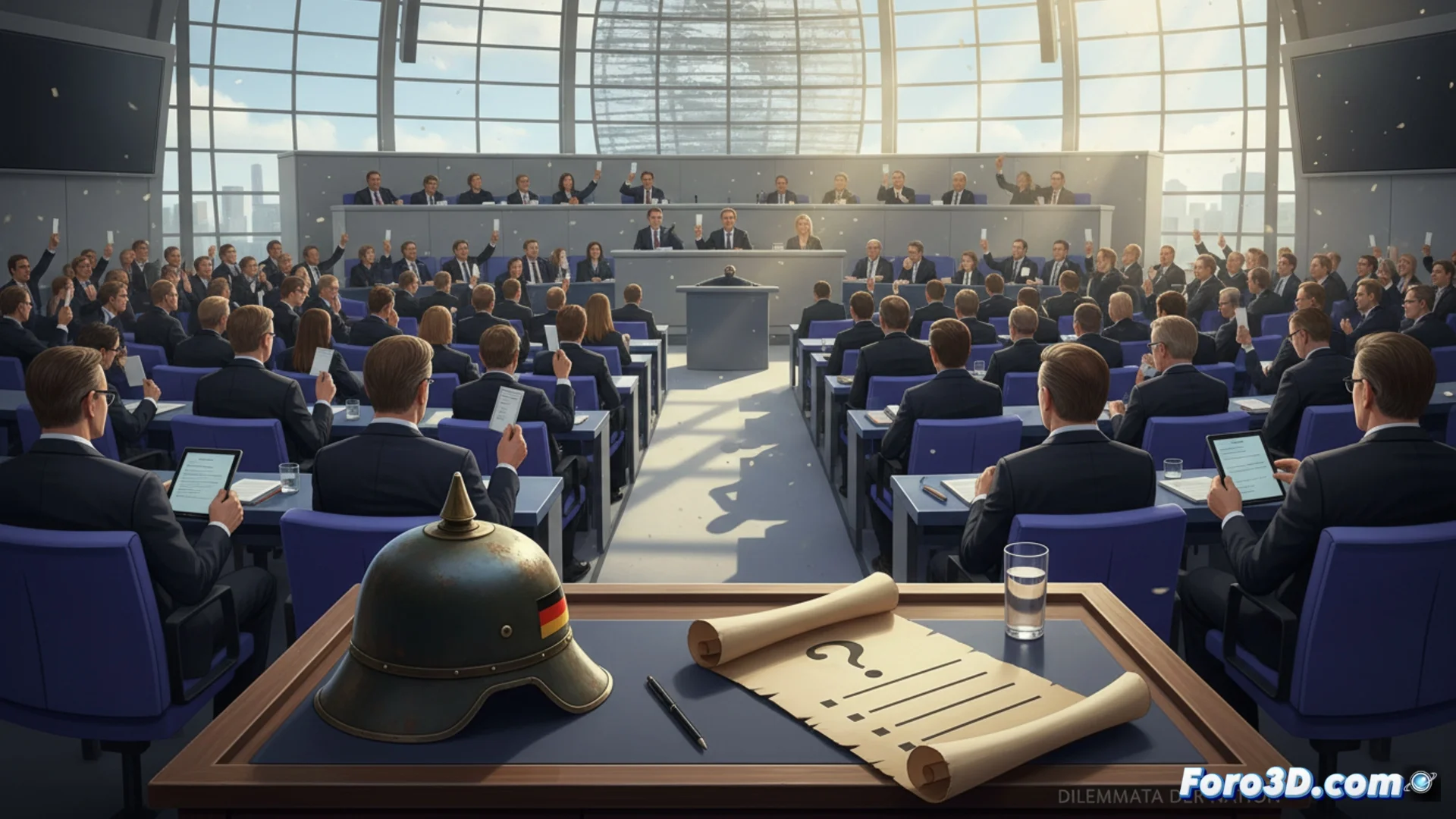
The Bundestag approves a new law for military service
The German parliament has given the green light to a profound change in how it organizes its defense. This reform introduces a mandatory questionnaire to evaluate men born in 2008 or later, while it is optional for women. If sufficient volunteers cannot be recruited, the law allows the activation of an on-demand conscription system. The text now must be reviewed by the country's upper house. 🏛️
The mechanism of the questionnaire and recruitment
The form represents the first step to create a central registry of people who could serve. Its main objective is to identify those who have the motivation and aptitude to do so. If the number of volunteers does not cover what is needed, the law authorizes calling recruits in a selective manner. This design seeks to balance what national defense needs with a method that avoids forcing an entire generation to serve. The system was created to adapt flexibly to variations in global security.
Key points of the new process:- The questionnaire is mandatory for men born from 2008 onwards.
- For women, completing the form is entirely voluntary.
- The conscription mechanism is only activated if voluntary recruitment fails.
The debate was reignited after the Russian invasion of Ukraine, leading Germany to reconsider how to organize its defense.
Legislative process and historical context
The bill is now sent to the Bundesrat, where the German federal states can examine it. It is expected to be approved without major obstacles. This modification marks a significant shift after the country suspended mandatory military service in 2011. The measure is part of a broader effort to modernize and strengthen the federal armed forces.
Next steps and relevant dates:- Review and vote in the upper house (Bundesrat).
- Entry into force scheduled for the first day of January 2026.
- The law responds to a transformed European security environment.
Implications for young Germans
After years of theoretical discussions about defense, some young people in Germany will soon be able to perceive directly what it is like to receive a state questionnaire that, paradoxically, inquires about your willingness to do something you may not want to do. This instrument seeks to be pragmatic, prioritizing efficiency over massification, in an attempt to build an army prepared for current challenges. 🇩🇪