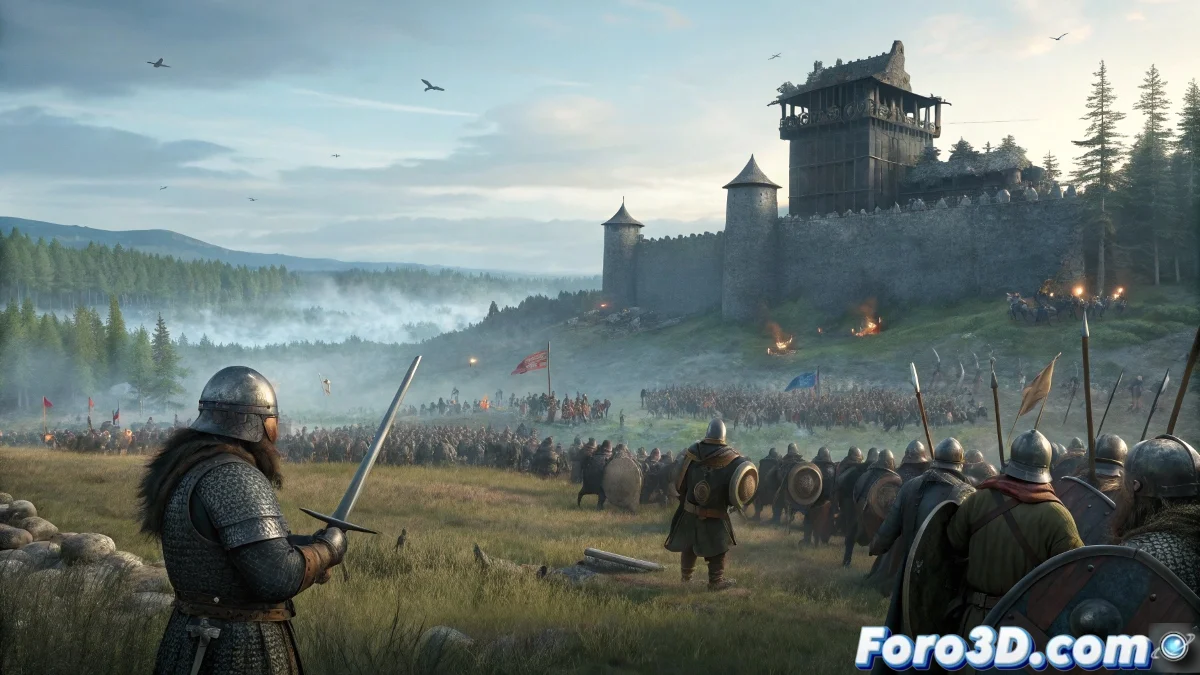
When the Middle Ages Need Digital Effects
In the fifth season of The Last Kingdom, BlueBolt demonstrated that recreating the 9th century requires both historians and digital artists ⚔️. The series combined physical brutality with technological magic to bring Saxon battles to an epic scale, without losing an ounce of its characteristic gritty realism.
Ingredients for an HD Medieval Battle
BlueBolt's visual arsenal included:
- Archaeologically precise 3D reconstructions of fortresses that no longer exist
- Crowds with Golaem that died with more conviction than some actors
- Houdini simulations for blood, mud, and sweat that flew with realistic physics
The most epic (and unintentional) moment: when a bug created a group of soldiers dancing in circles. Unprecedented Viking choreography.
How to Recreate These Effects in Blender
- Crowds: Particle system with instanced animations
- Blood Effects: Fluid simulations with the Mantaflow engine
- Atmospheres: Volumetrics with noise textures for fog and dust
The Science Behind Medieval Chaos
The technical challenges included:
- Crowd integration where each digital warrior followed realistic battle patterns
- Fluid physics for blood that varied based on the type of wound and weapon
- Compositing in Nuke that maintained the raw, documentary aesthetic
The result was so visceral that viewers could almost smell the mud and blood... fortunately, that remained impossible (for now) 🛡️.
Lessons for Digital Medieval Artists
This production taught that:
- In historical cinema, dirt is your best friend
- A good blood effect is worth a thousand fight choreographies
- Even the most epic battles can start with a few extras and a lot of digital imagination
So next time you watch a historical series, remember: behind every bloodied sword there is a VFX artist who probably dreamed of shields and axes that night... and of renders that don't get stuck "in the dark ages" 🏰💥.