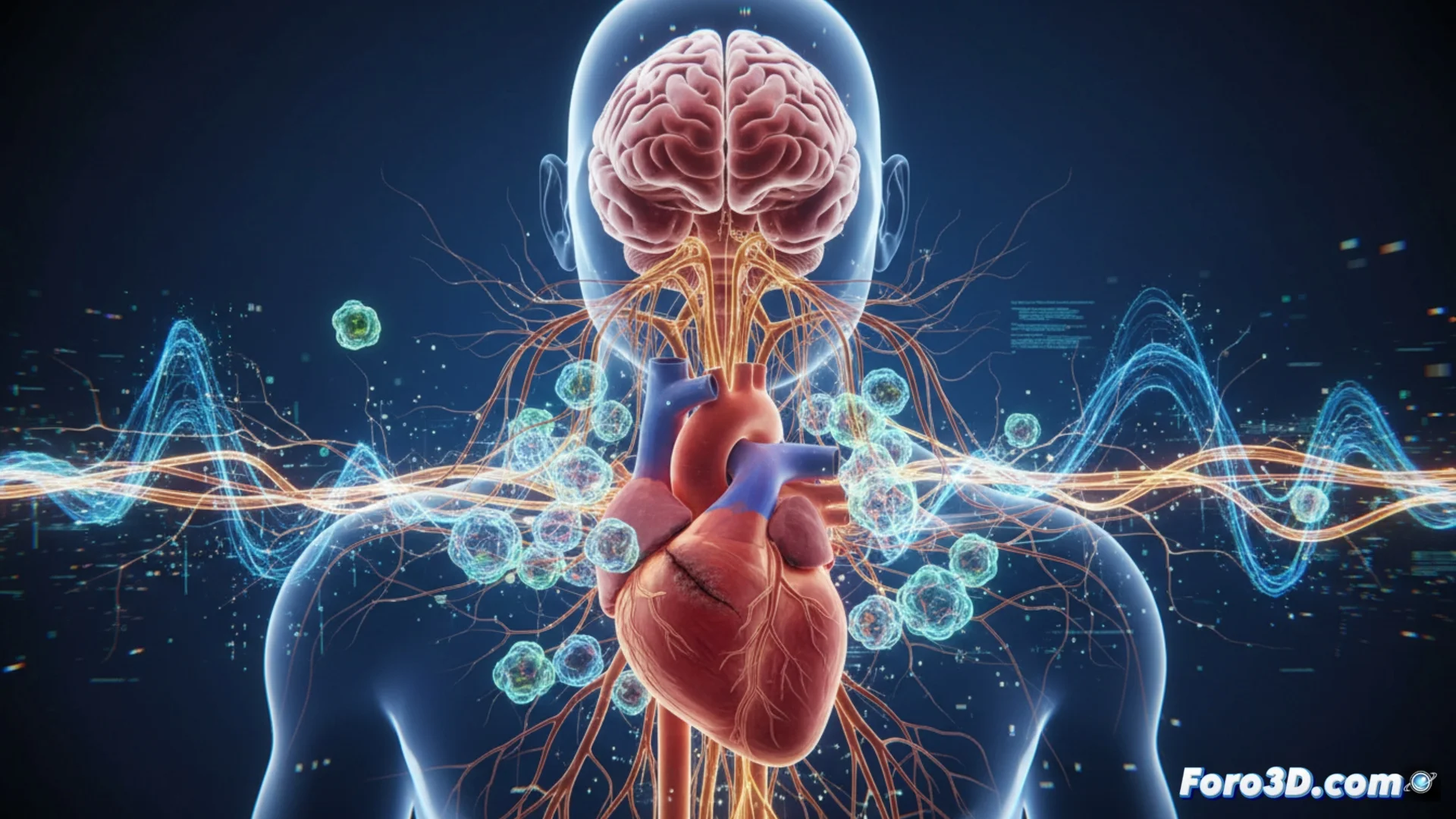
The Brain Directs Heart Repair After a Heart Attack
Science discovers an active and unexpected link: after a heart attack, the brain is not a spectator, but the director that orchestrates healing. 🧠❤️🩹
A Direct Communication Channel Between Organs
Researchers identified an axis mechanism where the central nervous system perceives damage in the heart muscle. Immediately, it activates specific neurons in the spinal cord, which send precise instructions to the body's defensive cells.
The goal of this neuronal intervention is twofold:- Initiate inflammation to eliminate dead cellular tissue and prepare the area.
- Halt the inflammatory response at the exact moment to allow healthy tissue to regenerate without collateral damage.
- If this modulation process fails, inflammation becomes chronic and further weakens the heart, increasing the risk of serious complications.
This finding redefines the relationship between neurology and cardiology, showing that the brain gives strict orders to repair the heart.
Towards a New Paradigm in Treatments
Understanding this neuro-immunological circuit completely changes the approach to designing therapies. Instead of drugs that act only at the cardiac level, medications could be developed that optimize this neural communication pathway.
The practical implications are profound:- Create treatments that improve prognosis after a first heart attack, helping the heart recover more effectively.
- Significantly reduce the likelihood that patients develop heart failure in the future.
- Integrate two medical specialties that were previously considered separate, fostering a holistic approach to the patient.
A More Complex Relationship Than Imagined
This study confirms that the connection between the brain and the heart goes beyond emotional metaphors. It is an essential biological dialogue for survival, where the nervous system exerts precise control over how the damaged organ is repaired. A vital dependency relationship that underscores the unity of the human body's systems. 🔬