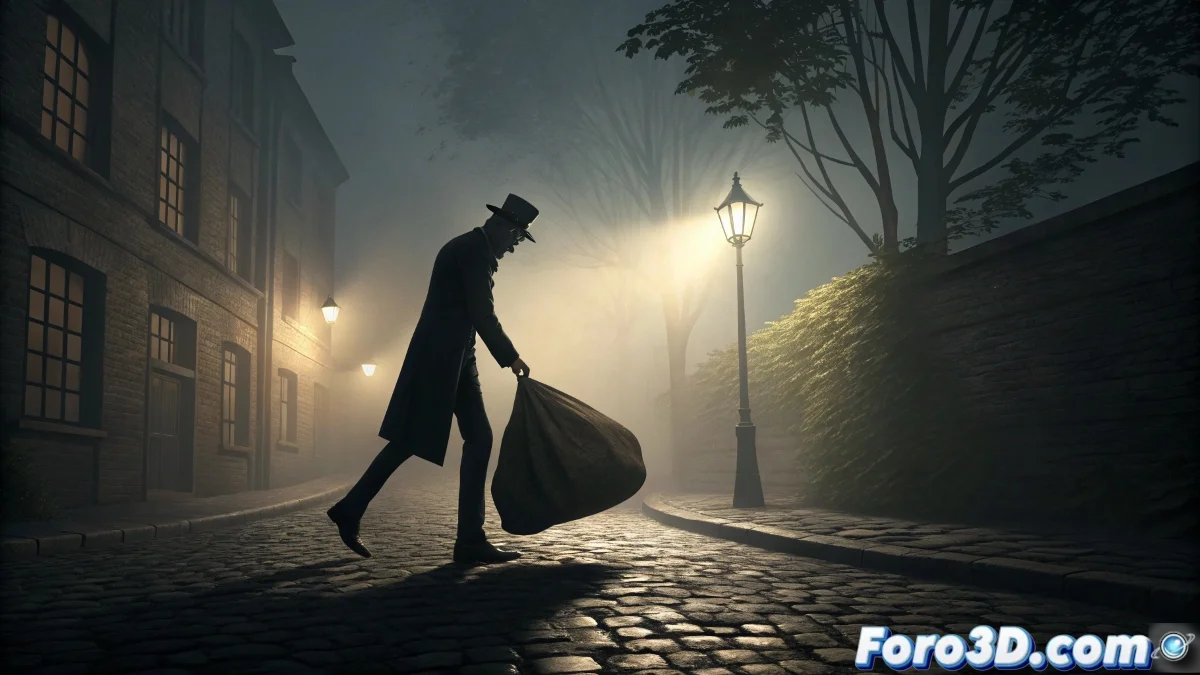
The Boogeyman: From Folklore Legend to Collective Nightmare
Among the mythological figures that have transcended the realm of folklore to become authentic collective nightmares, the Boogeyman holds a particularly significant position. What differentiates this entity from other legendary beings is its deliberate vague description: an anonymous individual who carries a sack in which he encloses disobedient minors. The true terror arises from its fundamental ambiguity and how it transforms everyday situations into potential tragedies 🎭.
The experience that marked a before and after
David always considered his grandmother's warnings as mere scary stories until that cold October night. His parents worked the night shift and he had broken the most important rule: never open the door after dark. The sounds began as distant drags that gradually intensified, as if someone were moving something heavy along the gravel path. Peeking through the curtains, he distinguished a skeletal silhouette carrying a disproportionately large jute sack, inside which something writhed with anguished desperation. The most terrifying moment came when the figure stopped in front of his window, as if it had detected his presence, and then the movement inside the sack abruptly ceased 😨.
Fundamental characteristics of the myth:- Intentionally vague and generic description that allows the projection of personal fears
- Recurrent presence in multiple variants throughout Ibero-America and Spain
- Transformation of everyday acts of disobedience into potentially dangerous situations
"Perhaps the most disturbing thing is how we use these figures to frighten children into obedience, when in reality they should horrify us adults for creating such convincing monsters that could literally be waiting around the corner."
The terrifying content of the sack
Oral tradition suggests that the Boogeyman not only kidnaps children, but also extracts their vital essences: their laughter, dreams, and personalities. The few accounts from alleged survivors describe individuals who never regain their original vitality, with empty gazes and whispers about shadows watching them from enclosed spaces. What is particular about these cases is the constant absence of eyewitnesses; the children simply disappear after breaking important rules. Although adults usually attribute these disappearances to conventional misfortunes, deep down they recognize the truth, for they too grew up with identical warning stories 👻.
Distinctive elements of its victims:- Irreversible loss of the original vital essence and personality
- Subsequent behavior characterized by empty gaze and whispering communication
- Disappearances that temporally coincide with significant acts of disobedience
Reflections on our role in the myth
The fundamental irony of this legendary figure lies in how we use it to instill fear in the little ones, when in reality it should serve as a mirror of our own fears as a society. We create entities so vividly terrifying that they end up inhabiting the liminal space between fantasy and real possibility. The Boogeyman represents not only punishment for disobedience, but also the embodiment of collective anxieties passed down generationally, reminding us that the most persistent monsters are those we ourselves feed with our narratives and fears 🕯️.