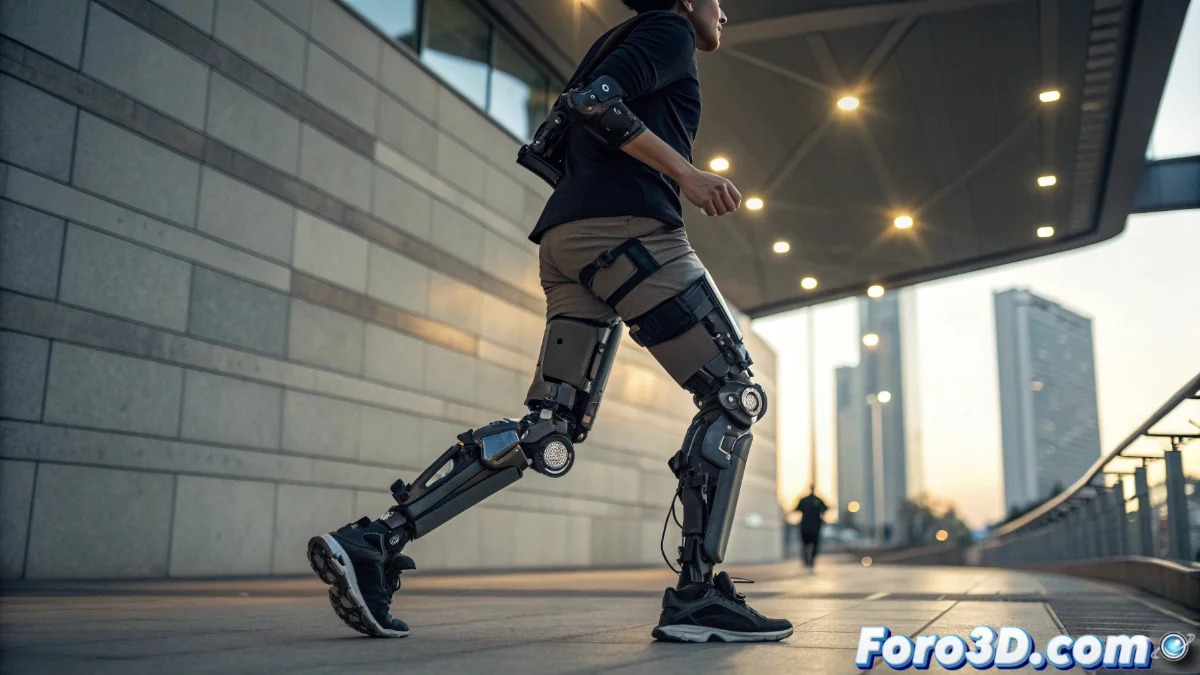
The BLEEX Project: Exoskeleton that Enhances Human Capability
Developed at the University of California, Berkeley, BLEEX represents a revolutionary milestone in the integration of robotics and biomechanics. This lower limb system is designed to amplify the user's physical capabilities, allowing the transport of massive loads with minimal effort. 🦿
Advanced Operating Mechanism
The exoskeleton's operation is based on a network of sensors that capture every leg movement in real time. This data feeds an intelligent control system that coordinates hydraulic actuators to generate complementary force. The ultralightweight structure ergonomically adapts to the body, optimally distributing weight to prevent injuries.
Essential System Components:- Kinematic sensors that detect angles and movement speed
- Hydraulic actuators with immediate response for muscle assistance
- Lightweight alloy structures that maintain user agility
The true innovation lies in motor anticipation: the system predicts our movements before we complete them
Practical Implementations and Advantages
BLEEX applications span multiple sectors. In rescue operations, teams can transport heavy equipment in complex terrains. In industrial environments, it drastically reduces ergonomic risks during load handling. The medical field leverages its potential for rehabilitation therapies, helping patients regain mobility and muscle strength.
Cross-Cutting Benefits:- 300% increase in load capacity without cumulative fatigue
- Reduction of workplace injuries in logistics sectors
- Accelerated rehabilitation protocols for patients with reduced mobility
Future Perspectives and Considerations
Although it potentially transforms human capabilities, the system raises new practical challenges: what essential elements to include when we can carry three times the weight? This assistive technology continues to evolve to optimize human-machine interaction in critical scenarios. 🤖