When Ecclesiastical Furniture Comes to Life
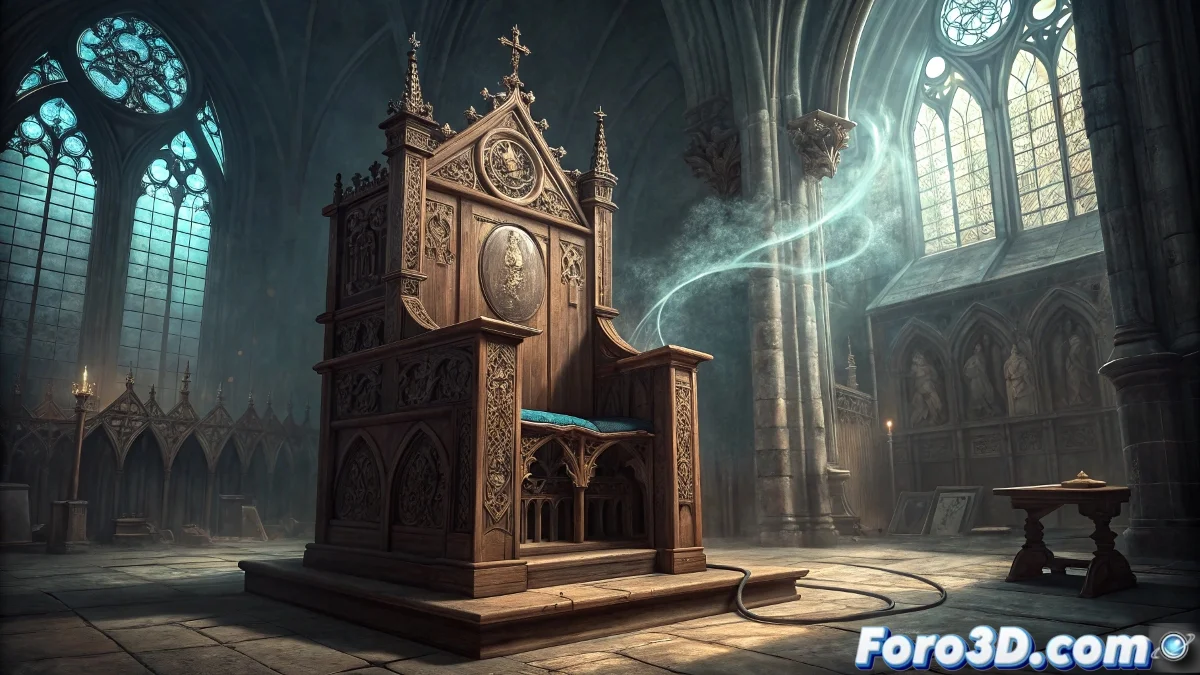
In the sacred silence of the choir of León Cathedral, an episcopal chair defies the laws of physics and logic according to a centuries-old legend. Attributed to a deceased bishop, this solid wood seat supposedly moves on its own during certain nights, as if its former occupant were still watching over the temple from beyond. 🪑 Oral tradition keeps this story alive from generation to generation, blending religious devotion with that touch of mystery that fascinates locals and visitors alike. For 3D artists, this chair represents the perfect challenge: animating the inanimate and giving digital life to a legend that refuses to be forgotten.
Between Episcopal Authority and Eternal Vigilance
The chair is not just any piece of furniture; it symbolizes the bishop's authority and his role as spiritual guide of the diocese. Its Gothic design, with precise carvings and ecclesiastical symbols, speaks of an era when liturgical furniture was as important as the architecture that housed it. 📜 The legend of the inexplicable movement adds an additional layer of meaning: it suggests that spiritual authority transcends physical death and that the protection of the temple is an eternal duty. Each supposed nocturnal movement is interpreted as a reminder that some responsibilities do not end with the last breath.
Symbolic elements of the chair:- Carvings representing episcopal authority and ecclesiastical tradition
- Solid wood symbolizing the solidity and permanence of faith
- Gothic design connected to the cathedral's architecture
- Strategic location in the choir, the liturgical heart of the temple
Blender Recreation: Animating the Supernatural
Recreating this chair in Blender goes beyond modeling historical furniture; it's about capturing the very essence of the mystery surrounding it. The key is to create animations that suggest movement without being explicit, that hint at presence without showing it. 👻 The visual effects must be subtle but meaningful, like that almost imperceptible shift or tilt that seems more the product of imagination than physics. Each keyframe must serve the narrative of an object that exists between the material and the spiritual.
Practical Guide: From Basic Block to Spectral Throne
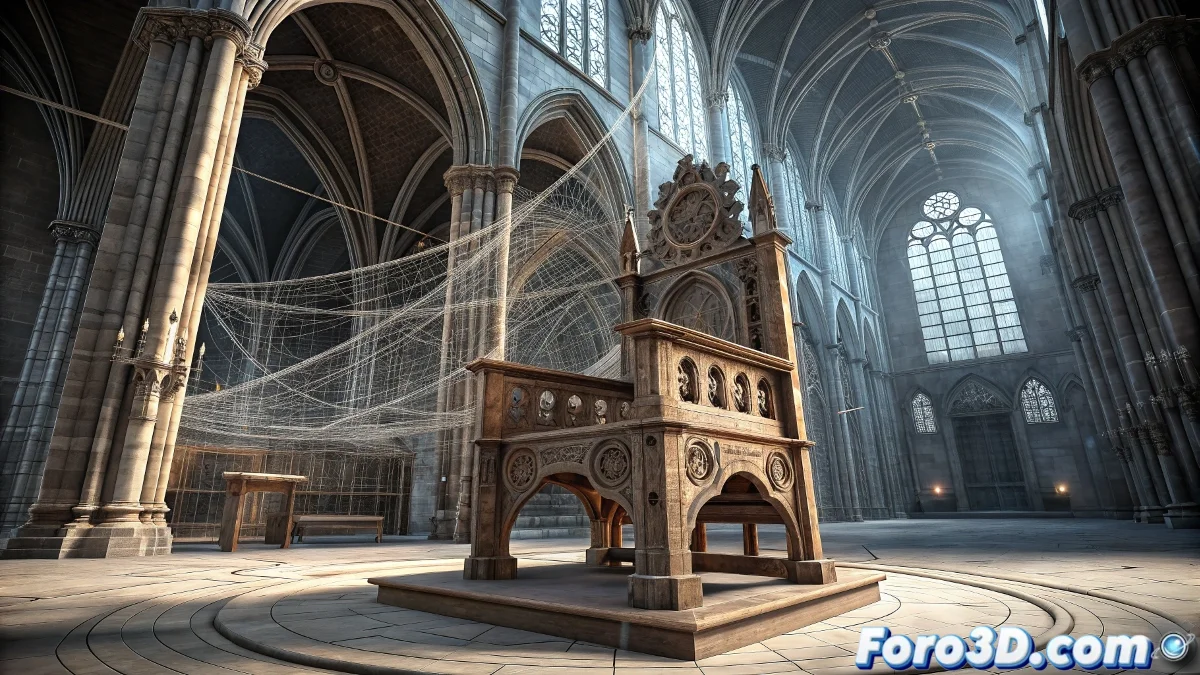
The process begins with gathering precise historical references of the chair's Gothic design. The modeling must capture not only the visible forms but also that quality of weight and permanence characteristic of ancient ecclesiastical furniture. 🏰 The creation of ornamental carvings requires special attention, as these details are not merely decorative but bearers of symbolic meaning. The choir setting establishes the necessary context to understand the liturgical importance of the chair within the sacred space.
Essential Blender Workflow:- Modeling the base structure with precise historical proportions
- Digital sculpting of Gothic carvings and ornamental elements
- Development of aged wood materials with PBR textures
- Setup of subtle animations and atmospheric effects
Texturing: Making the Weight of Centuries Visible
The chair's textures must visually tell the story of centuries of use and veneration. The wood cannot look new; it needs to show that particular wear that only time and ritual care can produce. 🔍 Color variations suggest differential exposure to light, while micro-imperfections speak of respectful but non-invasive maintenance. The use of normal and displacement maps allows recreating the real depth of the carvings, creating that play of light and shadows so characteristic of handcrafted wood.
Animation: The Art of Suggested Movement
The animation of the chair is the heart of this project and requires an especially subtle approach. The movements must be almost imperceptible, as if you doubt what you're seeing. 💫 The use of smooth interpolation curves creates that supernatural fluidity that distinguishes "spiritual" movement from mechanical. Small variations in timing and intensity avoid the mechanical repetition that would betray digital animation. The goal is to create the sensation that the chair moves by its own will, not by programmed keyframes.
Advanced Techniques for Spectral Animation:- Use of noise modifiers for organic and unpredictable movements
- Custom interpolation curves for smooth transitions
- Animation of material properties for presence effects
- Coordination between chair movement and particle effects
Lighting and Atmosphere: Building Visual Mystery
The lighting in this recreation does the heavy lifting of establishing an atmosphere of mystery and reverence. Dim lights simulating the cathedral's nighttime illumination create deep shadows where the imagination can flourish. 🌙 Volumetric effects add density to the air, as if the atmosphere itself thickened around the chair during its movements. The contrast between lit areas and those in shadow creates that visual tension between the revealed and the hidden that fuels all good ghost legends.
Special Effects: Dust as a Witness
Blender's particle systems become visual witnesses to the supernatural movement. The dust that rises when the chair moves, the motes floating in the moonbeams, even subtle air distortions around the object. 🌬?These elements are not mere visual adornments; they are clues that guide the viewer to the conclusion that they are witnessing something extraordinary. Their behavior must be believable but slightly altered, suggesting that normal physical laws do not fully apply in this context.
Some objects transcend their function to become symbols, and when they do, they sometimes refuse to behave as mere objects
Render and Post-Production: The Final Ethereal Touch
The render phase must carefully preserve all the subtle effects that turn a simple chair animation into a spectral experience. Cycles, with its advanced handling of materials and lights, is ideal for capturing the tactile quality of ancient wood and its mysterious interaction with ambient light. 🎨 Post-processing can add those final adjustments that make the difference: slight chromatic aberrations during movement moments, vignetting that directs attention, or even subtle distortion effects that suggest reality alteration.
Conclusion: When Wood Remembers It Was Once a Tree with a Soul
The recreation of the bishop's chair from León Cathedral in Blender demonstrates how 3D technology can serve to explore and preserve not only our material heritage but also the immaterial legends that give it meaning. This guide not only teaches modeling and animation techniques but invites reflection on how objects can acquire life through the stories generations attribute to them. 🔮 After all, what better way to honor a centuries-old legend than by giving it visual form so that new generations can experience its mystery. And who knows, perhaps after animating a chair that moves on its own, we'll understand why some objects prefer not to stay still in their assigned place. 😉