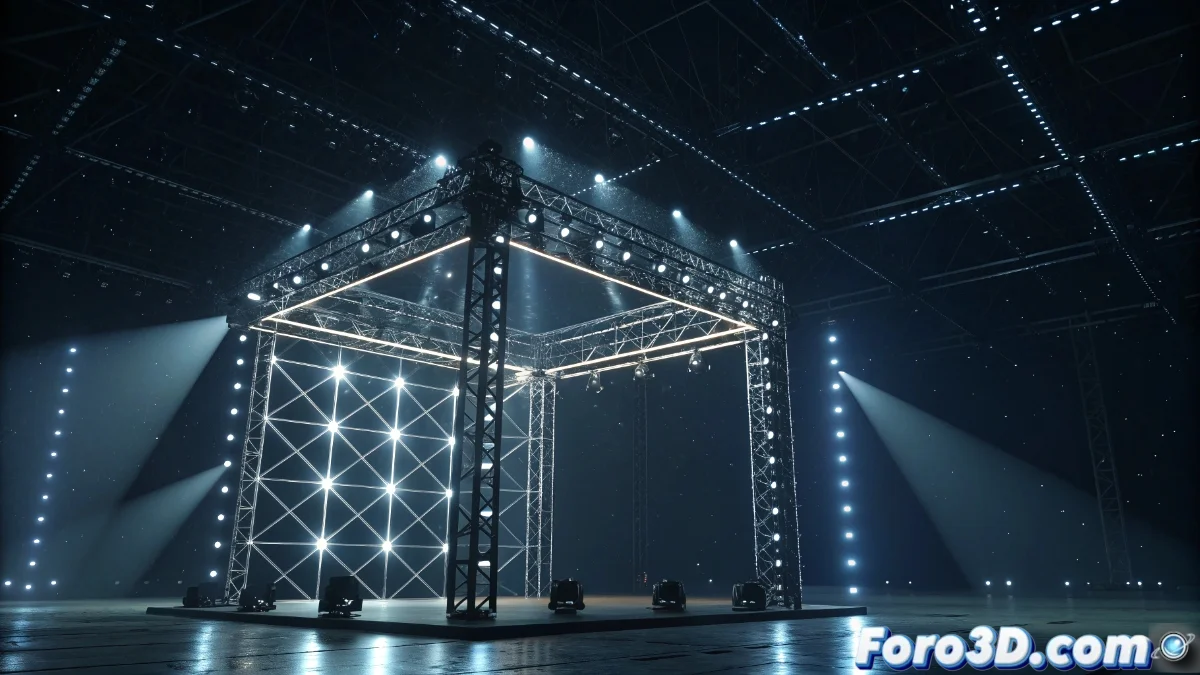
The Beauty of Controlled Chaos in Rigs and Simulations
In the fascinating world of rig and simulation design, the obsession with technical perfection often stifles artistic creativity. For this reason, many creators are adopting a contrary philosophy that celebrates controlled failures as generators of unpredictable behaviors with unique aesthetic value. This perspective transforms system errors into creative opportunities, where calculated randomness produces visual results impossible to achieve through traditional methods. 🎨
Integrating Systems with Tolerance for Disorder
To implement this concept in real projects, artists configure advanced rigs with expression nodes that incorporate non-linear mathematical variations, while physical simulations employ random forces within defined parameters. Tools like particle systems in Houdini or mesh modifiers in Blender allow for programming deviations that break perfect symmetry without compromising structural integrity. The secret lies in establishing tolerance thresholds where the system maintains visual coherence while exploring unexpected territories.
Practical Implementation Strategies:- Configuration of expression nodes with non-linear algorithms to introduce organic variations
- Use of controlled random forces in physical simulations within defined limits
- Programming of systematic deviations that break symmetries without collapsing structures
While programmers spend years eliminating bugs, we turn them into features and even market them as a premium artistic style
Applications in Contemporary Creative Projects
These methodologies find their ideal application in productions where the organic and the imperfect contribute visual authenticity, such as in effects for mythological creatures or surreal environments. A character rig can include instability controls that affect its center of gravity, generating movements that are more human and less mechanical. In cloth or fluid simulations, introducing calculated perturbations into the solvers produces folds and turbulence that seem natural rather than computationally perfect.
Specific Fields of Application:- Visual effects for mythological creatures with organic and believable movements
- Surreal environments that require controlled imperfections for greater authenticity
- Cloth and fluid simulations with calculated perturbations for natural results
The Paradigm of Error as a Creative Element
Shaders and compute processes also benefit when we accept render artifacts as valid compositional elements, transforming digital noise into atmospheric textures with unique character. The fundamental irony lies in the fact that while traditional engineering seeks to eliminate imperfections, contemporary digital art embraces them and turns them into distinctive features that define premium visual styles. This approach represents a paradigm shift where absolute control gives way to calculated surprise, creating that magical balance between technical precision and artistic expression that defines modern generative art. ✨