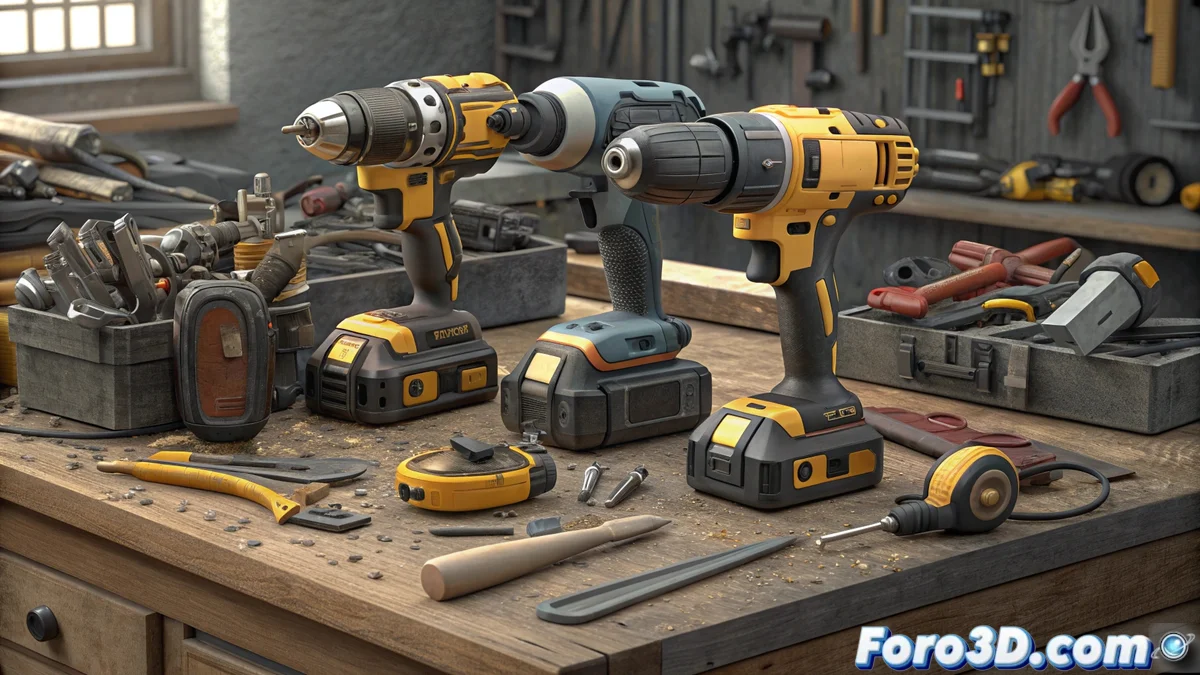
The Battery Dilemma in Cordless Power Tools
Manufacturers like DeWalt, Makita, or Bosch constantly renew their power platforms. These new generations, with voltages like 18V or 40V, rarely work with the tools users already own. This strategy places professionals and hobbyists before a difficult choice: stick with what they have or incur a considerable expense to migrate to the latest technology. 🔋
A Strategy That Creates Strong Brand Ties
By adopting a new battery, the user de facto commits to all compatible tools from that brand. This bond strengthens because abandoning that ecosystem implies stopping the use of a previous investment. Compatibility almost never transcends the boundaries of the brand itself and its specific generation, which discourages many from trying alternatives from other manufacturers.
Consequences for the user:- They become tied to a single supplier for future purchases.
- Switching brands means starting from scratch, at a high cost.
- Their workshop accumulates chargers and batteries that are useless for other tools.
The hobbyist looks nostalgically at their faithful drill, now orphaned of power, while calculating the price of the new battery.
Evaluate Whether to Upgrade or Keep the Old Equipment
Those who use tools for work must weigh whether improvements in power or runtime justify the expenditure. For simple tasks, old equipment is usually sufficient. However, the difficulty in finding spare parts or replacement batteries for obsolete models can force an upgrade. Some opt for third-party adapters, but these solutions can void the warranty and do not always offer optimal performance.
Factors influencing the decision:- The performance and runtime required for daily work.
- The availability and cost of replacement batteries for the old equipment.
- The risks associated with using unofficial adapters.
A Fragmented Landscape in the Workshop
The end result is a workspace where technologies age at different rates coexist. Devices accumulate that cannot share power with each other, which is inefficient and costly. This situation benefits manufacturers by ensuring loyalty, but places the user in a complex position, where innovation comes at a very high price and limits their freedom to choose. 🛠️