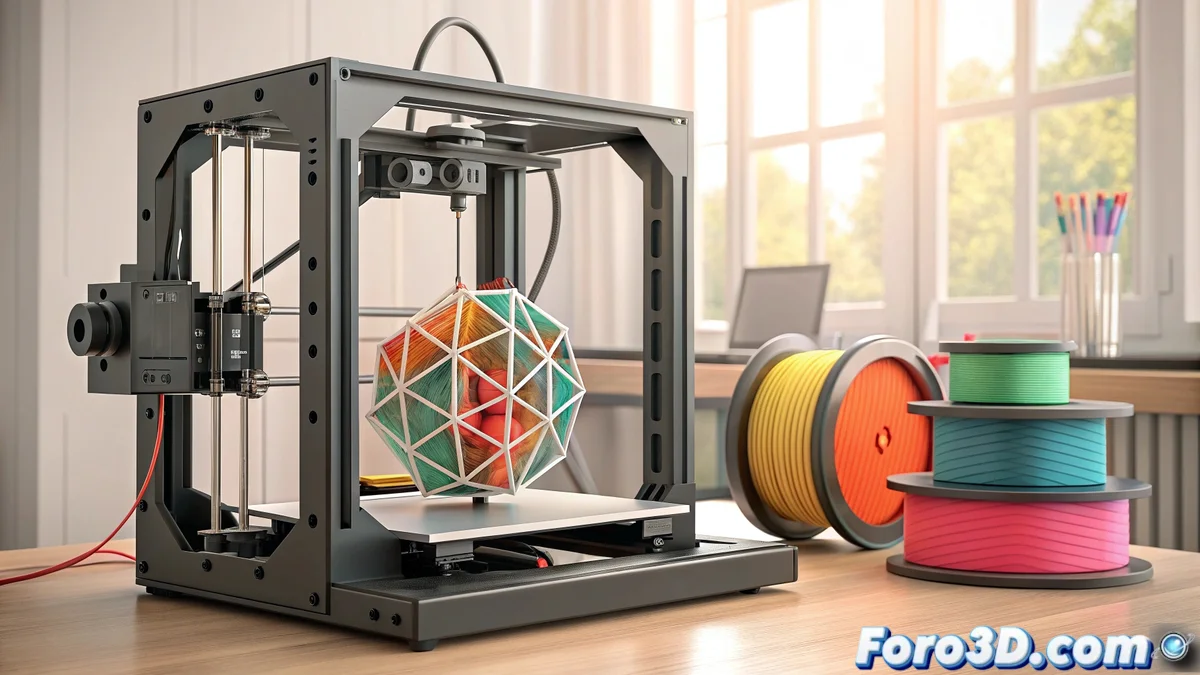
Bambu Lab: When 3D Printing Became Boringly Perfect
In a market dominated by machines that required saintly patience and engineering knowledge, Bambu Lab appeared with a radical proposal: 3D printers that simply work. The company took the maker ecosystem by storm with devices that prioritize user experience over extreme customization, making multicolor and high-speed printing accessible to ordinary mortals. 🚀
The Success Formula: Speed and Simplicity
While other brands competed to add more technical features, Bambu Lab focused on eliminating the traditional pain points of 3D printing. Their machines incorporate automatic calibration, failure detection, and integrated filament systems that reduce human intervention to a minimum. The result is that users who previously spent hours adjusting bed levels and temperatures can now send a file and get consistent results almost instantly.
Innovations That Changed the Game:- multi-filament system without manual intervention
- printing speeds up to 4 times higher
- comprehensive automatic hardware calibration
- closed but extremely polished ecosystem
The Ecosystem as a Competitive Advantage
More than just printers, Bambu Lab created a cohesive ecosystem where hardware, software, and cloud services work in perfect harmony. The mobile app allows real-time monitoring of prints, while the integrated model marketplace facilitates the discovery of new projects. This all-in-one approach is irresistible to users seeking results without the traditional complexity of the maker world.
We don't make printers for engineers, we make printers for humans
Market Impact and Controversies
The success of Bambu Lab has forced established competitors to rethink their strategies, accelerating the transition to more user-friendly products across the industry. However, its closed business model and reliance on cloud services have sparked debates about the direction home 3D printing is taking, dividing the community between those who value convenience and those who defend the traditional open-source philosophy.
Changes Generated in the Industry:- massive acceleration in user interface development
- greater focus on reliability over customization
- renewed interest in accessible multicolor systems
- debate on open-source versus polished experience
In the end, Bambu Lab proved that sometimes the most disruptive innovation is not adding more features, but removing complications—although that means users miss those glorious moments when they finally got a temperamental printer to work. Evolution hurts, but it prints faster. ⚡