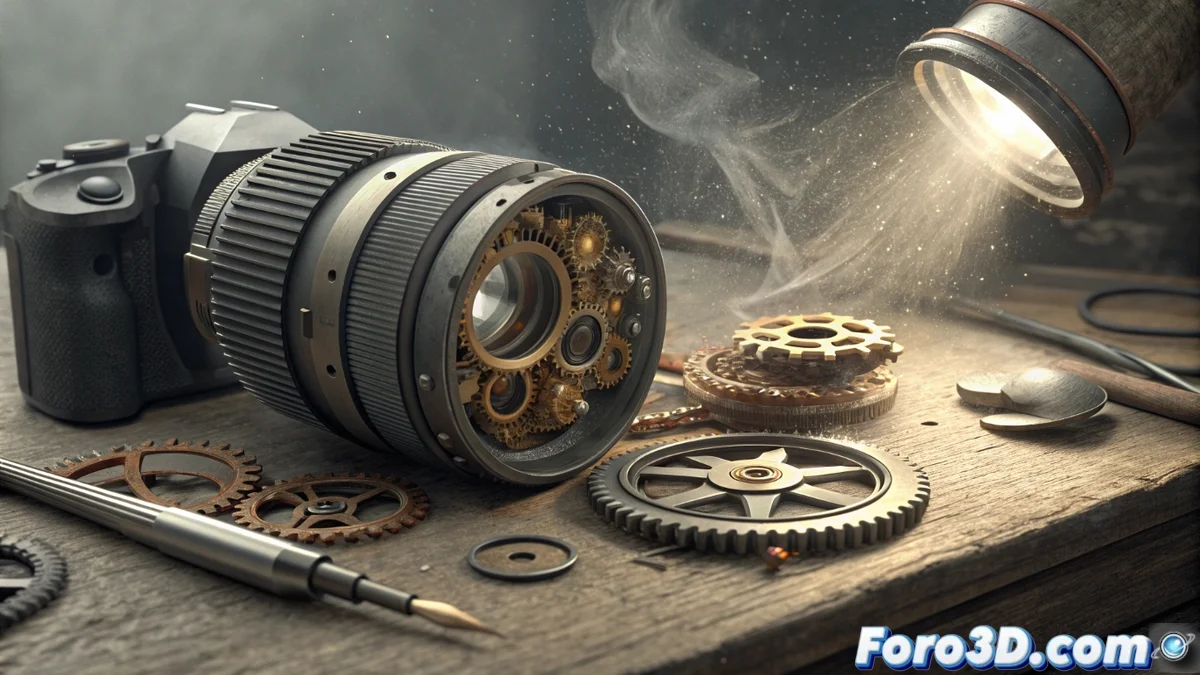
The Autofocus Motor: Fragility and Obsolescence in Modern Lenses
At the core of every contemporary autofocus lens beats an essential mechanical-electronic component: the focus motor. This mechanism, whether of the ultrasonic (USM/SSM) or stepper (STM) type, is responsible for transforming a digital signal into a millimeter-precise and rapid displacement of the optical elements. However, its complex architecture of coils, magnets, and precision gears makes it vulnerable. ⚙️
The Repair Paradox: Fix or Replace?
When this mechanical heart fails—whether due to material fatigue, an impact, or simple degradation—the lens, despite maintaining impeccable optical quality, becomes a manual instrument or, directly, useless. The real challenge emerges when seeking a solution. For a large number of lenses, especially entry-level and mid-range ones, the repair cost becomes the main barrier.
Factors that make repair expensive and complicated:- Complete module replacement: Manufacturers rarely supply individual parts like the motor, forcing the replacement of entire assemblies, which skyrockets the price.
- Lockout firmware and calibration: Many models require proprietary software to recalibrate the system after intervention, a tool to which independent workshops have limited access.
- Specialized labor: Meticulous disassembly and precise diagnosis demand technicians with specific knowledge of each brand and model.
A mechanical failure localized in the motor can dictate an economic death sentence for the equipment, fueling a cycle of consumption and disposal.
Prevention Strategies and Decisions When Facing Failure
Extending the useful life of the autofocus system is possible with conscious practices. Avoiding sudden thermal changes, storing the equipment with humidity control, and using more conservative focus modes (avoiding unnecessary continuous) reduces stress on the components. 🛡️
Warning Symptoms and Path to Follow:- Anomalous noises: Squeaks, ticks, or metallic groans during focusing are clear signs of wear.
- Erratic behavior: Constant "hunting" for focus or slow and uncertain movements indicate an imminent failure.
- Total paralysis: Complete absence of response is the final stage of failure.
Conclusion: Beyond Megapixels
In the face of these symptoms, the most sensible action is to seek a professional diagnosis at a trusted workshop before making a financial decision. For high-value optics or models with sentimental value, repair can be a valid investment. The fundamental lesson for the photographer is to evaluate long-term serviceability and build robustness as purchase criteria as important as sharpness or aperture. In a market oriented toward constant renewal, opting for equipment designed to last and be repairable is an act of resistance. The next time your lens emits an agonizing sound, remember that it is not just a technical failure, but the echo of a business model. 📉