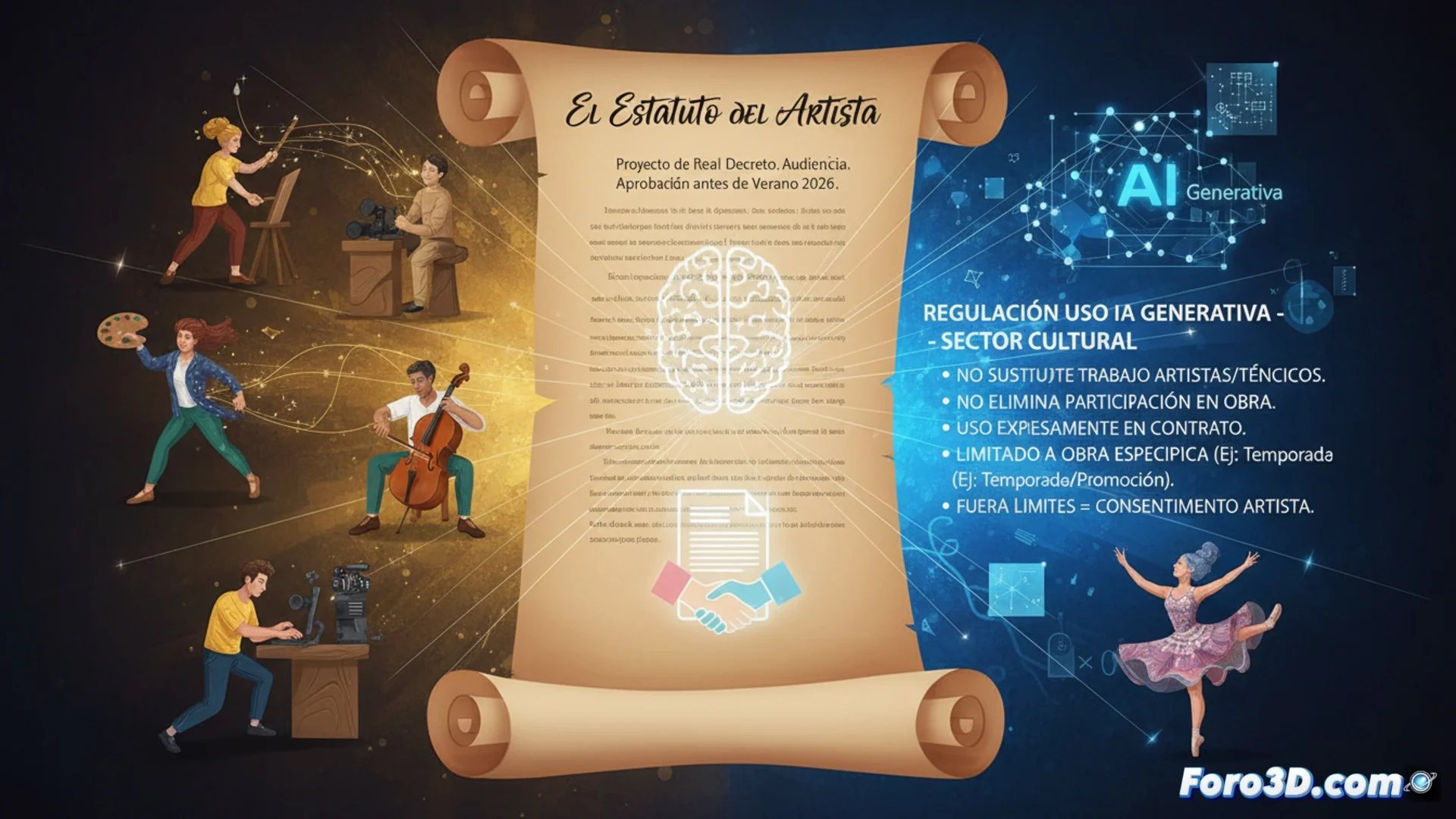
The Artist Statute defines rules for using artificial intelligence
The draft of the Artist Statute is in the public consultation phase, with the aim of being approved by the summer of 2026. Its central purpose is to adapt working conditions in the cultural sector to the current digital reality. 🎨
Clear limits for generative AI
The text proposes specific rules for employing generative artificial intelligence. It is only allowed if it does not replace human artists or technicians and if their participation in the contracted project is preserved. To use these tools, the artistic work contract must mention it explicitly and restrict its application to a specific work, such as a season of a series or a specific advertising campaign.
Key conditions for AI use:- AI cannot replace contracted human work.
- Its use must be detailed expressly in the contract.
- Its scope is limited to the work or project for which it is contracted.
The statute does not prohibit technology, but establishes how to incorporate it while respecting the rights of those who create.
Consent for new uses and other protections
If a company wishes to employ artificial intelligence beyond what was initially agreed, it will need to obtain the express consent of the involved artist. This clause seeks to protect professionals from unauthorized uses of their voice, image, or creative style. The statute also addresses other fundamental labor aspects:
Other measures included:- Regulate how minors work on social media within the cultural sector.
- Create the role of intimacy coordinator on sets to protect actors in sensitive scenes.
- Expand the definition of working hours to include time for rehearsing and promoting works.
Updating the legal framework for the digital era
With these provisions, the Artist Statute renews a legal framework that needed to respond to the challenges posed by modern digital tools. The regulation defines how to integrate AI in a way that safeguards creators. It is anticipated that this approach will provide legal certainty to both artists and companies, boosting innovation without harming working conditions. The text achieves a balance between adopting powerful digital tools and protecting professionals in a rapidly changing environment. ⚖️