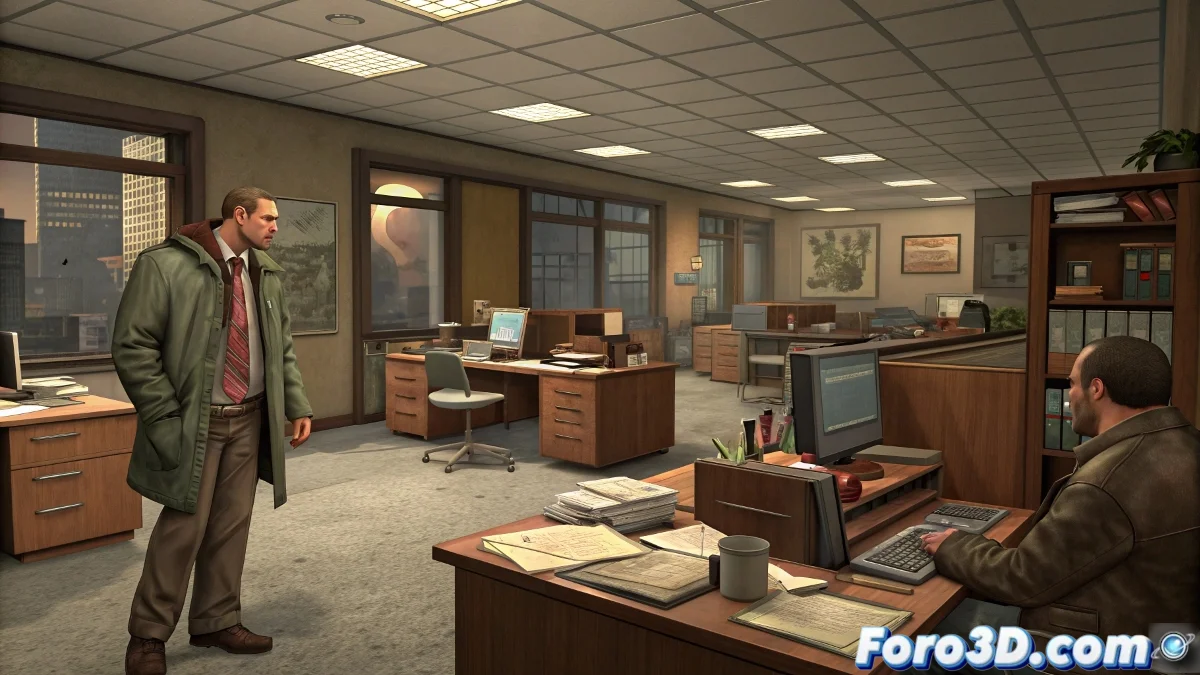
When Crisis Becomes a Creative Opportunity
The recent revelation about Bully's development has uncovered one of those crucial moments where a seemingly negative corporate decision ended up positively defining a game. According to an artist on the title, a mandate from Rockstar's main offices caused practically the entire original art team to leave the studio during development. What could have been the premature burial of the project became the catalyst that forged the unique identity that would make Bully a timeless cult classic.
What makes this story fascinating is how the resulting creative vacuum allowed a coherent and distinctive artistic vision to emerge. With the original team out of the picture, the remaining developers were forced to completely reimagine the game's visual direction, freed from established conventions and pre-existing expectations. This involuntary tabula rasa created the perfect space for the caricatured yet expressive style that would define Bullworth Academy and its memorable inhabitants to emerge.
The Forced Artistic Rebirth
- Replacement of the initial artistic approach with a completely new one
- Development of characters with more exaggerated and memorable designs
- Creation of a school environment that balanced realism and satire
- Establishment of a cohesive color palette and visual style
The Paradox of Freedom Under Mandate
The artistic purge demonstrated that restrictions often fuel rather than stifle creativity. By losing most of the original team, the remaining developers were forced to take creative risks that likely would have been vetoed under the previous structure. This emergent freedom resulted in bold decisions like character designs that balanced caricature with emotional authenticity, creating that unique tone which allowed the player to laugh at private school tropes while genuinely caring about Jimmy Hopkins's journey.
Sometimes the best creative direction is the one that emerges from absolute chaos
From a game development perspective, this episode illustrates how a project's identity can emerge organically from the process rather than being imposed from above. Bully wasn't designed to be the cult classic it became - that essence was forged in the crucible of unforeseen circumstances and improvised creative solutions. The irony, of course, is that the corporate mandate intended to control the project ended up giving it the creative autonomy it needed to find its unique voice.
Lasting Lessons from Bully's Development
- The value of visionary coherence over perfect execution
- The importance of adapting to changing circumstances in development
- The power of a distinctive visual style to define a game
- How crises can catalyze creative innovation
This revelation adds another layer to Bully's legacy, demonstrating that great games often arise from imperfect processes and unpredictable circumstances. For modern developers, it serves as a reminder that while meticulous planning has its place, so does the ability to embrace the unexpected and transform challenges into creative opportunities. The fact that we're discussing Bully nearly two decades later suggests that, in this case at least, the chaos was completely worth it. 🎒
And so, between corporate expulsions and artistic reinventions, Bully proves that sometimes the best way to find your identity is to lose almost your entire original team, though you probably don't want to put that in the project management handbook. 📚